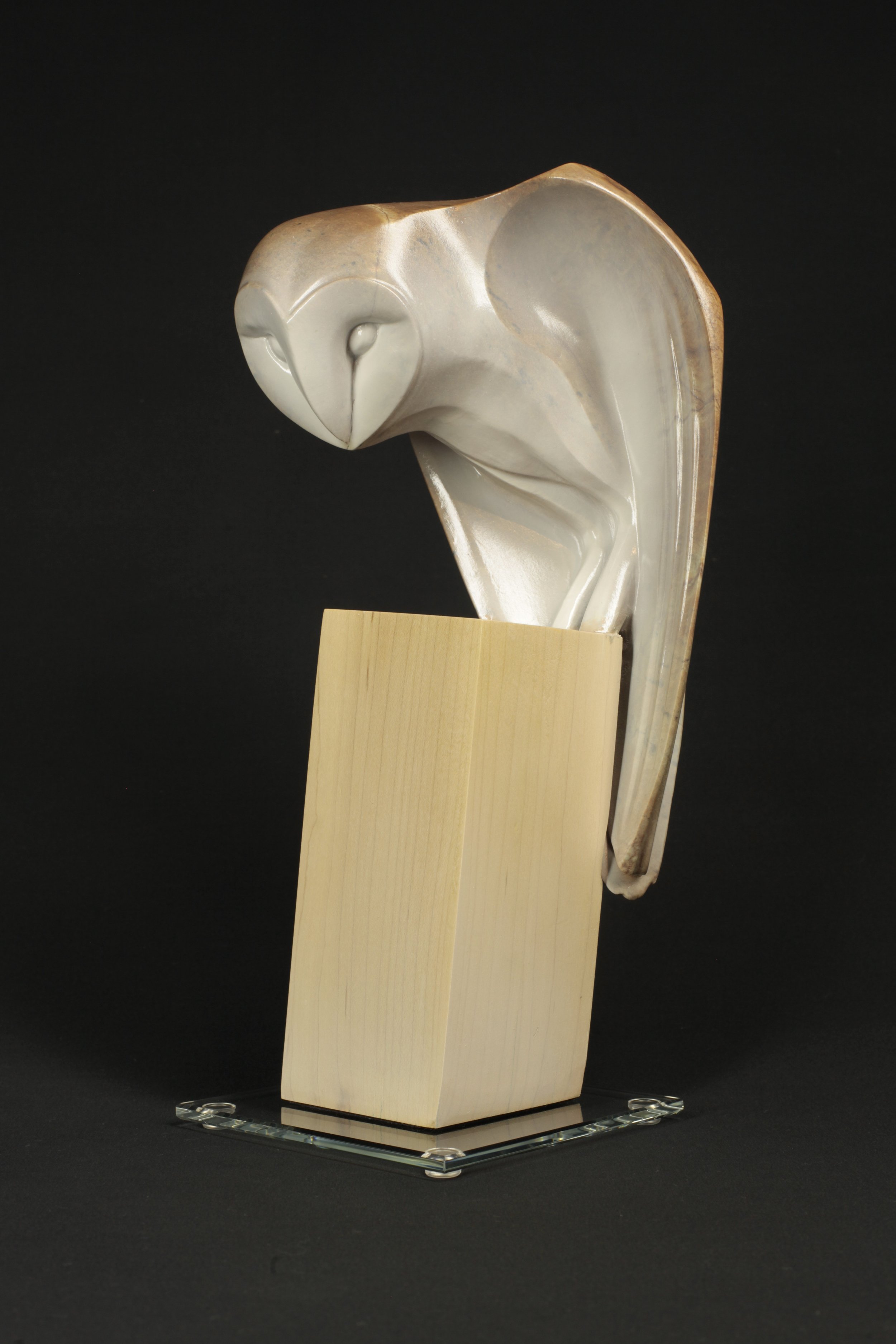
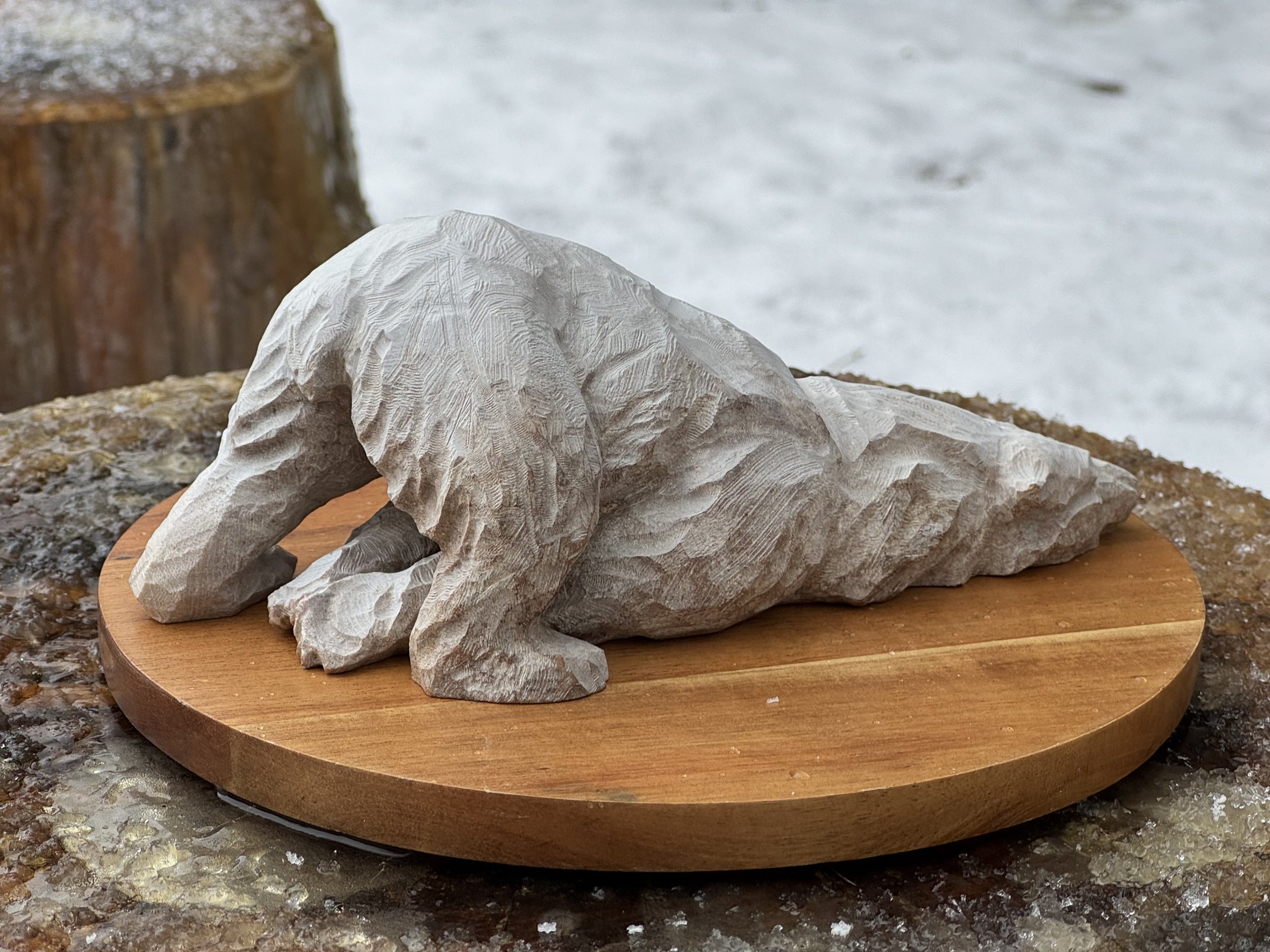
Mr. Clean and the Freedom of Getting Messy
In my latest reflection, I explore childhood memories, the chaos of the creative process, and the structures we build around ourselves—and whether they sometimes keep us from the very things that make life meaningful.
On childhood, the natural world, creative disorder, and the structures that keep us from living.
There is an odd memory that continues to return to me throughout my life. It is a junction point between relief and humour, a familiar crossing in the road that I find myself turning back toward whenever I need to question the nature of the culture we inhabit.
In some ways, it seems to divide me into two people.
One belongs to a life that feels original and natural: a life of freedom, play, satisfaction, and connection to the world as it is. The other belongs to a life that is rigid, stressful, and demanding, offering only occasional glimpses of freedom—just enough to convince me that I belong within the world it has constructed.
Yet I wonder whether these two worlds are real distinctions at all, or merely identities I have invented between the past I remember, the present I struggle to inhabit, and the future I am trying to reach. Perhaps I am chasing a future that will eventually lead me back to the past, provided I can grow through the discomfort that adulthood seems to demand.
Whatever the answer, I keep returning to one particular afternoon in my childhood.
The Rituals of Being Clean
When I was young, I developed an unusual attentiveness to the small things in life I could control. These details offered a sense of safety in a world where acceptance sometimes felt conditional.
Even the position of my bedroom door mattered. Leaving it open by just the right amount allowed enough air to circulate and let in the right amount of noise in the morning. I wanted to wake neither too early nor too late. It was a small arrangement, but one that gave me a sense of order over something otherwise beyond my control.
Chores carried a similar significance. Keeping things sufficiently tidy felt almost ceremonial, like a rite of passage into a world where I might be accepted. Personal hygiene became a kind of secret code—a means of protecting myself from unwanted attention, disapproval, or the possibility of being regarded as somehow less worthy.
Looking back, I can see how these habits offered more than cleanliness. They offered reassurance. If I could keep the little things in order, perhaps I could keep the larger world from turning against me.
But there was another world waiting for me, one that operated according to an entirely different set of rules.
Three Hundred Acres of Freedom
Through my church, I became friends with a family of four boys who lived on a cattle farm. They were a close-knit group, the oldest a little older than me and the youngest about six years younger. Their family often invited me over after church for lunch, to spend the afternoon together, or for supper before returning to the evening service and eventually being dropped off at home.
Those visits opened up a world that I could hardly have imagined within the confines of my own routines.
There were fields to explore, a small channel connecting to the lake where we could swim, fishing, paddle boating, and the occasional sinking of that very paddle boat. There was paintball, and later, three-wheeling along the back trails, sometimes pushing our luck until we found ourselves waist-deep in mud, trying to get through a puddle without getting bogged down.
The property covered hundreds of acres. I suspect there was more of it that I never explored than I ever managed to see.
We had the kind of freedom that seems increasingly difficult to describe as an adult. The days were filled with whatever we could find to do. There was no elaborate plan for making the afternoon meaningful. We simply went outside and allowed the world to provide us with something to experience.
Some of those adventures were over far too quickly. I remember wishing that certain afternoons could have lasted longer, without understanding that the wish itself would become one of the defining feelings of adulthood.
Eventually, we grew up. We attended high schools in different regions, and although we remained friends, the distances between us grew with the responsibilities of work and adult life.
The fields remained where they were, but we no longer belonged to them in quite the same way.
Mr. Clean Meets the Manure
I was probably in Grade Five when the incident occurred.
We were sitting on the back of a tractor-trailer that we occasionally hitched a ride on to get around the farm. I remember one of my friends teasing me about how clean I always was. He called me Mr. Clean, making a joke of the way I seemed to care so much about keeping myself presentable.
His point was simple enough: if I wanted to have fun with the rest of them, I needed to stop worrying so much about getting dirty.
We were out in the fields, where cow manure was simply another part of the landscape. It was something to dodge, step over, or occasionally encounter in ways that were less than pleasant. To my friend, it was hardly worth thinking about.
Eventually, I grew tired of being teased. Fine, I thought. If being clean was keeping me from enjoying myself, then I would give it up.
My friend responded immediately.
He grabbed a handful of dried manure from the trailer and tossed it into the air above our heads like confetti, cheering as the pieces came down around us.
I still remember my reaction.
I flinched, brushed the bits from my clothes and hair, and protested, “Not like that!”
It was hardly a heroic surrender to the natural world. I had agreed to let go of my cleanliness, only to discover that I had not meant it quite so literally.
But something changed in that moment.
I had been forced to confront the difference between the idea of letting go and the actual experience of doing so. It was one thing to agree that dirt should not prevent me from enjoying life. It was another to have dirt falling onto my head.
And yet, beneath the humour of the incident, there was a lesson I have spent years trying to understand.
Life is messy. Work is messy. Play is messy. The things that matter often require us to enter into the disorder of the world rather than remain safely outside it.
Sometimes, you have to get your hands dirty before anything worthwhile can happen.
The Necessary Disorder of Making Things
I have come to recognize that this memory is a turning point I return to whenever I struggle with my own need for order.
There is a difference between maintaining a useful structure and becoming imprisoned by the need to keep everything structured. One allows life to function. The other can prevent life from happening at all.
Of course, I have not resolved this distinction. It is often difficult to know when disorder is necessary and when it has simply become an obstacle.
Every task has its own relationship with chaos. Materials must be gathered, tools must be found, ideas must be tested, and mistakes must be made before a finished work can emerge. Eventually, the disorder needs to be brought back into a workable arrangement. A clean workspace allows the next stage of the process to begin.
But the creative process rarely moves in a straight line from order to order.
In my stone-carving studio, I have spent much of the past year pushing the boundaries of what I can accomplish within the space available to me. New projects, new techniques, and new possibilities have accumulated alongside the tools and materials required to pursue them.
My basement studio is hardly three hundred acres of open farmland. It is a small space in which I have tried to make room for an increasingly ambitious practice. Soon, I hope to expand into an open pavilion-style structure, with curtained walls to help contain the dust while allowing more room to work.
The desire behind that expansion is not simply to create a cleaner or more impressive studio. It is to make room for the work itself.
Still, there comes a point when the mess begins to take more than it gives. Time disappears searching for misplaced tools. Projects become buried beneath other projects. Materials that were meant to serve a purpose become obstacles. Hours of activity produce little tangible progress.
The creative disorder that once opened possibilities becomes a system of its own, demanding time, energy, and money merely to maintain itself.
And that is where the distinction matters.
The goal is not to eliminate disorder. It is to recognize when disorder is serving the work and when the work has become subservient to it.
There is a difference between a studio alive with possibility and a studio that has become a monument to unfinished intentions.
I am still learning where that line lies.
When the Rules Become More Important Than Life
There is a related tension I find in the Biblical narratives, particularly in the way Christ confronts the religious authorities of his time.
Again and again, he challenges those who place the observance of religious law above the needs of the people standing before them. The Pharisees become figures through whom we can examine the danger of mistaking the rules for the purpose they were meant to serve.
In these accounts, the question is not simply whether a law should be followed. It is whether following it has become an excuse to neglect compassion, mercy, and the humanity of others.
Christ’s message repeatedly points toward a relationship with the divine that cannot be reduced to the approval of religious authorities or the successful performance of prescribed rituals. The hope he offers is that God is not distant from the people, waiting behind a wall of human requirements, but present among them.
The distinction is profound.
A structure intended to help people live meaningfully can become a structure that prevents them from living at all. A ritual intended to deepen a relationship can become a substitute for the relationship itself. A law intended to serve life can eventually be treated as though life exists to serve the law.
I recognize something of this pattern in my own habits.
The small rules I established in childhood were not inherently bad. Cleanliness, organization, and routine can all be useful. They become restrictive when their purpose is forgotten and their observance becomes an end in itself.
Perhaps the same is true of the larger systems we inhabit.
We construct rules, institutions, expectations, and standards to help us navigate the world. Over time, however, we can become so occupied with maintaining these structures that we lose sight of the life they were supposed to support.
We become caretakers of the framework rather than participants in the experience it was built to contain.
And in doing so, we can lose something of our capacity to help one another, to work freely, and to recognize what is needed in the moment.
The City and the Country
I have often felt this tension most strongly in my life as a city dweller.
There is a particular discomfort in feeling that one’s character must be maintained for the benefit of an audience. To remain clean, composed, productive, and presentable can begin to feel like a performance, as though I were a mannequin in a shop window or merely the frame for someone else’s painting.
The life I experienced as a child was not free of work, hardship, or responsibility. It was not some perfect, untouched paradise. But the relationship between work and experience felt more immediate. There was land to cross, water to swim in, animals to care for, and mud to get stuck in. The world offered its challenges directly, without requiring so many layers of interpretation.
In the city, I sometimes feel caught in a different kind of cycle.
We construct systems, maintain them, tear them down, and rebuild them in the name of progress. The process becomes so consuming that it is difficult to ask whether we are moving toward a more fulfilling life or simply becoming more efficient at maintaining the machinery of our own existence.
The city gathers the fruits of the country and concentrates them into systems of exchange, production, and consumption. Yet in doing so, it can distance us from the natural processes that make those fruits possible in the first place.
I do not mean that city life is without value, or that returning to the country would resolve every difficulty. The problem is not geography alone. It is the possibility that our environments, wherever they are, can become so dominated by maintenance and expectation that we lose contact with the things that make life feel alive.
The result can be a strange kind of unfruitfulness: a life filled with activity but starved of the experiences that make activity worthwhile.
Sometimes it feels like breathing the same stale air inside a building for months without ever opening a window.
Suffocating.
Finding My Way Back
I wonder now whether that afternoon on the tractor-trailer was about more than cleanliness.
Perhaps it was an early encounter with the tension between the person I thought I needed to be and the person I was free to become.
I wanted to be accepted. I wanted to be safe. I wanted to avoid the discomfort of being judged or found wanting. These are understandable desires, and I do not think I need to condemn the younger version of myself for having them.
But I also wanted to play.
I wanted to swim, fish, explore, and spend entire afternoons doing things that had no purpose beyond the experience itself. I wanted to belong to a world in which the occasional mess was simply part of being alive.
Growing older has given me responsibilities that cannot be dismissed. My work as a sculptor requires discipline, planning, and the willingness to confront difficult practical realities. Materials cost money. Time is limited. A studio must eventually be organized. A sculpture must be brought to completion.
Freedom does not mean abandoning these things.
It means finding a way to serve them without allowing them to consume everything else.
Perhaps the task is not to return to childhood, but to recover something of the relationship with life that childhood made possible. To approach work with seriousness without making seriousness the whole of life. To keep a studio functional without demanding that every moment of the creative process be orderly. To participate in the world without surrendering the parts of ourselves that do not fit neatly within its expectations.
I am still trying to learn this.
Some days, I suspect that the future I am chasing is not really a future at all. It is an attempt to recover something I once knew instinctively: that life is not meant to be lived entirely in preparation for living.
There is work to be done, but there are also fields to explore. There are tools to put away, but there are also things worth making a mess for. There are rules that help us live together, but there are also moments when compassion requires us to look beyond them.
And sometimes, when I find myself worrying too much about keeping everything in its proper place, I remember that boy sitting on the back of a tractor-trailer, surrounded by open fields, being called Mr. Clean.
I remember his reluctant surrender, the flying manure, and the indignant protest that followed.
Not like that!
I can still laugh at it.
But I also wonder whether the answer was always hidden in the joke. I did not need to become careless, nor did I need to abandon every desire for order. I needed to learn that a little mess was not the end of the world.
Sometimes it was the beginning of an experience I would remember for the rest of my life.
And perhaps that is what I am still trying to make room for: a life in which the structures I build support the living, breathing experience of being here, rather than becoming walls around it.
A life in which I can work, create, and take responsibility without forgetting the freedom that made any of it worth pursuing in the first place.
A life with enough room to get a little dirty, to breathe fresh air, and to remember that I belong to the world—not merely to the systems we have built around it.
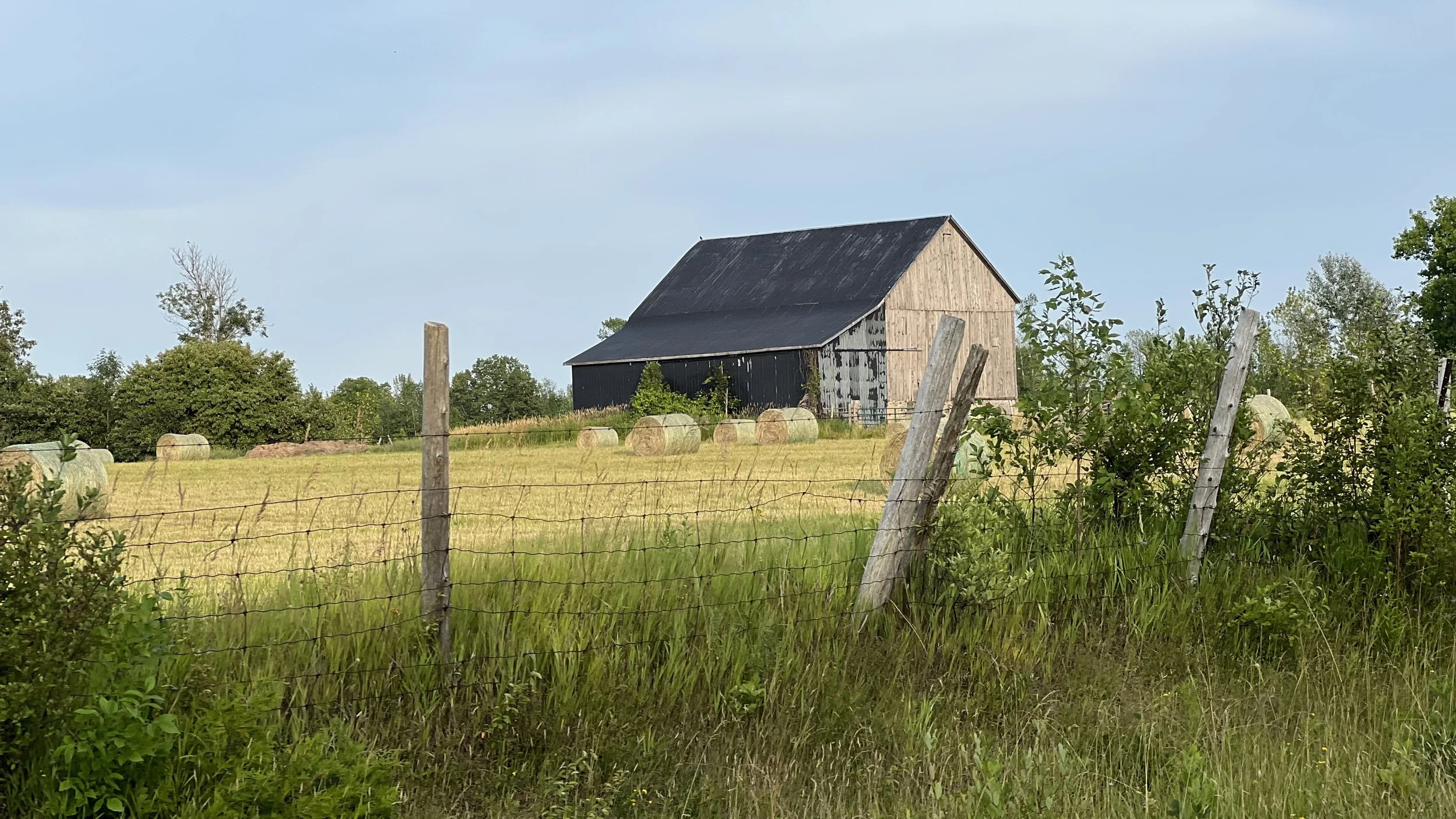
Before a Sculpture Begins
A sculpture often begins long before the first cut of a chisel. A photograph, an unusual posture or a technical problem can quietly occupy the mind for months. Here’s a glimpse into that process—and an experiment that may take my work beyond stone for a little while.
We’ve all heard that a picture is worth a thousand words, and when it comes to finding inspiration for a sculpture, I don’t think that can be understated.
Whenever I can see the end of an existing work somewhere on the horizon, my thoughts are already beginning to wander toward the next one. Ideas that have been quietly brewing in the background begin pushing their way forward—sometimes sparked by an animal, a posture, a photograph, or simply a shape that seems to carry a certain feeling.
Of course, imagining a sculpture and actually making it are two very different things.
Most ideas immediately bring with them a collection of technical questions. How can this particular form be translated into stone? Where are the weak points? How will it be mounted? What kind of base belongs beneath it? What finish will bring the stone to life? Should the colour remain natural, or would subtle tones help carry the idea further?
These thoughts tend to occupy my mind constantly. There are long stretches in my everyday work where my hands can continue almost automatically while my mind is free to wander, and sculpture has a habit of filling that empty space. Problems are turned around, abandoned, revisited and occasionally solved long before I ever put a tool to stone.
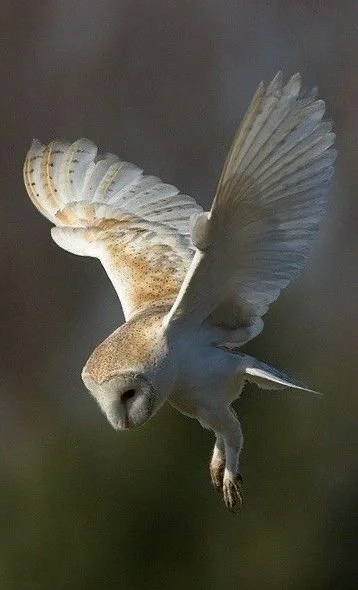
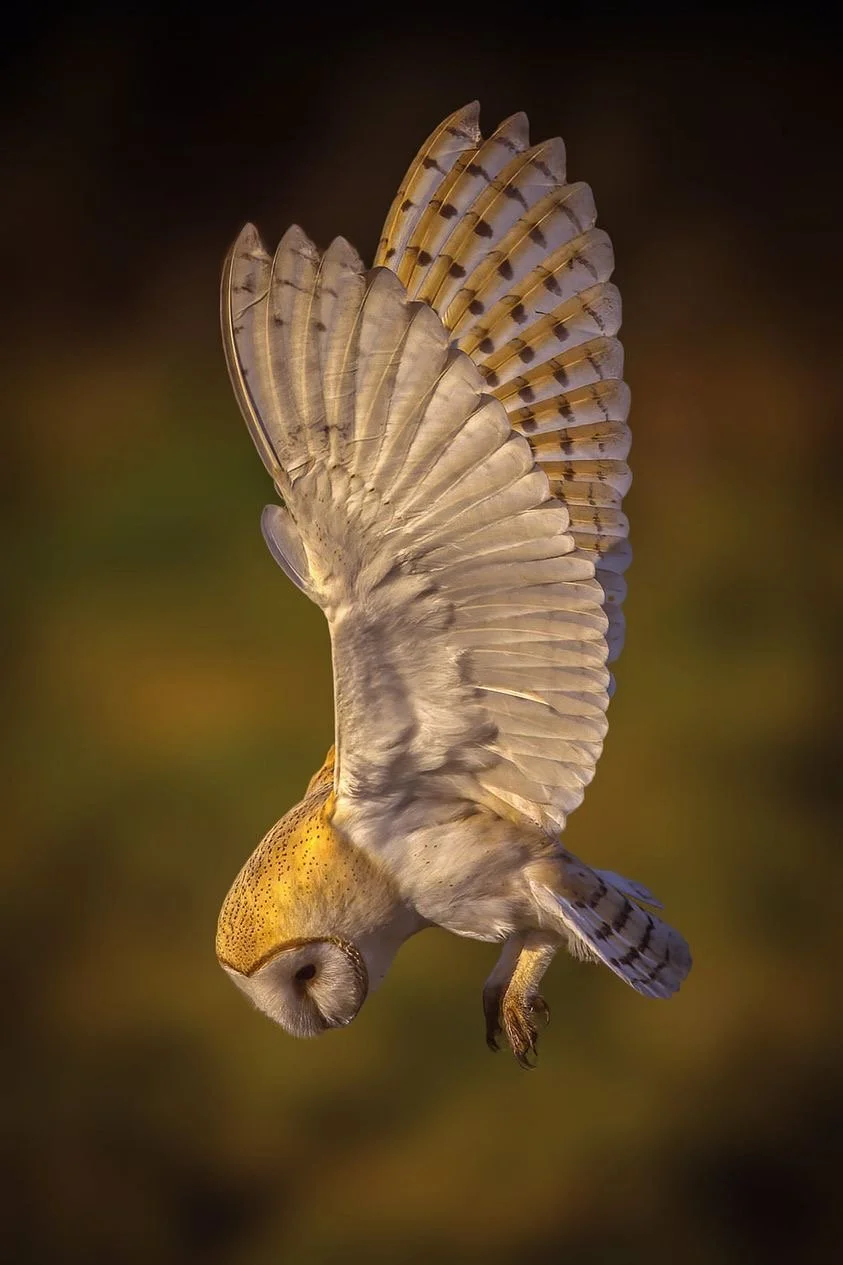
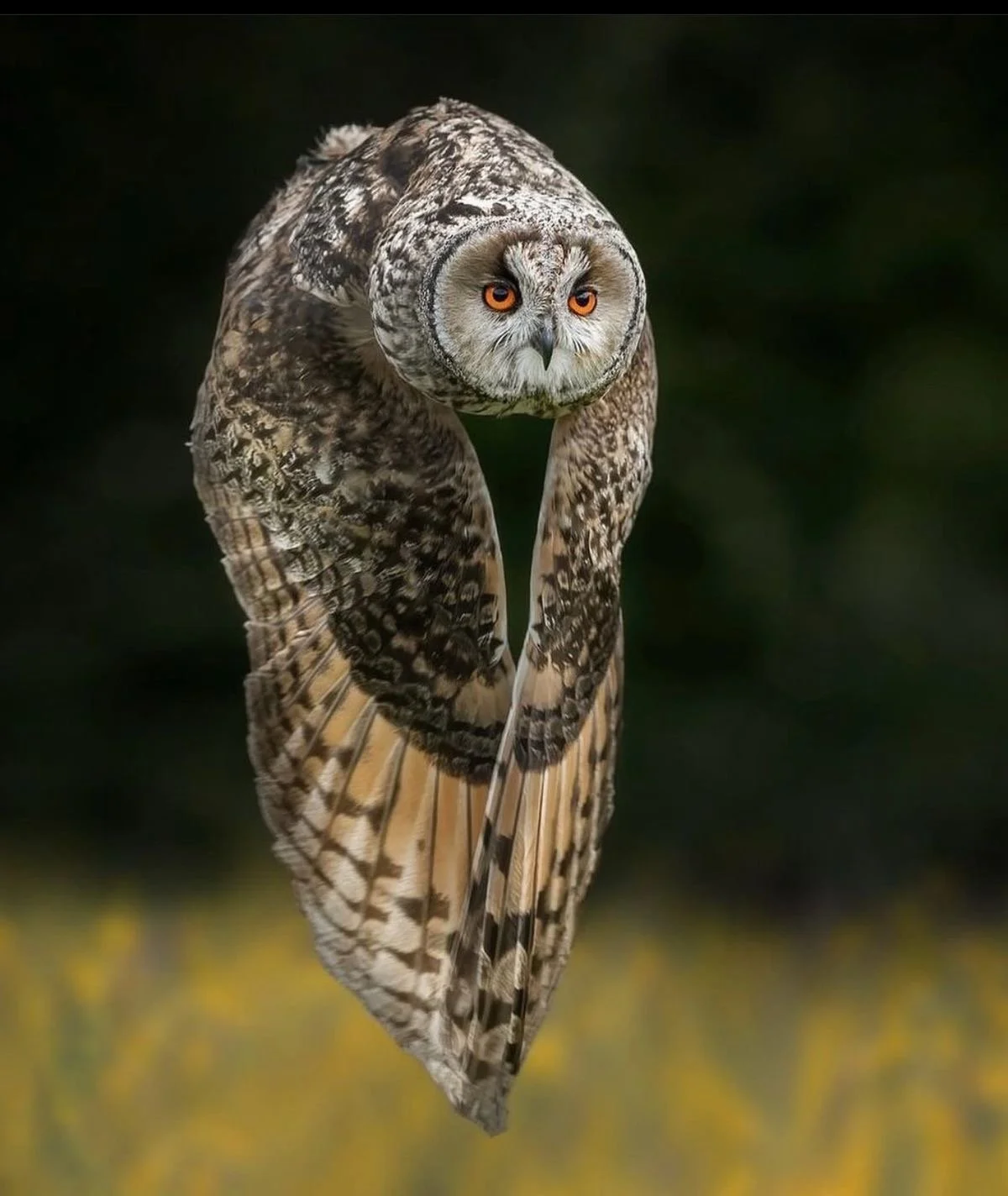
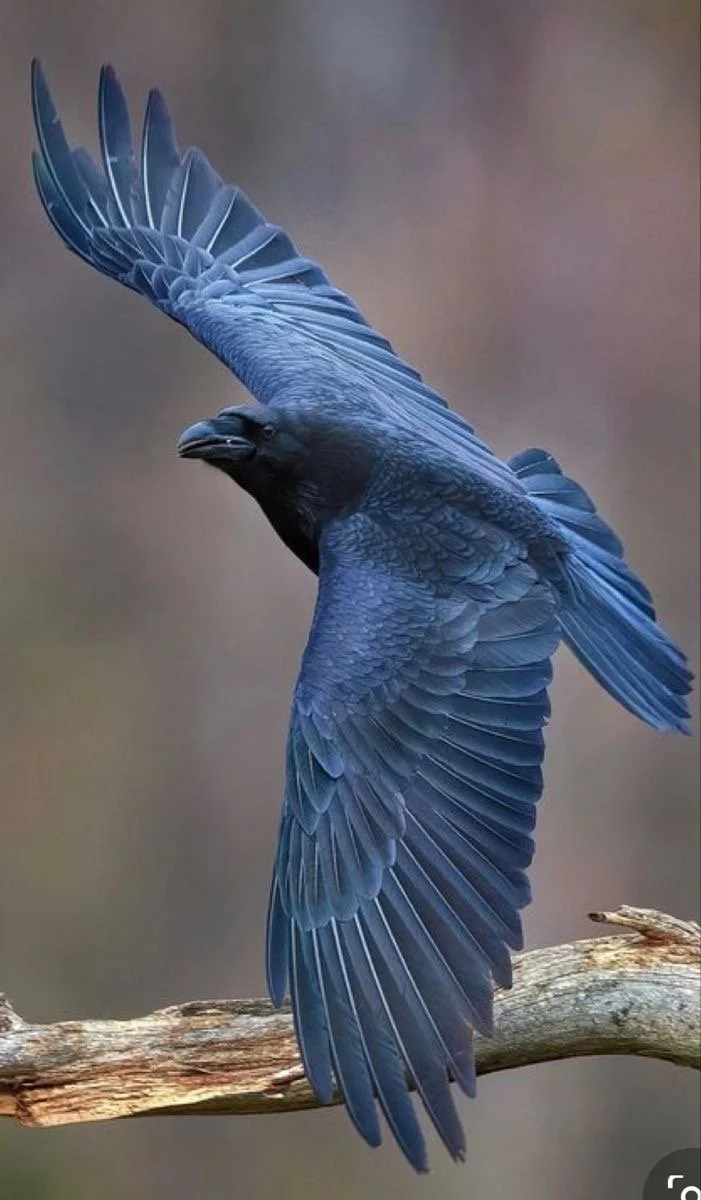
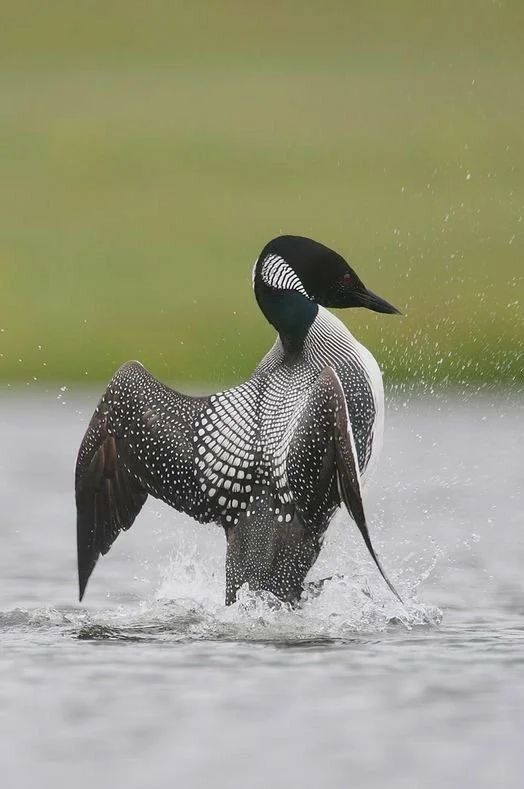
As some of you may know, I’m currently working on a fairly large blue heron sculpture. It still has miles to go, and I’ll share proper photographs when it finally reaches that point. But while that piece continues its slow journey toward completion, my attention has already been caught by several photographs of birds in wonderfully dynamic postures.
What interests me most about them is also what makes them difficult.
Wings, legs and extended feathers can create beautiful lines, but they also produce extremely thin and vulnerable sections. In stone, those graceful shapes quickly become structural problems. In previous sculptures I’ve sometimes been able to work around this by subtly bridging wing tips or feathers together, allowing the stone to support itself without sacrificing too much of the movement I was trying to capture.
But some ideas simply resist being forced into stone.
And that has led me toward a slightly different experiment.
I’ve been considering building a sculpture around a wire armature mounted to a base, then developing the form using epoxy putty and experimenting with mineral-filled surface finishes. I have no certainty yet about where that experiment will lead—which, admittedly, is part of what makes it interesting.
Epoxy putty itself isn’t entirely unfamiliar territory for me. Over the last couple of years I’ve used it quite extensively around the leg armatures of several owl sculptures and a raven piece. It has allowed me to create a much more seamless transition between stone, steel and the wooden base, particularly when combined with careful shaping and colour matching.
Taking that material from a supporting role and allowing it to become the primary sculpting medium would be a much larger step.
It would also open possibilities that stone naturally resists: thinner forms, extended wings, more dramatic negative spaces and postures that might otherwise be too fragile to attempt. Stone will always remain at the heart of what I do, but there is something exciting about occasionally stepping outside the familiar boundaries of a material and seeing what another process might make possible.
Perhaps the experiment will succeed. Perhaps it will send me straight back to stone with a renewed appreciation for it.
Either outcome has value.
For what it is, I hope this offers a small glimpse into the part of sculpture that happens before a sculpture really exists—the accumulation of photographs, shapes, technical problems, half-formed ideas and quiet experiments that eventually begin to converge.
A finished work may appear to begin with the first cut of a chisel.
More often, its genesis started somewhere much earlier, while the hands were busy and the mind was wandering.
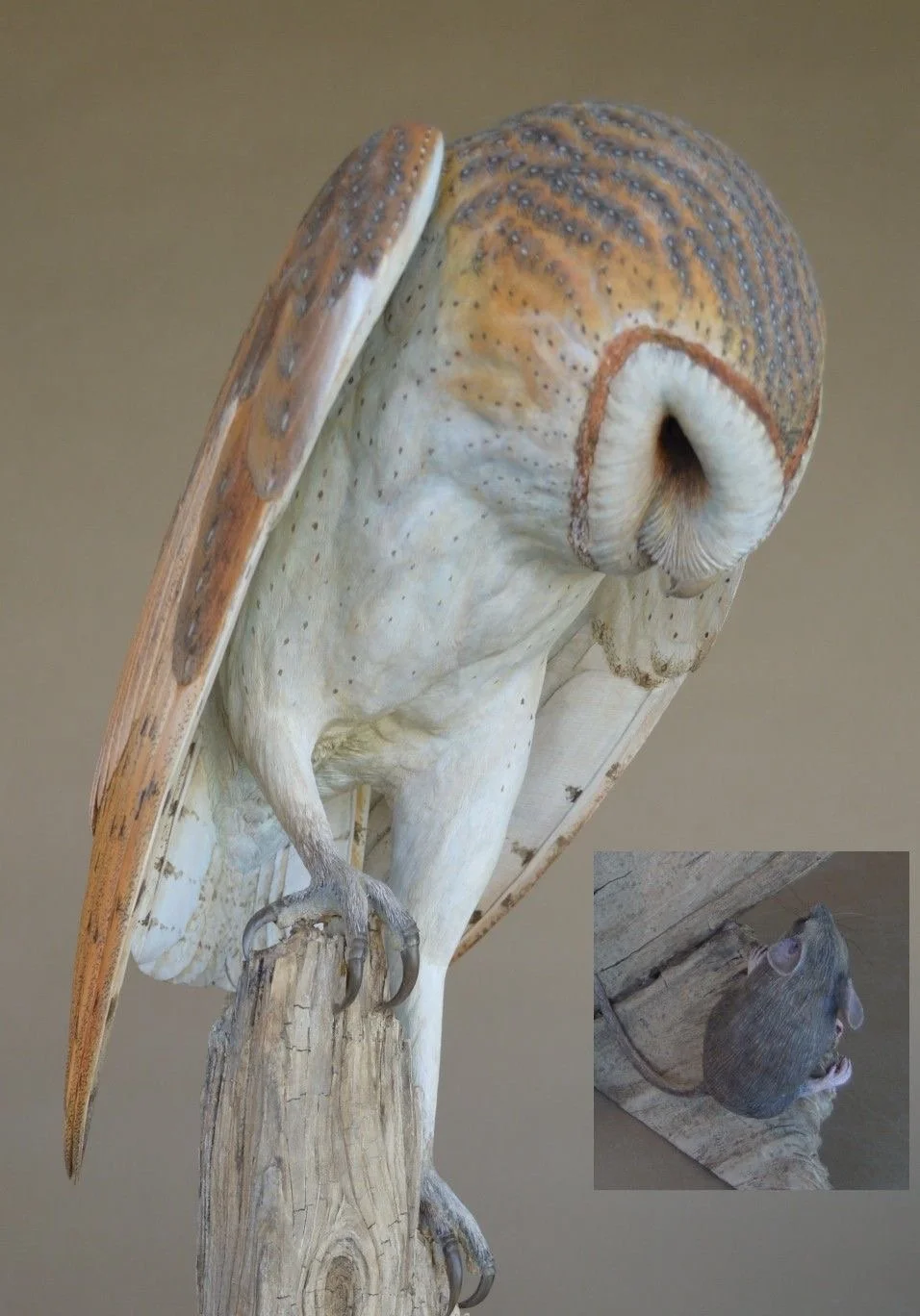
The Value Connection
What makes something feel real to us? In an age of endless reproduction, generated imagery and instant creation, perhaps we are beginning to recognize that the value of art lies not only in what we see, but in the human presence behind it. The material, the labour, the intention and the story of its making all become part of the work.
I have been thinking lately about what makes something feel real to us.
Not merely real in the sense that it exists, but real in the deeper sense—that it carries something of the person, place, experience, or intention from which it came. I think this connection is part of what makes art alive.
We live in a time when images and stories can be produced almost instantly, and when it has become increasingly difficult to know what we are looking at. Photographs can be altered, stories fabricated, and images generated without any physical encounter between an artist and the subject they appear to represent. The phrase AI slop has emerged to describe some of this material, but perhaps the more interesting question is not whether something was made with AI. It is why we have begun to hunger so strongly for evidence of authenticity.
I experienced this myself recently. I came across a story online that seemed moving and entirely plausible. It took only a few minutes before I began noticing inconsistencies in the images and realized that what I was looking at had been constructed rather than witnessed.
The strange thing was that the story itself had been carefully designed to produce a feeling. In that sense, it had succeeded. Yet once I understood that the apparent evidence was fabricated, something disappeared. The emotional connection I had formed with it could no longer rest on the same foundation.
Perhaps this is because we do not only value the image. We value the story behind the image.
What makes a work of art real?
Consider a great work from the past. We may stand before a sculpture such as Michelangelo’s David and admire its proportions, its surface, its physical presence and its extraordinary technical achievement. But our understanding of the work is also inseparable from the knowledge that a particular person stood before a particular block of marble and devoted an enormous portion of his life to transforming it.
The sculpture carries more than an image.
It carries a history.
We know something about the artist, his ambitions, his struggles, his convictions and the world in which he worked. We know that the marble resisted him. We know that decisions were made with a chisel in hand. The object before us becomes a meeting point between our own experience and the life of another person who existed centuries before us.
This does not mean that every great work must be made entirely by one pair of hands. The Renaissance workshops themselves complicate that idea. Raphael employed a substantial studio, and Michelangelo also worked with assistants at various points in his career. Art has never been quite as simple as the romantic image of the solitary genius.
What matters is something deeper than the number of hands involved.
It is the presence of conviction.
The difficulty of the thing
There is another reason we value handmade objects: we understand that they cost something.
Time is one of the most difficult things for us to fake.
When we encounter a hand-carved piece of stone, we can sense that the material demanded a particular kind of attention. A mistake cannot simply be undone with a keystroke. The stone has its own grain, fractures, density and character. The artist has to respond to what is actually there.
This relationship between resistance and intention is part of what interests me about sculpture.
The finished object is not simply an image that has been reproduced in a material. It is the consequence of a sustained relationship between the artist and the material.
That distinction has become increasingly meaningful in a world where almost anything can be reproduced.
A duplicate of a bronze sculpture may be visually indistinguishable from another cast, yet its meaning can be different depending upon its place within the artist’s body of work, its provenance, its edition, and the story of its creation. Value does not necessarily reside in physical uniqueness alone. It can reside in the relationship we understand the object to have with its maker.
The same is true of many things outside of art.
We tend to treasure objects that reveal something about where they came from.
The temptation of the shortcut
Artists have always looked for ways to overcome limitations.
The history of art is filled with techniques, tools, assistants, templates, casts, studies, machines and methods that allow an artist to accomplish something that would otherwise require an impossible amount of time. There is nothing inherently wrong with this. The history of making is, in many ways, the history of finding better ways to bring an idea into physical form.
The danger comes when the method begins to replace the conviction.
A shortcut can preserve an artist’s intention, or it can become a substitute for having one.
That distinction is increasingly difficult to see.
Perhaps this is why there is so much suspicion surrounding automatically generated imagery. The problem is not necessarily the technology itself. Behind any image there can still be a human mind, an idea, an intention and even a genuine emotional impulse. But when the connection between those things and the finished work becomes difficult to understand, we instinctively begin searching for what is missing.
We want to know where it came from.
We want to know why it exists.
We want to know whether someone cared enough to make it.
What survives
This is part of what draws me to the older traditions of making.
Stone, wood, bronze, clay and other enduring materials have been carried forward through generations not simply because they are old, but because they continue to give the artist something to wrestle with. They impose conditions. They resist. They record touch. They reward patience.
There is something humbling about working within those limitations.
A stone does not care what I intended to make. It gives me what it gives me, and the work becomes a conversation between that reality and the vision I brought to it.
Perhaps this is one reason art can remain meaningful long after the artist is gone.
The material survives.
The marks survive.
And, if the work is successful, something of the person survives with them.
This is the connection I think we are really searching for.
Not merely proof that something was handmade. Not nostalgia for an older technology. Not even an objection to the new.
Rather, we are looking for the evidence of a human presence behind the thing we are seeing.
We want to feel that someone stood there.
That someone looked.
That someone struggled with the material.
That someone had something to say.
And perhaps this is ultimately what gives art its life: not the medium itself, but the light that passes through it.
Stone can carry it.
Bronze can carry it.
Wood can carry it.
So can an image on a screen.
But whatever the medium, the most lasting work begins with something that cannot be manufactured for us—the genuine conviction of the person who made it.
Forging the Legs of a Blue Heron
The heron still has a long way to go. There is carving left to do, feet to shape, steel to finish, colour to build and water to create.
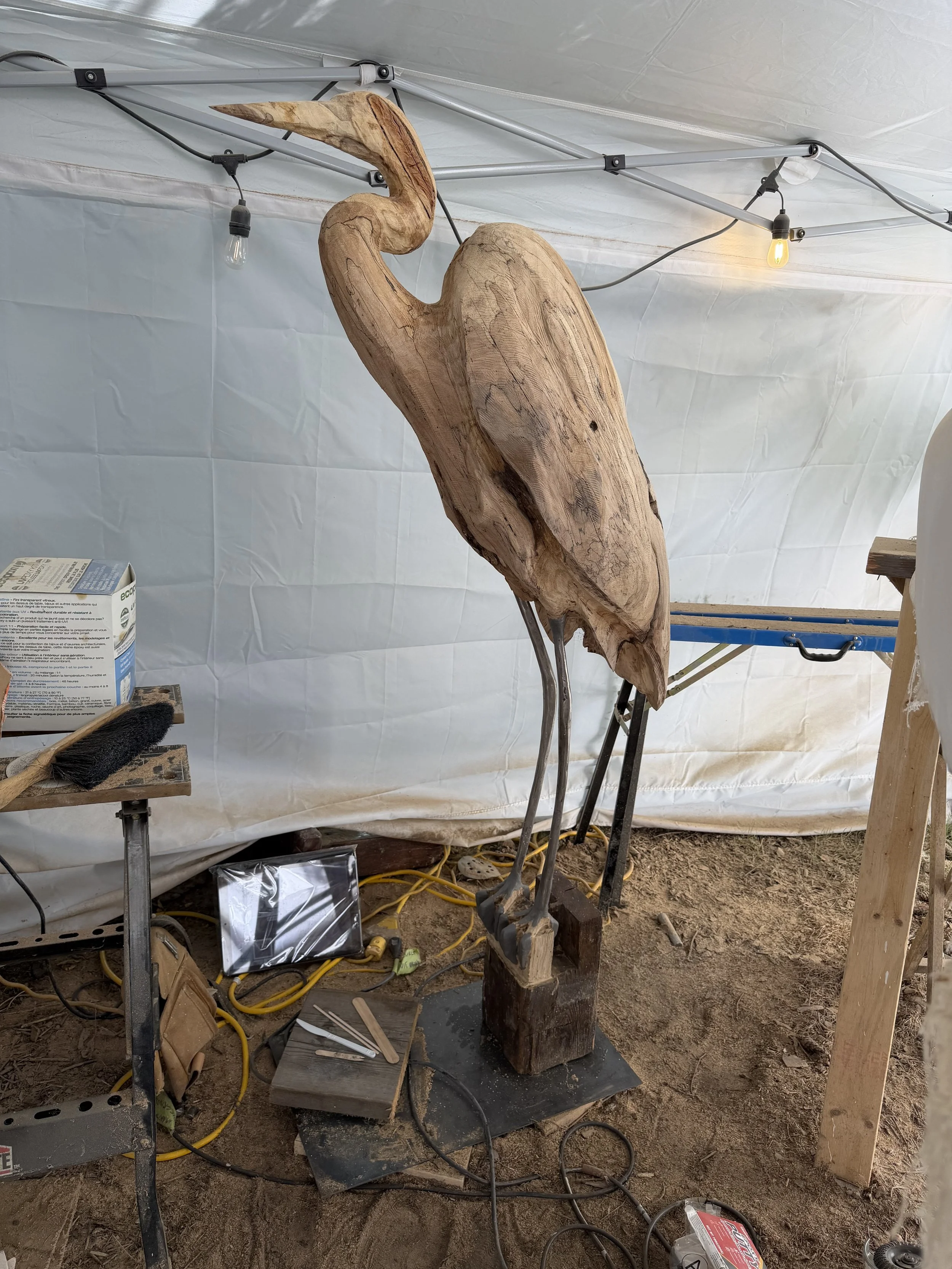
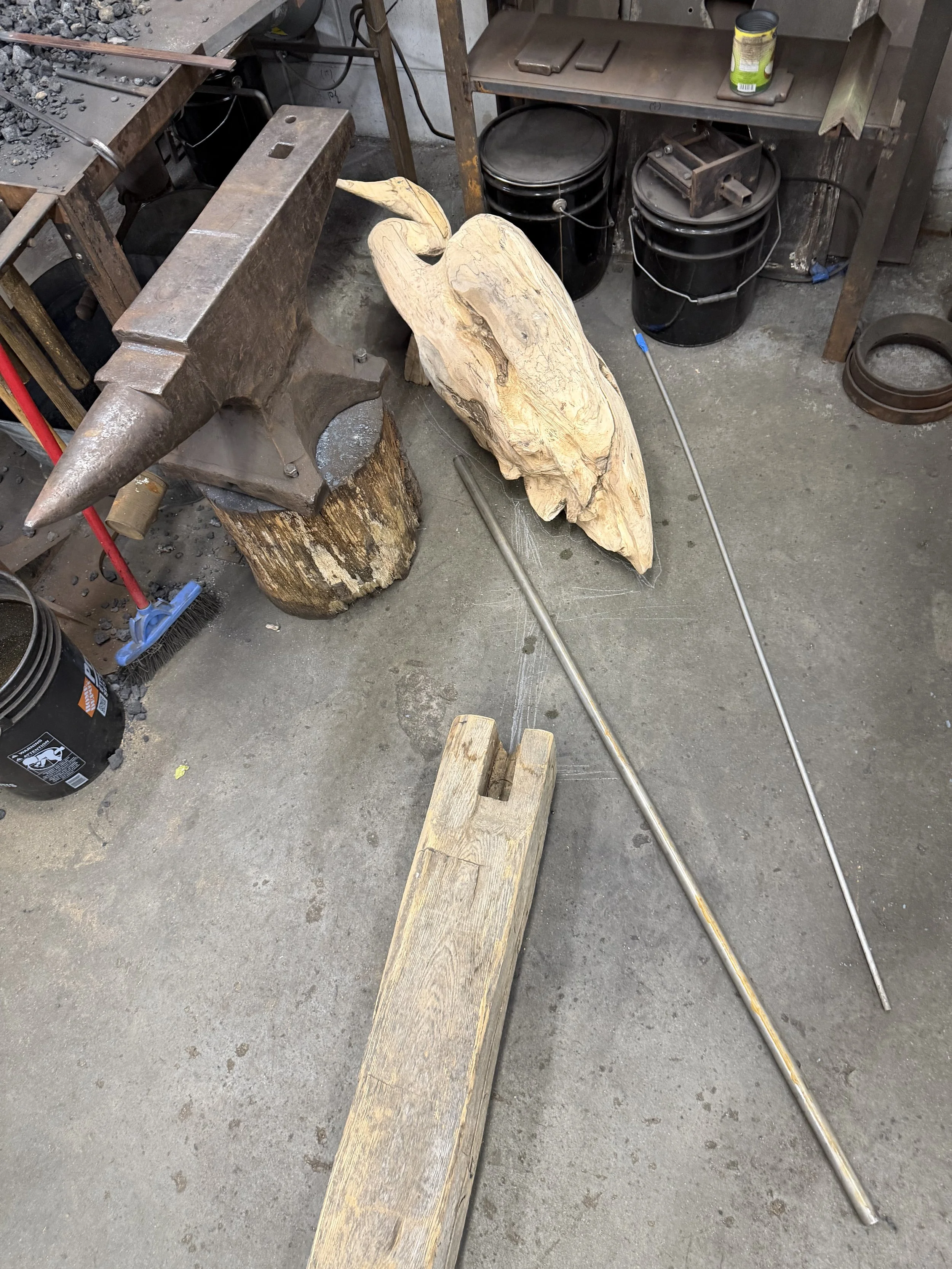
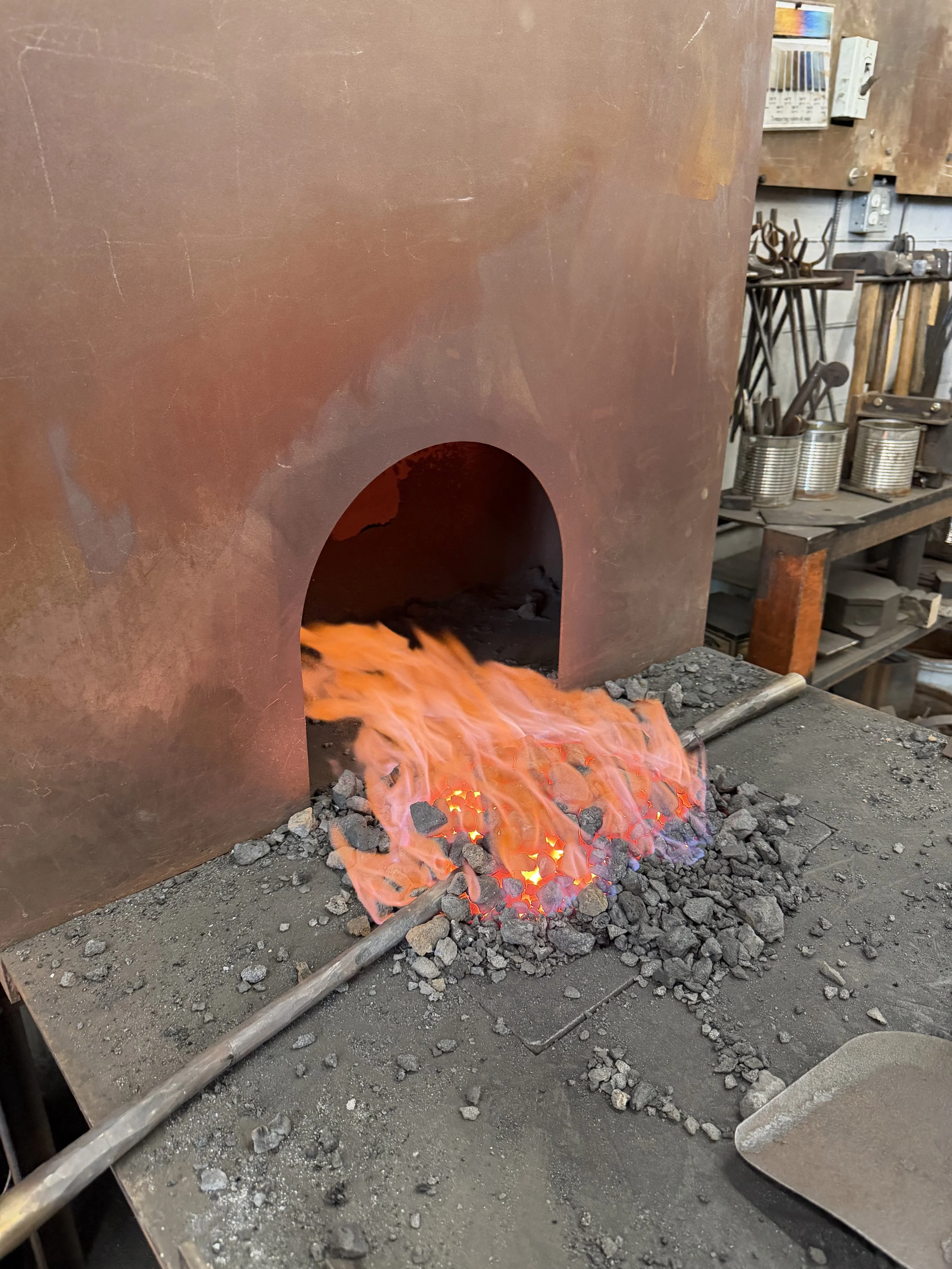
About four weeks ago, I made the trip to a blacksmith shop to tackle an unusual part of a sculpture that has been occupying my studio for quite some time: the legs for a large blue heron carved from spalted maple.
This piece began sometime last winter and has been a particularly meaningful project for me. It is the first sculpture where I started with a chainsaw and gradually worked my way down through smaller and smaller tools, slowly revealing the form hidden within the wood. After months of carving, I had finally reached the point where I could begin to feel a real sense of accomplishment.
The legs, however, presented a problem.
I hadn’t done any serious blacksmithing since 2004, when I studied the craft at the Haliburton School of Art and Design. Fortunately, I have the good fortune of knowing someone who could help me get back into it: Sandra Dunn, who runs the blacksmith shop I visited—and, somewhat ironically, was also one of my teachers all those years ago.
It was a wonderful opportunity to return to the forge with someone who had originally taught me the craft.
We fired up the coal forge and selected the stock for the legs: one-inch stainless-steel rods. Sandra also generously let me make use of her pneumatic hammer, which made the work considerably faster than it would have been by hand.
Even so, the stainless steel was a completely different beast from the wrought iron I remembered working with. It was incredibly hard and required a tremendous amount of effort to move. What I had imagined would be a roughly five-hour job quickly became something closer to a two-day undertaking.
And, naturally, I managed to make things a little more complicated.
At one point on the first day, I left one of the pieces in the forge a little too long and managed to disintegrate part of the leg. Thankfully, Sandra and her crew were able to weld it back together. The repair disappeared remarkably well—once finished, you would never know the leg had been broken in half, and the joint is structurally sound.
After all that forging, the next challenge was figuring out how to actually mount this enormous bird.
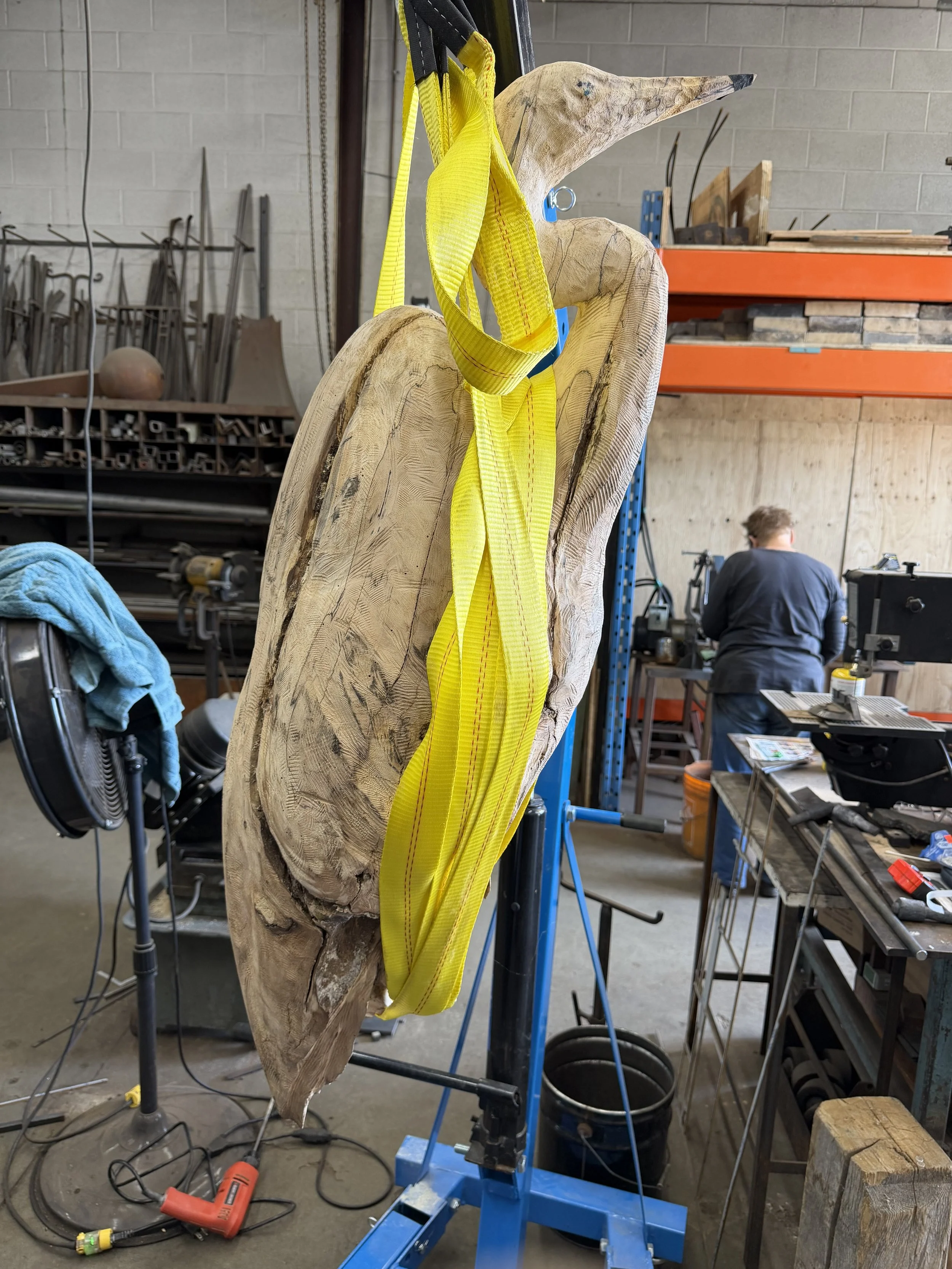
The wooden sculpture stands roughly three and a half feet tall, so I used an engine hoist to lift the piece into the air while I carefully located and drilled the mounting holes through both the reclaimed wood base and the heron itself. Getting the angles right took some patience and careful attention to detail, but eventually everything came together.
And then came the moment I had been waiting for.
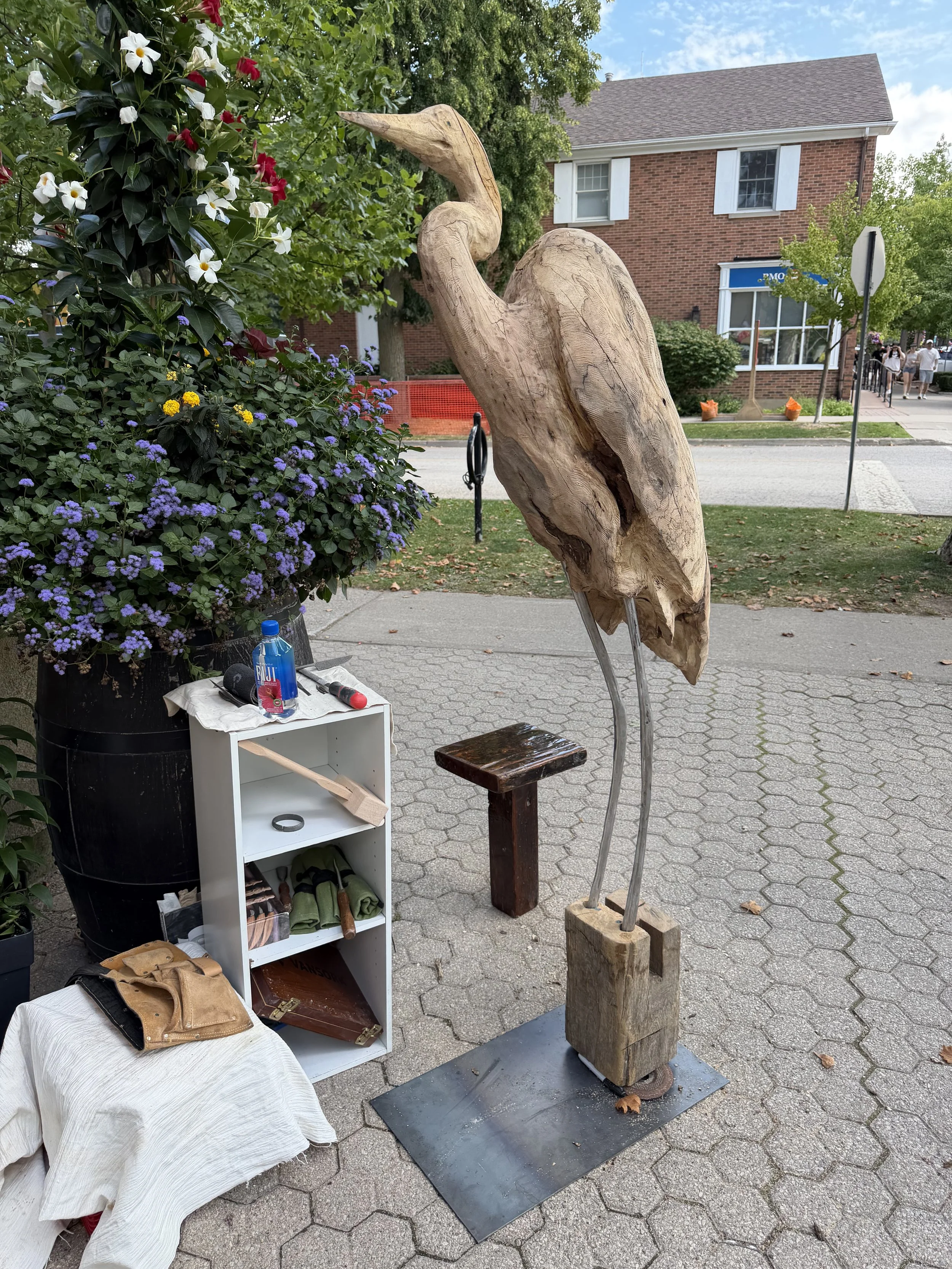
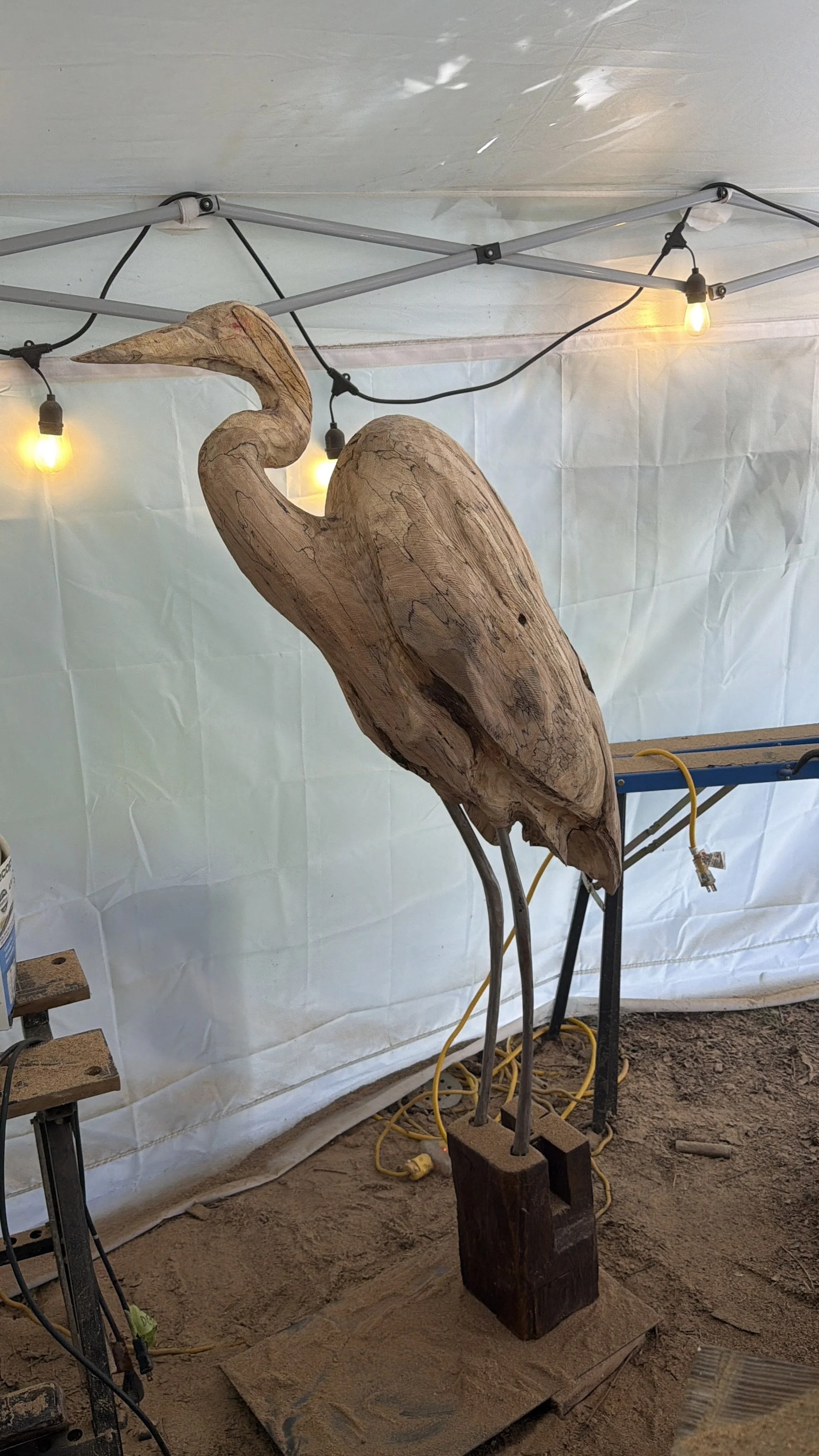
The heron stood on its own.
For a sculpture this large, though, simply standing isn’t quite enough. I need to be able to continue carving without worrying about the whole thing shifting or tipping, so I also had Sandra help me fabricate a steel support hidden within the reclaimed wood base.
Three half-inch wrought-iron rods will disappear into the base and connect the sculpture securely to the bottom. The intention is that none of this structure will be visible when the piece is finished. Instead, the base will create the illusion that the heron is standing in shallow water, with its legs disappearing naturally into the surface.
There is still quite a bit of work ahead.
I’ll carve the heron’s feet directly from wood and paint them to blend with the stainless-steel legs. The legs themselves will receive a dark, black-grey finish that transitions naturally into the feet and the colours of the bird.
Once the carving is complete, the heron will be painted with a gradient inspired by the natural tones of a blue heron—richer colour toward the upper portion of the bird while leaving the lower portion closer to the natural warmth of the maple.
The final touch will be the base.
I plan to use a river-flow epoxy over the stainless-steel support so that the structure disappears beneath a translucent, water-like surface. The goal is for the finished sculpture to give the impression of a blue heron standing in water, while still allowing the character and grain of the reclaimed wood to remain part of the piece.
It is a big project.
But that’s often the way these things happen. You start with an idea that seems manageable, and somewhere along the way it becomes considerably more complicated than you anticipated. Then, once you’ve invested enough time into it, you can’t really stop. You just keep following the piece toward whatever it wants to become.
Interestingly, this sculpture wasn’t originally intended to be a blue heron at all.
I began it as a great egret. Somewhere well into the carving process, however, I realized that the height and proportions of the sculpture had grown beyond what would make sense for a great egret. Rather than forcing the sculpture to conform to the original idea, I decided to let the piece become what its proportions were suggesting.
The blue heron made much more sense.
Sometimes the material has a better idea than the artist.
There is another reason I’ve had the opportunity to make so much progress on this piece lately.
My stone-carving course at the Haliburton School of Art and Design was unfortunately unable to run this year because we didn’t reach the minimum enrollment. It was disappointing, particularly because I really enjoy returning to Haliburton and introducing people to the craft of stone carving.
The timing would have been ideal, too. The course was scheduled for mid-August, when the temperatures are generally a little more forgiving than they can be in June or July. Since the course takes place outdoors in a tent, cooler weather makes a considerable difference.
But that’s the nature of teaching and scheduling. Sometimes a particular week simply doesn’t line up with enough people’s vacation plans.
Hopefully the course will have another chance to run next year. I would love to return and share the process of taking an idea from a rough piece of material and gradually turning it into something tangible.
In the meantime, perhaps everything happened for a reason.
The cancelled course gave me a little unexpected time to return to this heron and push the project further than I otherwise might have.
So, for now, I’m enjoying the process and looking forward to seeing where it leads.
There is still plenty of carving, forging, drilling, painting and finishing ahead before this bird is ready to leave the studio. I’ll share more photographs and progress as the sculpture continues to take shape.
For now, at least, the heron has legs—and it can finally stand on its own.
Finding Life in Form
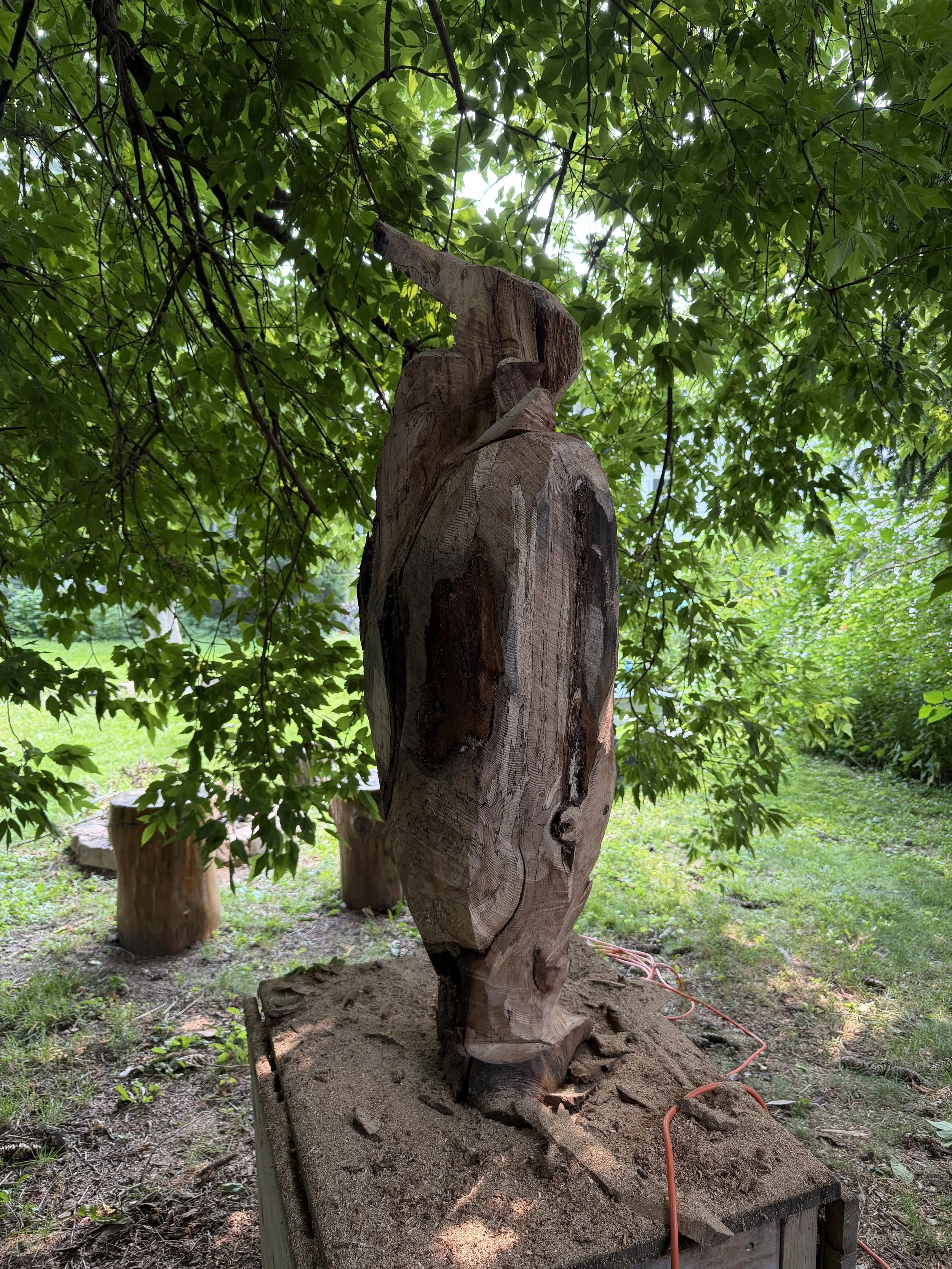
I have been thinking lately about something that I believe is fundamental to sculpture: the importance of finding forms that feel alive.
When we carve stone, we are asking something relatively inert to appear as though it contains life. Whether the subject is an animal, a plant, a human figure, or something completely abstract, the form itself must possess some quality of movement, growth, tension, rhythm, or balance.
Before the detail, there must be life in the shape.
I was reminded of a story from high school. A young student was painstakingly painting a field of poppies, carefully placing each flower as though she were planting them one by one. She had invested enormous effort into the individual flowers, but had become absorbed in the details.
Our art teacher came over and told her that the painting needed ground beneath it. Then, to demonstrate what he meant, he took a broad brush loaded with darker tones and swept it across much of the painting.
She was horrified.
Yet there was something important in that moment. Sometimes, in our effort to perfect the individual parts, we lose sight of the thing that makes the whole work function. Details are important, but they must serve the larger form. Every mark has to belong to something.
I think sculpture works in much the same way.
A sculpture can be technically accurate, beautifully finished, and full of carefully rendered details, yet still feel strangely lifeless. Conversely, a very simple form can immediately capture our attention without telling us exactly what we are looking at.
Try standing thirty feet away from a sculpture less than a foot tall. Before asking what it represents, ask yourself whether the shape itself makes you want to come closer.
Perhaps it resembles a shell, a growing plant, a folded body, a wave, a seed, or something you cannot quite name. What matters is that some quality within the form catches us. We recognize something—not necessarily an object, but a quality of life.
Nature is filled with forms that do this. Curves, spirals, branching structures, asymmetry, repetition, rhythm, growth and balance appear everywhere. We are surrounded by shapes that communicate movement and vitality without having to literally depict a living thing.
This is part of what makes nature so compelling to us. We don't simply look at it. We respond to it.
As sculptors, I believe we can use that response.
The challenge is not simply to make stone look like something. It is to find the underlying form that makes that thing—or even an abstract shape—feel alive.
This becomes especially important when working in stone. Stone is hard, heavy, and fundamentally inert. Yet through carving, we can give it the appearance of movement, softness, growth, tension, or even breath. We can make something that cannot move appear as though it is about to.
That, to me, is one of the great possibilities of sculpture.
The search for those living qualities within a form should therefore come before almost everything else. Detail, texture, and finish can enhance a sculpture, but they cannot rescue a form that never had life in it to begin with.
So when you are outside, slow down and look.
Notice the curve of a branch, the spiral of a shell, the posture of an animal, the way a leaf unfolds, or the shape of a stone worn by water. Pay attention to the forms that draw your eye before you even understand why.
Don't necessarily try to copy them.
Study them.
Feel what it is about them that suggests life, and then carry that understanding back into your own work.
Because perhaps the real goal of carving is not to make stone resemble life.
It is to make stone feel alive.
Taking a Break to Learn Another Craft
And now for something completely different.
I’ve stepped away from stone carving for a little while.
Partly, it’s to make sure I don’t compete with myself creatively. Sometimes the best thing an artist can do is forget what they know for a while, buy the tools they’ve always wanted, learn something completely different, and return with fresh eyes. That’s where I find myself.
This past week was… potty training week.
Our two-and-a-half-year-old daughter has been learning one of life’s great milestones, and my wife and I have spent more time encouraging someone over a toilet than I ever imagined possible. I’ll spare you the details.
Being home has its own challenges. Cabin fever has a way of convincing me I should tackle three projects at once. Instead, I’m learning patience. I’ve been spending an hour or two each day making quiet progress on a few different things.
One is the final stages of a new Veritas Composite sculpture.
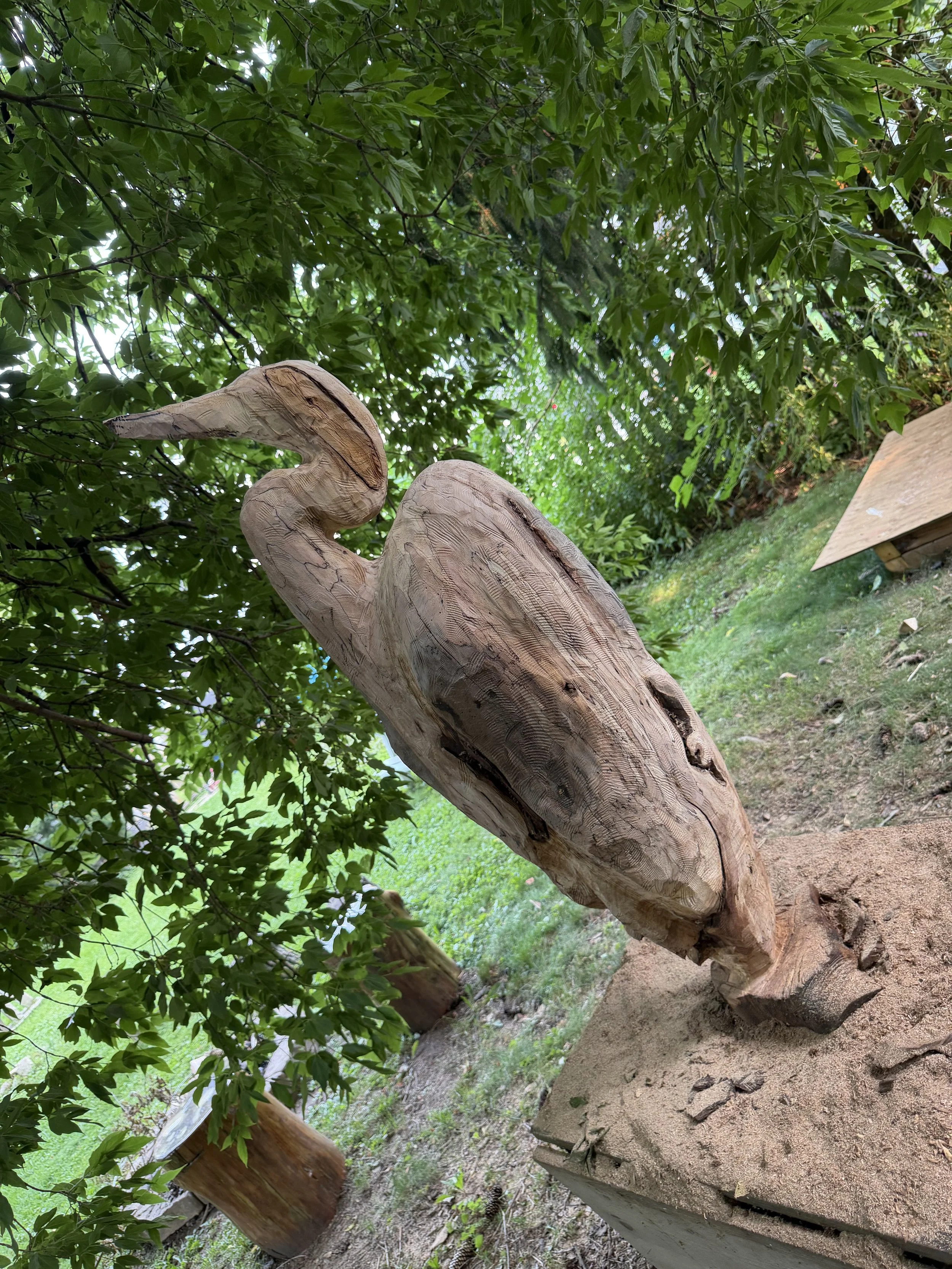
Another is a large Great Egret—slightly larger than life, with a body measuring nearly three and a half feet before the legs are even attached. I’ve reached out to an old blacksmith instructor to help fabricate the steel legs and base. It wasn’t until I stood back and looked at the body that I realized just how ambitious this sculpture had become. Sometimes a project quietly grows into something much bigger than you expected.
The third project, however, has completely captured me.
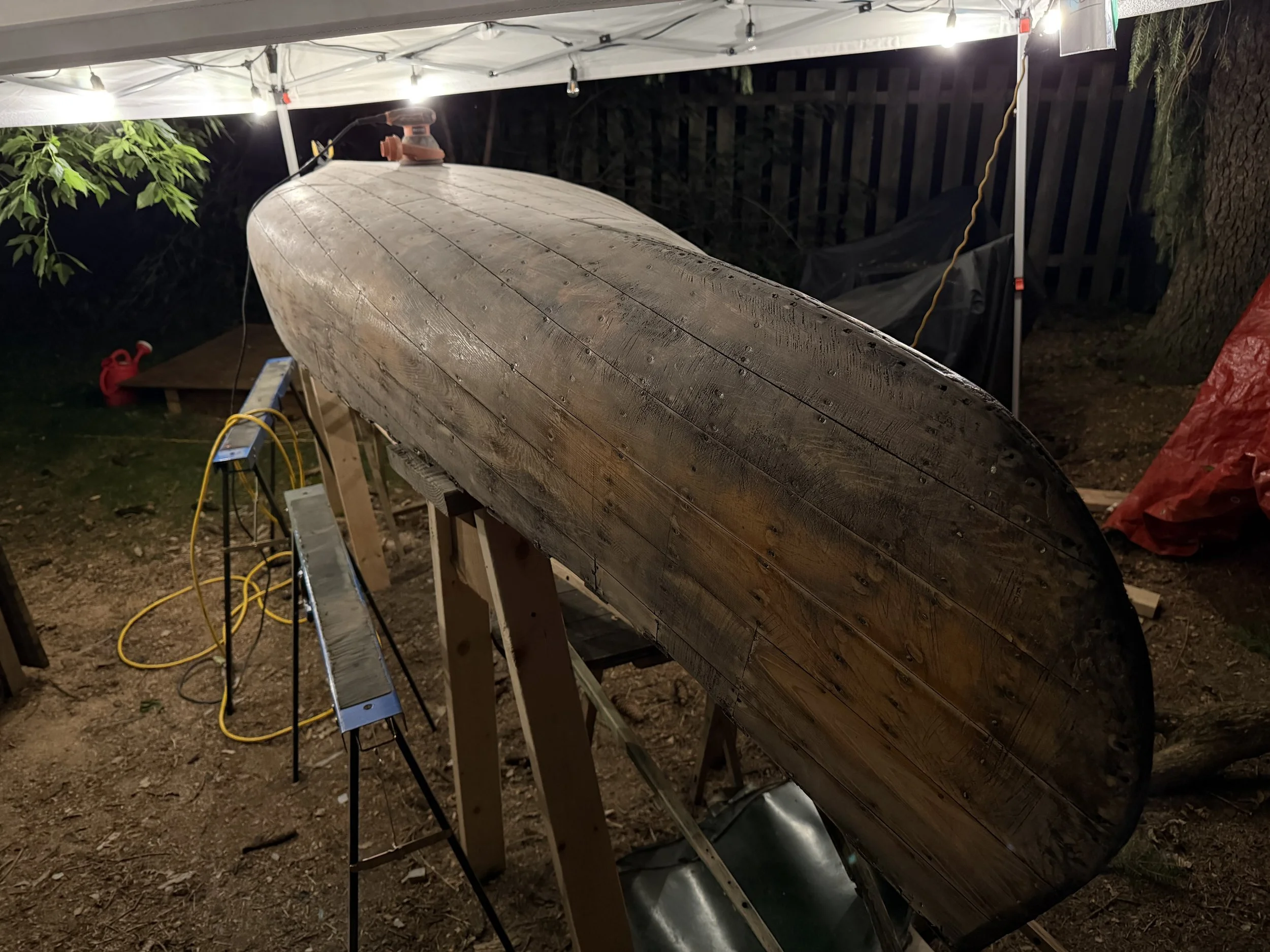
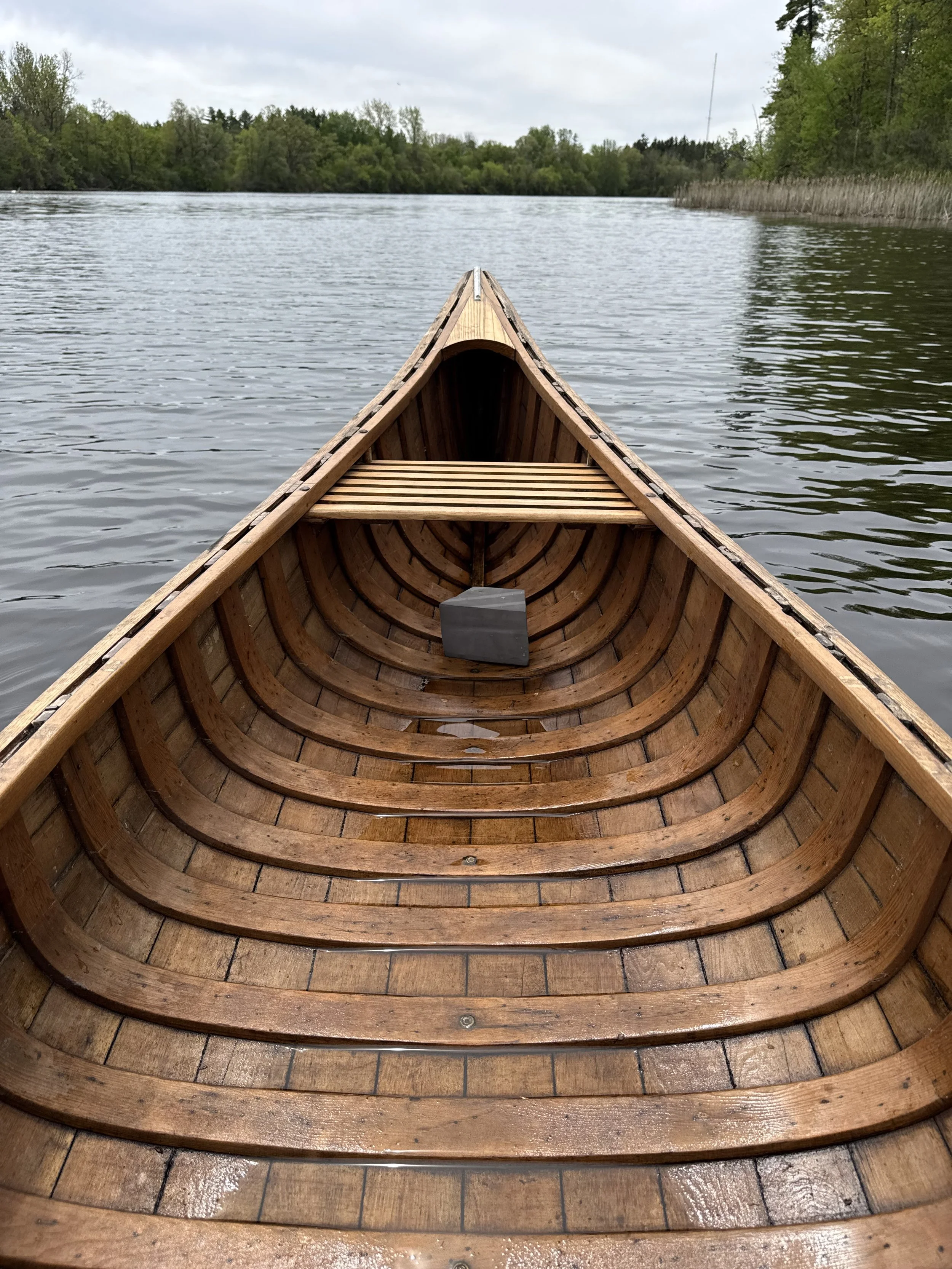
It’s a 17-foot cedar-canvas canoe that I believe is a Chestnut Prospector, though there is no certain way to confirm it. What I do know is that its craftsmanship is exceptional. Details like the single-piece inwales, outwales, and keel reveal a level of work that is becoming increasingly rare.
The more I study it, the more I feel responsible for restoring it properly.
I bought one of the most comprehensive books I could find on cedar-canvas canoe restoration. At first I thought I was simply removing the old canvas, restoring the wood, and installing new canvas. I quickly discovered that every one of those steps branches into dozens more. There are countless small decisions that determine whether the canoe will last another few years—or another generation.
It has been humbling.
I won’t mention how much I’ve spent gathering supplies.
But I still remember the first time I slid the canoe into the water after buying it for $750 from a seller on Kijiji. He hadn’t cared for it the way he claimed, but he was honest about one important thing: before he owned it, it had spent decades hanging safely in the rafters of his aunt’s barn. Because of that, it survived in remarkably good condition compared with most cedar-canvas canoes of its age.
The first paddle made me smile.
Not because it was perfect, but because I could already see what it could become.
Working on this canoe has become my break from stone carving, but it has also reminded me why I love making things in the first place. I’m learning another person’s craft. I’m studying the decisions made by builders long before I was born, trying to understand why each piece was shaped the way it was.
It also connects me to Canada’s history. Long before cedar-canvas canoes, voyageurs travelled incredible distances in enormous birchbark canoes held together with spruce roots, bark, and pine pitch. The cedar-canvas canoe became the evolution of that tradition—a practical, durable craft built for hard travel and generations of use.
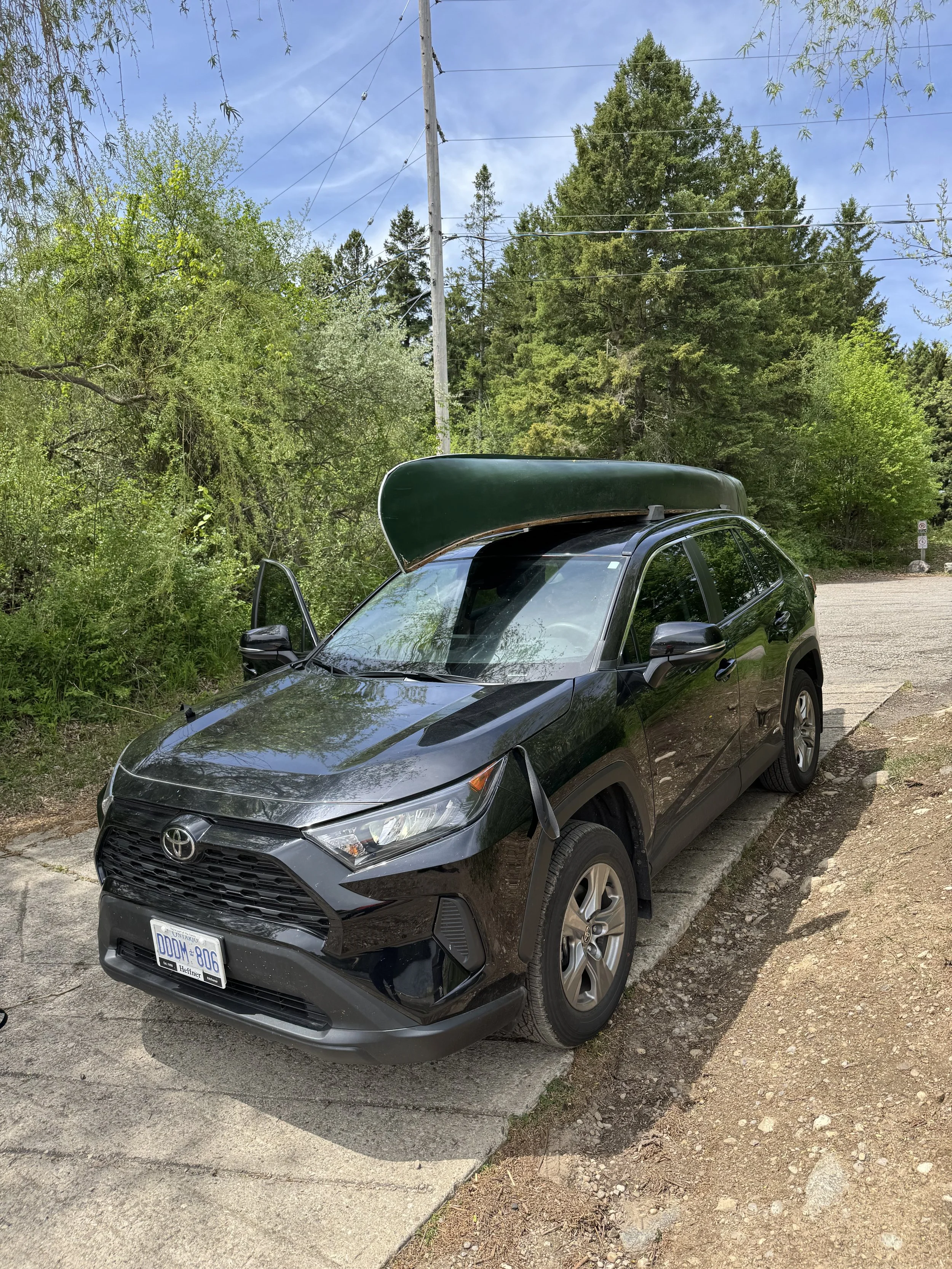
Mine is only seventeen feet long, small enough that I can load and paddle it alone. It reminds me of the sixteen-foot plastic canoe my parents owned when I was younger. I spent many days on the water in that canoe, and restoring this one feels like reconnecting with a part of myself I hadn’t realized I missed.
The funny thing is that none of this feels very different from stone carving.
Both are old crafts.
Both ask for patience over speed.
Both reward careful hands more than hurried ones.
We live in a time that celebrates instant results, but the things that endure still ask for time. Coffee beans are still grown, picked, roasted, and prepared with care. Farmers may harvest with machinery now, but that simply shifts the craftsmanship into designing, building, and maintaining the equipment that makes the harvest possible.
The work never truly leaves our hands.
Whether we’re carving stone, restoring a canoe, growing food, or building something entirely different, our feet are still planted in the same earth as those who came before us.
So here’s to the craft—whatever yours may be.
May you follow it farther than you ever imagined it could take you.
And when the work asks for patience, give it freely.
One careful step at a time, until the path has finished telling you where it was leading all along.
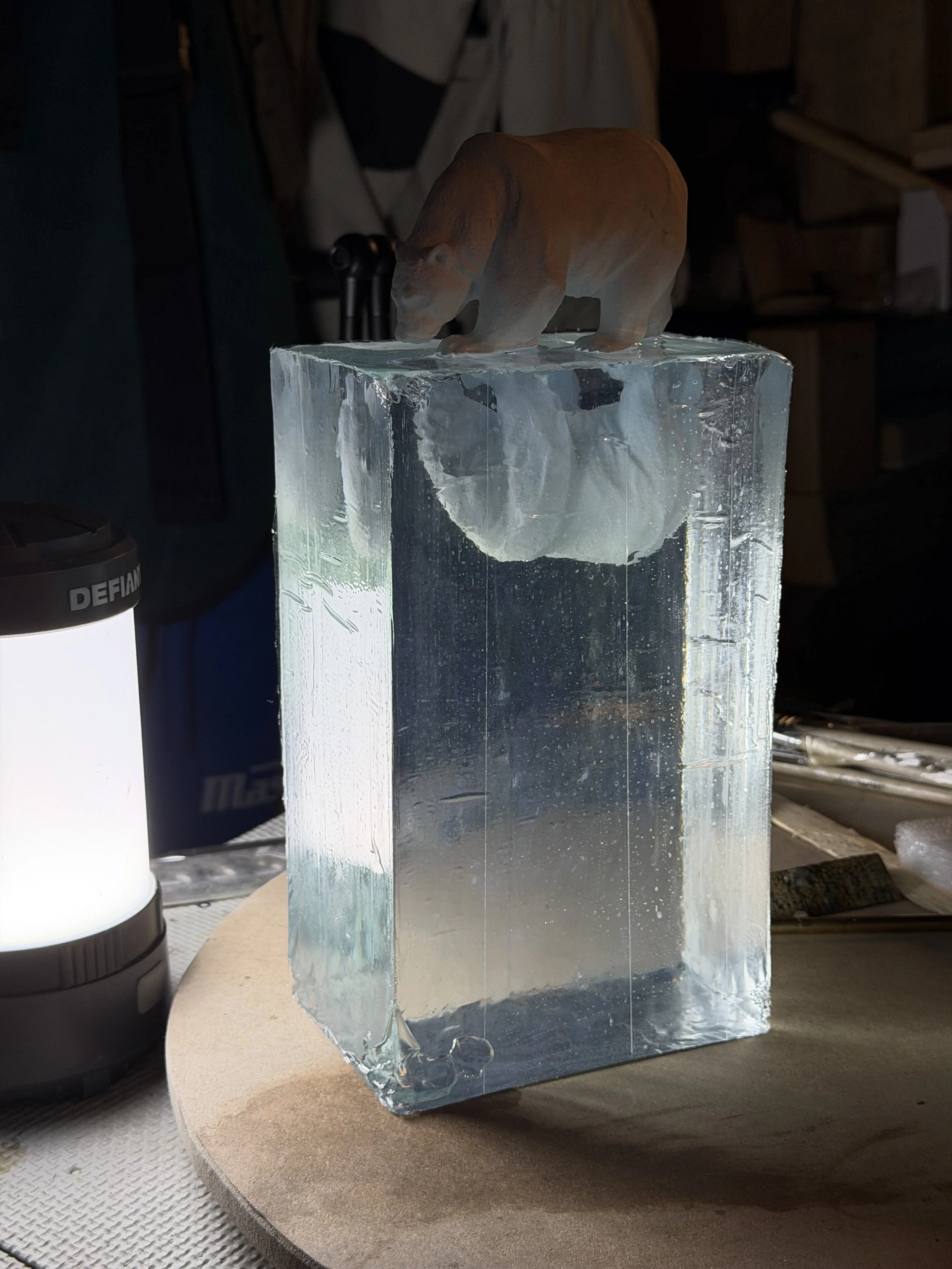
The Artist Beneath the Art
Artists often hide behind their work, hoping the art will prove their worth. But perhaps the true value of art begins with the person behind it. A reflection on artists, identity, storytelling, self-worth, and the importance of bringing ourselves forward.
There is something largely unrecognized in the art world—something I scarcely understood until recently. Now it resounds clearly in my heart and mind, as though I have heard it in a way that cannot be unheard.
As artists, we often hide behind our work. We remain unseen, hoping that our worth will somehow be recognized through the beauty of what we produce. We hope the work will prove that we are valuable. That we are worth something. That we are worthy of being exchanged for something of equal or greater value.
It is a strange way to live.
In some ways, it reminds me of the soldier whose value is only fully recognized after death—by family, by country, by the people who finally gather around the meaning of what has been lost. The thought is terrifying. And yet, for a small mind, the hope of immortality can seem like the only way to make sense of existence.
Perhaps the problem is obvious on the surface. Look at my art. My own sense of self-worth is poor, so I need you to support my illusion that I am worth something, even though some deeper part of me insists that I am not.
But perhaps there is another layer beneath that.
The art itself can become part of the illusion—a product created not only from inspiration, but from our attempts to cover, disguise, or compensate for our own psychological wounds. The work becomes a façade. We hide behind beauty.
The obvious answer, then, would be to turn this around.
But how?
The product in art is often assigned a monetary value. Yet it is clear that this value has little to do with the actual time, talent, or effort invested in creating it. A work can take months to complete and be worth very little. Another can be created in minutes and be worth a fortune.
So what is it that is actually being valued?
I have always been fascinated by the story of Salvador Dalí saying that he wanted to be a professional clown. The interviewer was apparently shocked by the statement, but Dalí remained confident and entirely unashamed. Then he clarified what he meant: what he had to offer the world was the personality of Dalí.
No more.
That idea has stayed with me.
We often replace ourselves with our art. We try to make the work speak for us because we are unwilling—or perhaps afraid—to speak for ourselves. We worry that to put our own personality forward is to expose our flaws.
But we are exposed anyway.
Every day.
The artist is present in the work whether they wish to be or not. The artist’s fears, obsessions, desires, wounds, humour, arrogance, humility, and strange little ways of seeing the world all find their way into the work. We can cover ourselves with layers of paint, stone, bronze, polish, branding, and carefully chosen words, but there is still something of us beneath it all.
People see more than we think they do.
And perhaps that is where the true value of the artist begins.
Regardless of whether you believe that confidence has anything to do with success, there is one thing I feel increasingly certain of. If I had no more time to explain this clearly and had to leave it as a footnote to everything else I have written, I would want this to ring as clearly and as loudly as possible:
Art is first about people. The product means very little without the person behind it.
Art is often sold through a story.
And every one of us has a story.
That story is our character. It is the strange collection of experiences, failures, beliefs, wounds, triumphs, contradictions, and dreams that make us who we are. It is always there. It is always worth telling.
So keep making the art.
Keep producing.
Keep carving, painting, drawing, building, writing, and creating.
But remember that people often see you before they see the work.
And if I have learned anything about people over the years, it is that they are far better at seeing through us than the most skilled psychic. They can see through the magic and the makeup. They can see through the carefully constructed image. They see the person beneath it all.
They see you.
And perhaps they can recognize your worth long before you are capable of recognizing it yourself.
If you can begin to see it too, then something changes.
It becomes easier to do what you love.
To produce art.
To create.
But perhaps the greater task is to place yourself forward alongside your work—and, in doing so, to place other people forward before their art as well.
Because the work may be beautiful.
The work may be valuable.
The work may even outlive us.
But before the art, there was always a person.
And perhaps that person was the real masterpiece all along.
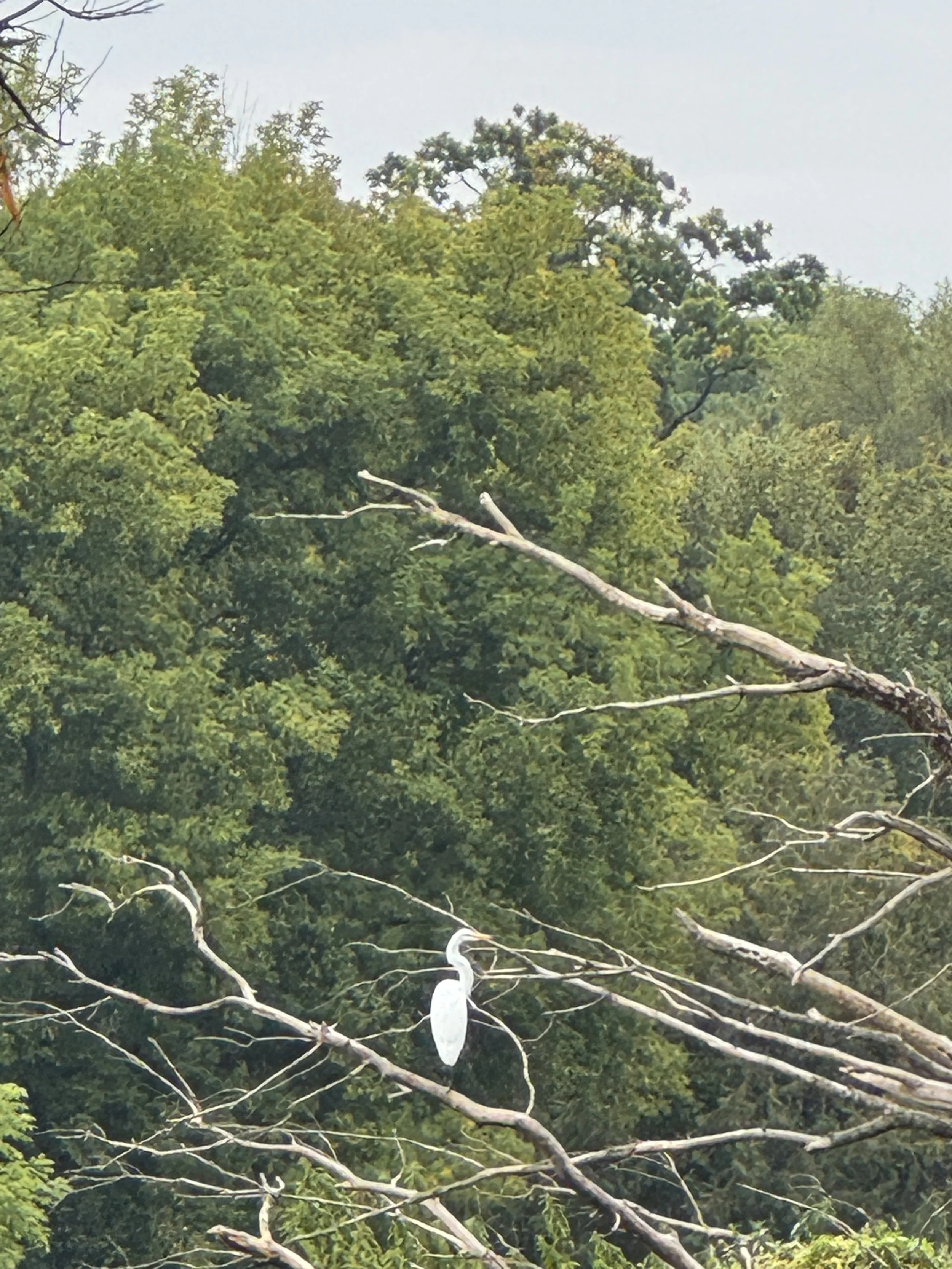
Something Unique
What happens when an original stone sculpture crosses into another medium? Through 3D scanning, digital modelling, and a combination of materials, Wesley Booker explores a new sculptural process he calls Veritas Composite.
I suppose everyone is looking for something exceptional. Something that has never quite been done before. Something that makes people stop for a moment and wonder how it came into existence.
And I think, perhaps, I have found a little bit of that.
In my studio, I am constantly imagining new ways of getting things done. Stone carving has slowly moulded me into something of a jack-of-a-few-trades. Over the years, I have learned to move between materials, tools, and technologies—sometimes because I want to, and sometimes because the work itself seems to demand it.
Recently, I have been exploring 3D scanning and digital modelling as part of my sculptural process. But the goal is not to abandon the original material. Quite the opposite. The goal is to carry something forward.
A sculpture begins in stone. It is carved, discovered, and brought into being through the removal of material. Then, through a combination of scanning, modelling, and casting, it can pass into another medium entirely. The strange thing is that the result often becomes so transformed that people cannot even recognize the original sculpture within it. And yet, somehow, it is still there.
This is not entirely unlike the process of bronze casting, where the original sculpture is often made from clay or another material before being transformed into bronze. But there is something different about beginning with stone. Stone is not simply a material that can be replaced. It has its own history. Its own weight. Its own ancientness.
So when a sculpture begins in stone and eventually becomes something else, the process becomes a kind of transformation. The original is not destroyed. It becomes something new.
I have begun calling these works Veritas Composite.
Veritas is Latin for “truth,” while composite refers to something made from several different materials. Together, the name seems to describe the process quite well. It is a simpler way of saying: a sculpture that began in stone and has been transformed through a combination of materials and modern techniques.
But perhaps there is something more truthful in the name than that. Because the work is not pretending to be one thing. It is stone. It is bronze-like. It is wood, brass, glass, and the invisible mathematics of digital scanning. It is an original sculpture, and it is also something entirely new.
Perhaps that is what makes it true.
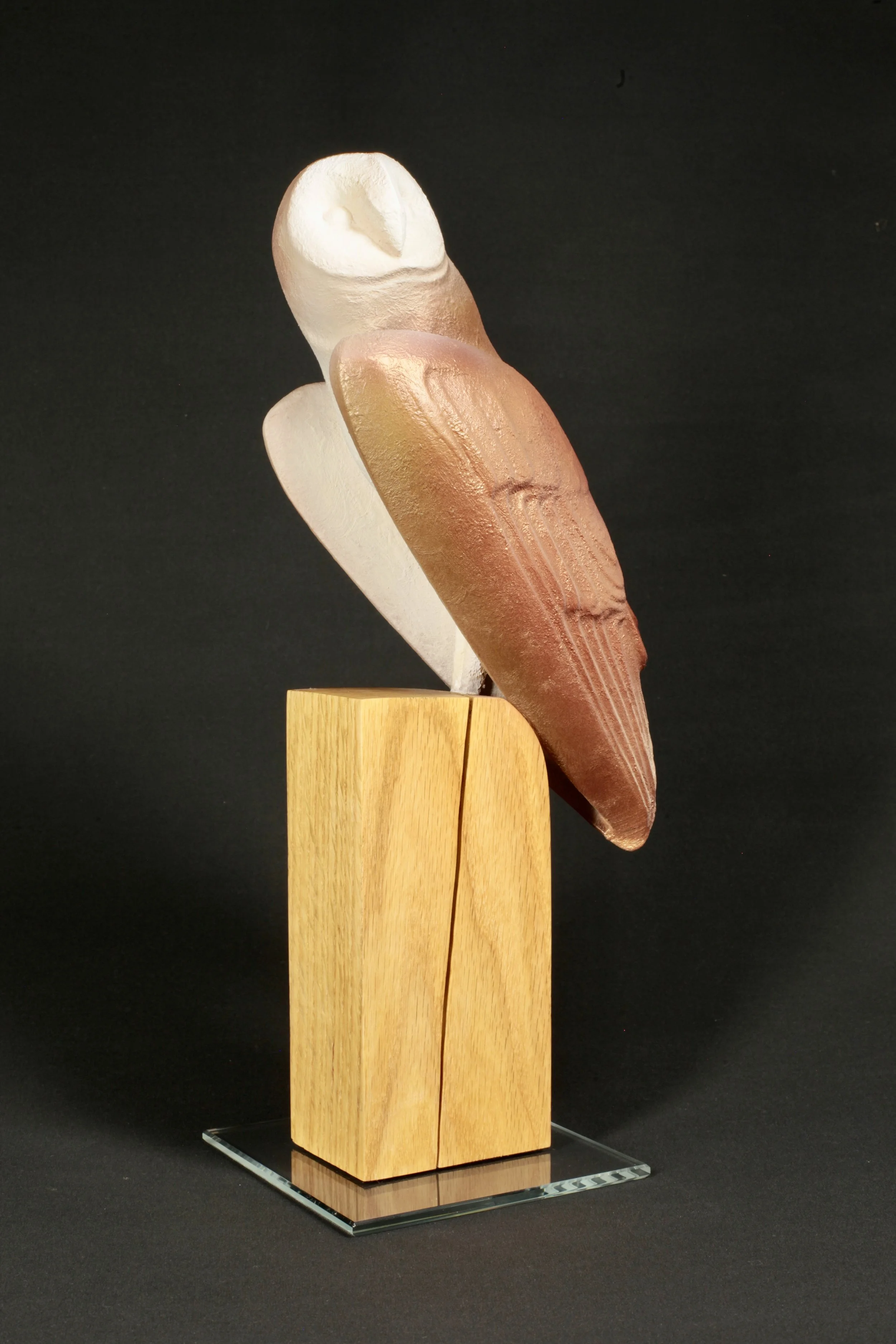
Tracing the Heavens
The first of these works is named, like its predecessor, Tracing the Heavens. The sculpture is mounted with brass dowels running through the work and into a cured piece of red oak. Beneath it, a glass base provides stability while allowing the sculpture to remain visually light.
There is something I enjoy about the meeting of these materials. The stone carries its ancient weight, while the brass and glass seem to lift it into something more contemporary. The red oak gives it a grounding—something warm and earthly.
Stone reaching upward. The heavens above. The earth below. A small meeting of worlds.
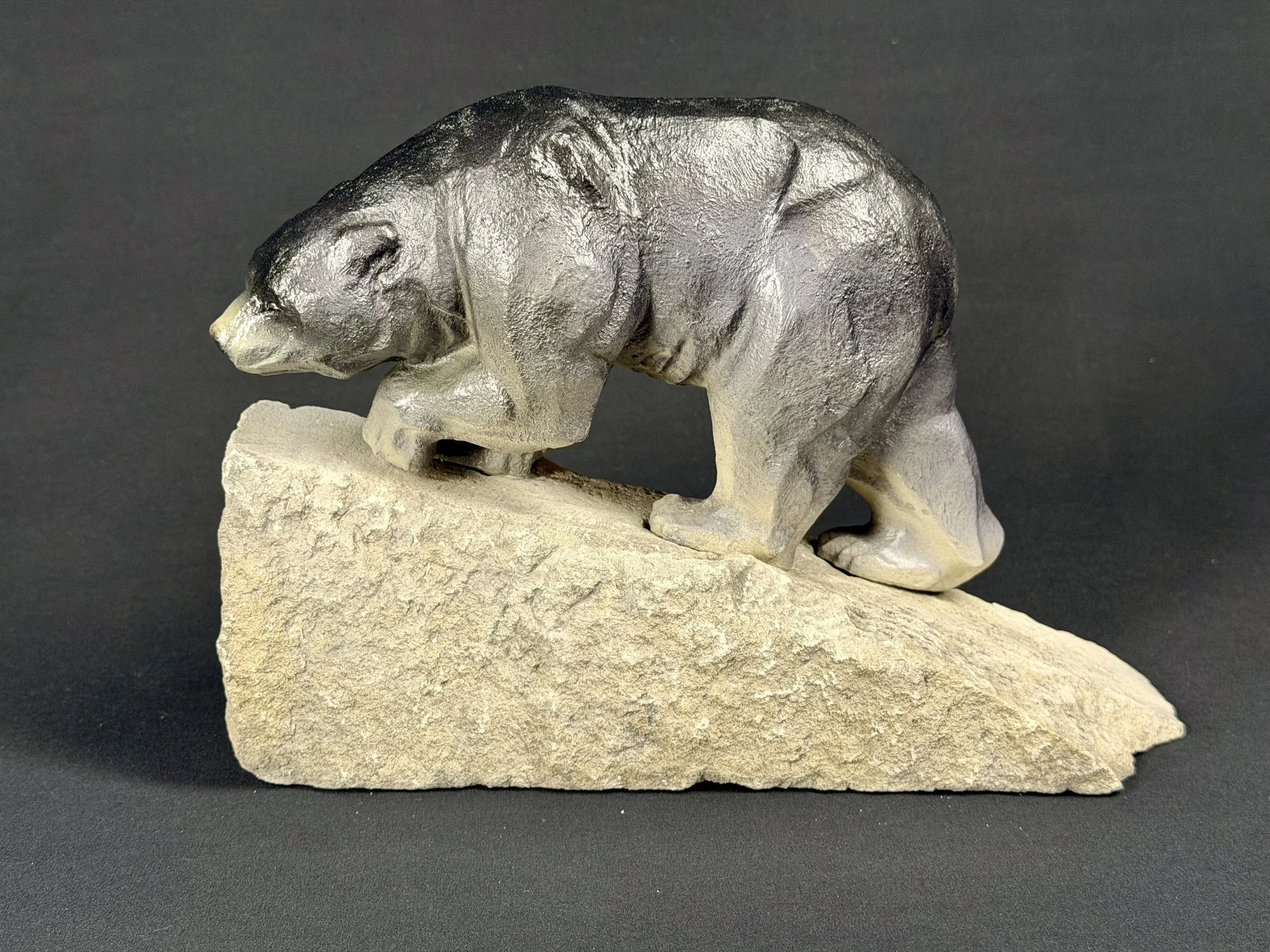
Requiem
The second work is called Requiem.
The word means “rest.”
I chose the name following a period in my own life last year when I was forced to rest after an illness that nearly took my life. There are certain experiences that change the way one looks at time. The things that once seemed urgent become strangely quiet. The body becomes a reminder that everything we are doing is temporary, and that sometimes the most important thing we can do is simply remain.
This black bear is mounted to a limestone base. The finish was designed to bring out the character of its movement, while also allowing the life of the stone to move upward through its feet and into the body. I wanted the bear to feel as though it had not simply been placed upon the stone, but had emerged from it.
As if the limestone remembered the bear. As if the animal had been waiting there all along.
The black bear’s stealth is something that deserves attention in these northern lands. It can become almost ghostlike when it does not want to be seen. There is an incredible power in that kind of presence—the ability to move through the forest almost entirely unnoticed.
A dark shape between the trees. A sound in the undergrowth. And then nothing.
Perhaps that is part of what I wanted to capture in Requiem: not simply the physical form of the bear, but the feeling of its passing through the world.
Both of these sculptures exist somewhere between stone and bronze. They carry qualities of both, while belonging entirely to neither.
And this is perhaps the most interesting part of the process.
Each piece will be completely unique unto itself. Although I can create another work from the same original sculpture, the process of casting, finishing, and combining materials means that no two pieces will ever be entirely identical. Each one will have its own surface, its own character, its own small history.
The sculpture changes as it travels. From stone. To digital form. To another material. And finally, into the world.
These works are now resting at La Belle Galerie in Quebec City.
If one of them speaks to you, or if you are interested in having another piece created through this process, feel free to reach out to me.
Perhaps there is another sculpture waiting to cross over.
What Tomorrow Brings…
I find myself constantly caught in the pause of life these days, carefully deciding what the next move should be. The next note in the song. The next sculpture. The next anything.
This pause, I suppose, should be filled with rest—a feeling into the next moment so that it can arrive effortlessly. Yet the fear of making another uncalculated mistake seems to overwhelm me, leaving me apprehensive about moving forward at all. I find myself afraid of making the wrong choice, and in that fear, I become stuck.
Tomorrow is a big word. Today is enough.
I believe Emerson said something to the effect of: at the end of the day, be done with it and throw it down. I may be misremembering the exact words, but the sentiment has stayed with me. Living faithfully within each moment is critical to the evolution of the next one.
Sometimes I feel that writing about these things publicly can help both myself and others move through moments when each day seems tinged with a little more fear than the one before. When I return to art, it should be a refuge. Yet it carries the same emotional charge, and I cannot help but allow that feeling to pass through each work.
As I gaze into the emotive essence of a simple owl, I can see more than I could before. Its face becomes tainted with my own.
There is a secret that seems to reveal itself when I furiously pour over the articles and epiphanies of quantum physicists describing their experiments. I will only touch on it in the lightest way here, but perhaps it reveals something that should be clearer than ever in today’s world.
And here it is:
We think, and so we are.
Imagine that your future self is looking back at the person you are today, just as your present self looks back upon the person you once were. What would your future self say to you? Who is to know which version of yourself is the truest one?
What does seem apparent, however, is that whichever self you choose to become—or even to pretend to be—affects all of them.
In some real way, we are constantly affecting every other version of ourselves, whether we think of the past, the future, or even the present. None of them may be as fixed as we imagine. All are in flux. All can be moved.
Perhaps reality jumping is real, but that is another subject entirely.
Regardless of this jargon—impossible to completely wrap one’s head around—what seems clear enough is that we can begin writing the book of today by deciding what our future self will say about our current self. In doing so, we may open doors that the present self could never have imagined were there.
And what does that future self look like for an artist like me?
I have sold myself on the idea that I can make an influence through the mediums of art. I believe in a future where we value one another’s presence and time more than any other commodity. I believe our physical presence is merely an inkling of the emotional power we possess to unlock love in all its facets—to open our arms toward God more fully than any clergy or politician could ever promise us.
Our friendship with the world is the first step toward repairing the boundaries we have crossed. We must make amends with the creatures of the forest, because our relationship with them is perhaps most clearly reflected in the disharmony we have with ourselves.
I believe the world will one day vibrate with true colours and patterns unlike anything we could ever remember—despite the fact that they were always right in front of us.
We simply never had the eyes to see them.
This is my journal log for the day, spelled out plainly and without hesitation. I hope you find some truth in it. I hope something in it resonates with you.


Timelessness
Why spend countless hours carving stone in an age obsessed with speed and efficiency? After finishing a recent sculpture, I found myself reflecting on the true meaning of timelessness—and why some things endure far beyond the materials they’re made from.
At some point, every artist asks the same question:
Why do I still do this when it takes so much time?
The hours disappear. The to-do lists multiply. If you’re anything like me, there is always something demanding attention. In an age where the telephone became a smartphone, we’ve somehow inherited an endless stream of responsibilities, notifications, and distractions. Social media alone can feel like a bottomless pit.
After finishing my most recent piece, I found myself reflecting on the value of something we often speak about in art: timelessness.
It’s a word I’ve heard used countless times to describe great works of art and architecture. Yet I think I misunderstood it for years.
Let me explain.
When I’m carving, my hands are occupied with the practical work of shaping stone, but my mind is fixed on something else entirely. Throughout the process, I’m trying to see the finished piece before it exists. That requires patience, attention, and a willingness to set aside all the other things clamoring for importance.
Eventually, the noise settles.
Perhaps it’s exhaustion. Perhaps it’s focus. Whatever the reason, there comes a point where the constant chatter fades into the background and the work begins to flow more naturally. In those moments, I find a deep sense of peace.
But beyond the peace, something else arrives.
It’s difficult to describe. It’s a feeling of standing between two worlds—between what is and what could be. Between belief and disbelief. Between limitation and possibility. As artists, we spend much of our lives in that space.
It’s probably the closest thing I know to hearing the voice of God.
Recently I’ve been thinking about the Sagrada Família in Barcelona. The name translates to “Holy Family,” and the cathedral has been under construction for generations. Thousands of skilled hands have contributed to its creation, each building upon the work of those who came before.
We often call something like that timeless.
Yet even the greatest structures eventually fade.
History is filled with magnificent cathedrals, temples, and monuments that now exist only as ruins. Many disappeared so quietly that most of us have never even heard their names. Strangely, there is something profoundly beautiful about those remnants. Ancient stone walls reclaimed by nature often carry a tranquility that feels deeper than the structures did in their prime.
Why that is, I can’t say for certain.
But it has led me to this realization:
Timelessness has very little to do with time.
It is not about lasting as long as stone, mountains, oceans, or stars.
Timelessness is what survives in consciousness.
It is the meaning that remains long after the material has passed away.
A sculpture, a song, a story, or even a simple act of kindness can become timeless because it carries something beyond itself. The object is merely the vessel. The meaning is what endures.
Perhaps the same is true for us.
Our bodies are temporary, but the love we express through them is not. The hands that carve, build, teach, comfort, and create are participating in something larger than themselves. The material eventually returns to dust, but the meaning continues onward in ways we may never fully understand.
I’m not entirely sure where all of this is leading me with my sculpture work.
I’ll keep carving as long as I am able.
Recently, I asked ChatGPT a question related to Jungian psychology. After years of conversations, it responded with a description of my work that caught me off guard:
“The man who restores soul, meaning, and spirit through enduring craft in a mechanized world.”
That rang a bell.
Still, my story is unfolding day by day. The way God sees me fumbling through it all is probably very different from how I see myself. Hopefully, it’s in a kinder light.
To any artist reading this: your time is not wasted.
What you’re building may be difficult to articulate. It may not fit neatly into a business plan or a social media post. Yet the value is there all the same.
Long after the work is finished, after the tools are put away and the dust has settled, something remains.
Perhaps it is inspiration. Perhaps it is beauty. Perhaps it is simply the reminder that another human being cared enough to create.
Whatever it is, it helps carry the flame forward.
And maybe that is what timelessness truly means.
All My Changes Were There
These days, I’m caught somewhere between believing whether it’s today, tomorrow, or even yesterday.
And no — I haven’t gone crazy yet.
My high school, the one I graduated from in 2004, is closing down and moving to a new location. The old building will apparently be renovated into apartments. Strange how a place so foundational to hundreds of lives can suddenly become something entirely different.
Today I called the principal — who, years ago, was my business teacher. We spoke briefly about where life has carried us since those days. I honestly wish it weren’t for time and the busyness of life that we could have talked longer, but responsibilities pulled us both back: him to the business of running a school, and me back to a delayed stone carving project waiting in the studio.
The reason I called was because my parents recently walked through the school during one of the final open houses before it closes for good. They photographed four of my paintings that are still there.
Funny enough, they actually missed one.
Five pieces in total remain in that building.
One of them isn’t removable at all.
I couldn’t help but sit with the weight of that realization — that something I made as a teenager has remained anchored in that place for over twenty years. Long after classes ended, lockers changed hands, teachers retired, and entire generations passed through those halls, the work stayed.
There’s something deeply humbling about that.
My parents urged me to ask whether I could take the paintings back before they were discarded or forgotten during the transition. I was told they would otherwise be placed into storage, so I agreed to take them.
Oddly enough, part of me hesitated.
I don’t really have any practical use for them.
Truthfully, I don’t have much use for most of my work once it leaves my hands. Art is strange that way. It’s often made for a specific place, person, or moment in time. Once it resonates somewhere, it no longer fully belongs to the artist.
But these pieces felt different.
I realized I should honour that younger version of myself — the kid trying to leave some kind of impression on the world without fully understanding why he needed to. Those paintings became part of the memory of that school for students and teachers alike. I’m grateful they mattered enough not to be removed years ago.
And this entire experience has stirred something much deeper in me.
I keep thinking about a story I once heard involving a man who experienced a near-death incident. After being revived, he described sitting in a hospital room having clear conversations with family members as though everything were completely normal. He knew he had died. His family knew he had died. Yet the interaction unfolded as naturally as waking life itself.
That story has lingered with me for years.
Sometimes I wonder: what if we are already living across multiple layers of reality at once? What if memory, presence, and influence continue beyond the framework we call time? If someone were dead in one reality but alive in another, would anyone truly know the difference? We all continue participating in this shared consensus — contributing to places, people, and moments that collectively become “real.”
But what happens when the place disappears?
When a building changes, something strange happens to memory. The mind can still replay events, but the physical anchor is gone. Four incredibly important years of my life were rooted inside those walls. Once those walls are altered, revisiting those memories becomes harder somehow — like trying to hold smoke in your hands.
And yet, the memories remain alive internally.
When I sit quietly and allow myself to drift backward, I can still hear everything. I can still see the classrooms, the hallways, the art room. There’s more there than the physical structure ever contained.
I never fully understood the emotional weight of Neil Young’s song Helpless until now.
“There is a town in north Ontario,
With dream comfort memory to spare,
And in my mind I still need a place to go,
All my changes were there.”
Neil Young was referring to a northern Ontario town — likely Blind River, the same town where W.C. Eaket Secondary School still stands today. Those lyrics suddenly hit differently now.
“And in my mind I still need a place to go.”
That line almost brings tears to my eyes.
Because some places never really leave us. Even when the doors are chained shut. Even when the windows are replaced. Even when time moves on.
“All my changes were there.”
I think that’s what this reflection is really about.
Not death.
Not nostalgia.
But presence.
The realization that our influence continues through the impressions we leave behind — through art, memory, conversation, kindness, struggle, and creation. Whether time is past, present, or future may not matter nearly as much as we think it does. Perhaps those are only perspectives layered onto something much deeper.
We are.
And from time to time, in stillness, I can feel that.
So whether that old art room eventually becomes someone’s apartment or not, there will always be a version of it that remains untouched in memory.
There will always be Al Wright with music blasting through the room.
There will always be students covered in charcoal dust and clay.
There will always be that younger version of me discovering the path I’m still walking today.
Some places never stop existing.
They simply continue somewhere else.


One Foot in the North, One in the South
Heading into another stretch of night shift has always been both my burden and my blessing.
Every week begins with the same promise to myself — that somehow, somewhere between exhaustion and responsibility, there will still be enough energy left to create something meaningful. A new sculpture started. An old one finally completed. A breakthrough in form, movement, or technique.
That hope is what keeps me moving forward.
But if you are an artist, you probably already understand the quiet frustration that comes with time never being enough.
And strangely, it seems the problem only grows with age. Commitments gather. Responsibilities stack higher. Sleep becomes more valuable and somehow more elusive. Coffee becomes less of a luxury and more of a negotiation with the body. Even the work itself changes. As skill improves, so does expectation. Pieces become more ambitious, more refined, and more demanding of patience and attention.
The irony is that expertise often slows creation rather than speeding it up.
You begin to see more. You demand more from yourself. The appreciation necessary to sustain the momentum takes years to catch up with the labour being poured into the work.
The gap widens.
In many ways, this feeling reminds me of the transition from living in Northern Ontario back into the city years ago. Up north, I found something I didn’t even realize I had been missing — space. Not just physical space, but mental space. Silence. Wilderness. Time to wander. Time to think. Time to reconnect with a part of myself that eventually became the reason I create sculpture at all.
Living among the wild gave birth to something important in me.
The city, by contrast, moves like a rising river behind a dam. Bills, schedules, work, obligations, maintenance, family, noise — everything builds pressure. The current never fully stops. You spend much of your energy simply trying to hold the structure together while the water rises higher behind it.
And yet, despite all of that, I still find myself standing at the threshold of another carving week.
Somewhere beside all of these responsibilities, I’ve started quietly exploring another avenue for my work — one that bridges old traditions with emerging technology. I recently created a page featuring scanned versions of some of my sculptures for the growing community of artists and creators experimenting with the expanding world of 3D printing.
It has been fascinating to see traditional stone sculpture translated into a digital form.
In a strange way, it allows the work to become accessible to people who may never have had the opportunity to own original sculpture, while also opening the door to entirely new creative possibilities. It feels a little like trying to plant one foot firmly in the North and the other in the South — balancing tradition and future at the same time.
If you’d like to explore some of the scanned works, you can view them here:
White Raven Sculptures 3D Models on Cults3D. https://cults3d.com/en/users/Hops118/3d-models
Over the next couple of weeks, I’m hoping to finally complete the loon sculpture currently underway while continuing to move several other projects forward quietly in the background. I’ve learned that keeping multiple streams flowing at once helps maintain momentum, even when one current slows.
More than anything, I hope these updates encourage others to continue building lives that embrace both the science of the future and the traditions of yesterday.
I don’t think we were meant to abandon one for the other.
I think we were meant to learn how to carry both.
— Wesley Booker
White Raven Sculptures

Small Updates From the Studio (and Everywhere Else)
Life has felt a little chaotic lately.
Ten-hour night shifts, lack of sleep, family responsibilities, and the constant balancing act of being a young dad, assembly line worker, and sculptor have definitely left my mind feeling a little frazzled. These days, life tends to happen in exactly that order too — fatherhood first, work second, and sculpting somewhere after that. As demands grow heavier, carving time always seems to get pushed further down the list.
Still, despite the exhaustion, I’m grateful that there’s enough energy left to write about the little everyday things that make up this strange and rewarding life.
And honestly, those mundane moments are part of the journey too.
Over the last while I’ve hinted at a new venture that’s slowly taking shape, one week at a time. My excitement for it keeps building, and mentally I’m already far ahead of where I physically have time to be. There’s a strong feeling that important progress is coming soon, and I’m eager to see where it leads.
This past week wasn’t spent carving though — it was spent organizing stone.
What started as “a bit of cleanup” quickly turned into the realization that I may, in fact, be a complete stone hoarder.
Soapstone and carving material had slowly spread themselves across two sheds, parts of the basement, a massive wooden crate outdoors, and even a giant plastic storage bin. So I finally decided to build a dedicated shelving unit strong enough to hold roughly 2,000 pounds of stone.
The good news is the shelf works beautifully.
The bad news is… it’s probably still not big enough.
And that doesn’t even include the stone still sitting on the floor.
But selection matters. Finding the right stone for the right subject is a huge part of the process. Certain forms simply don’t belong in certain material, and sometimes the perfect piece sits untouched for years before revealing what it wants to become.
At least that’s what I tell myself while staring at piles of rock.
Lately I’ve also been slowly tinkering away at a new sculpture project — one with absolutely no timeline attached to it, thankfully. Some pieces simply cannot be rushed without losing something important along the way.
This one is especially delicate.
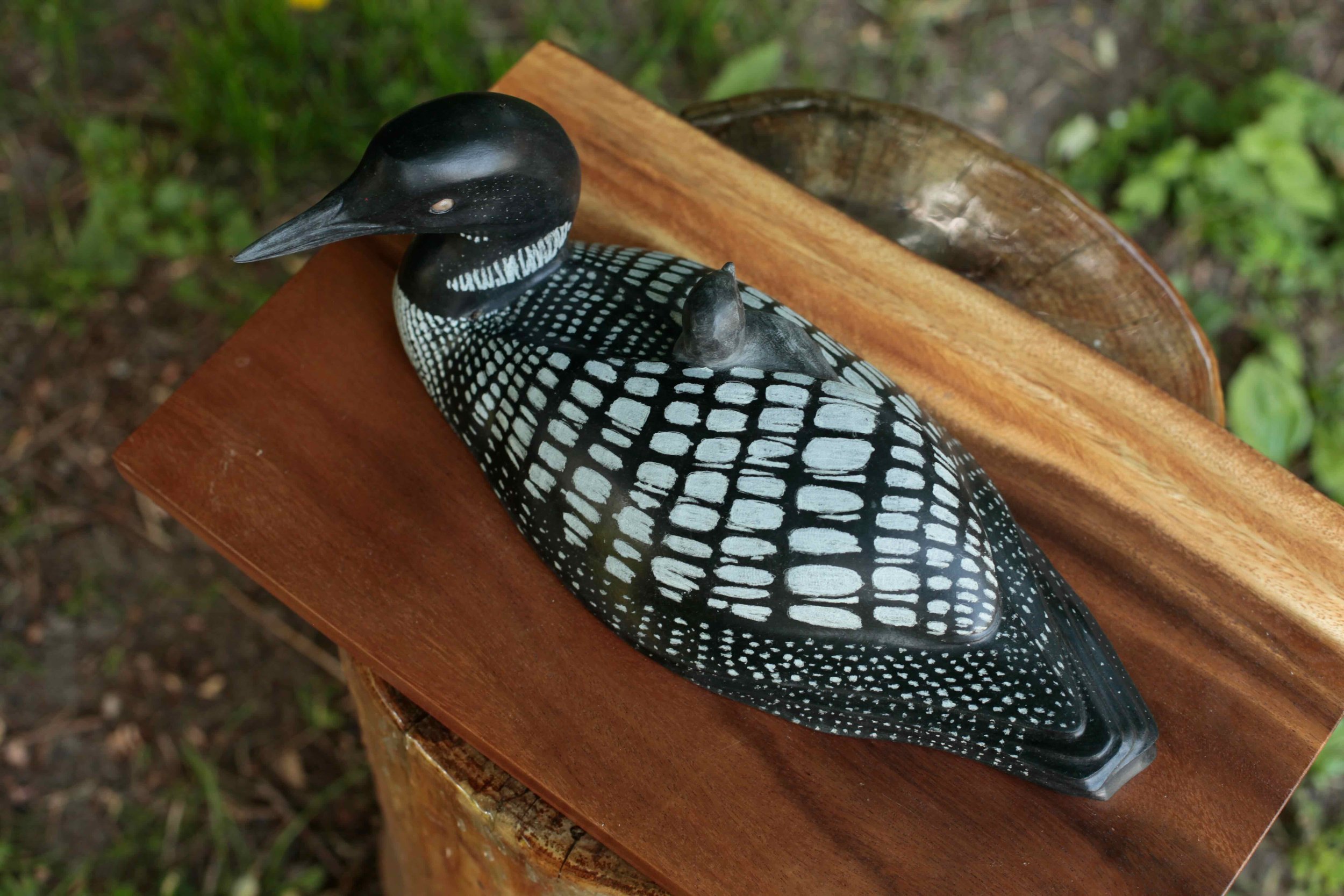
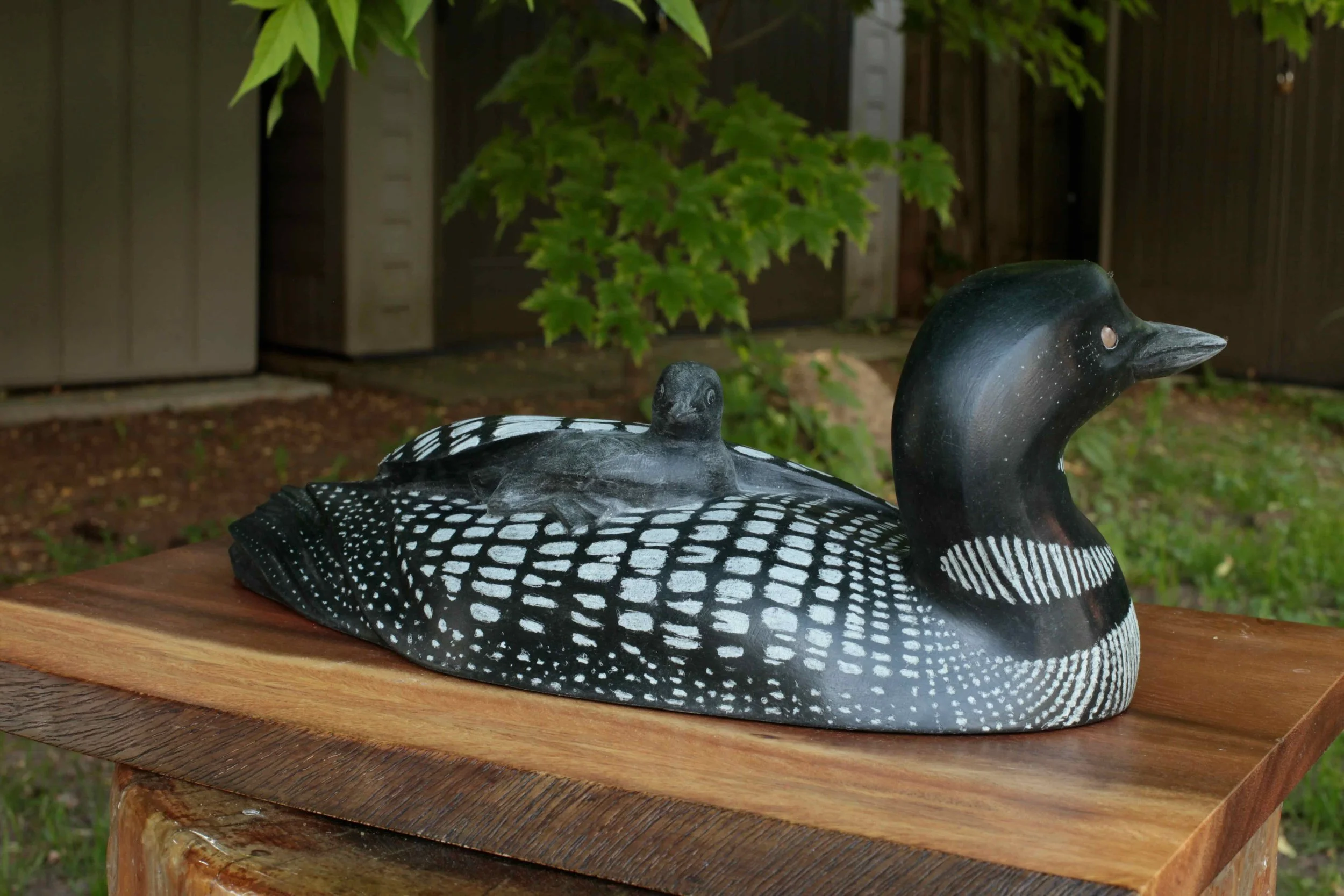
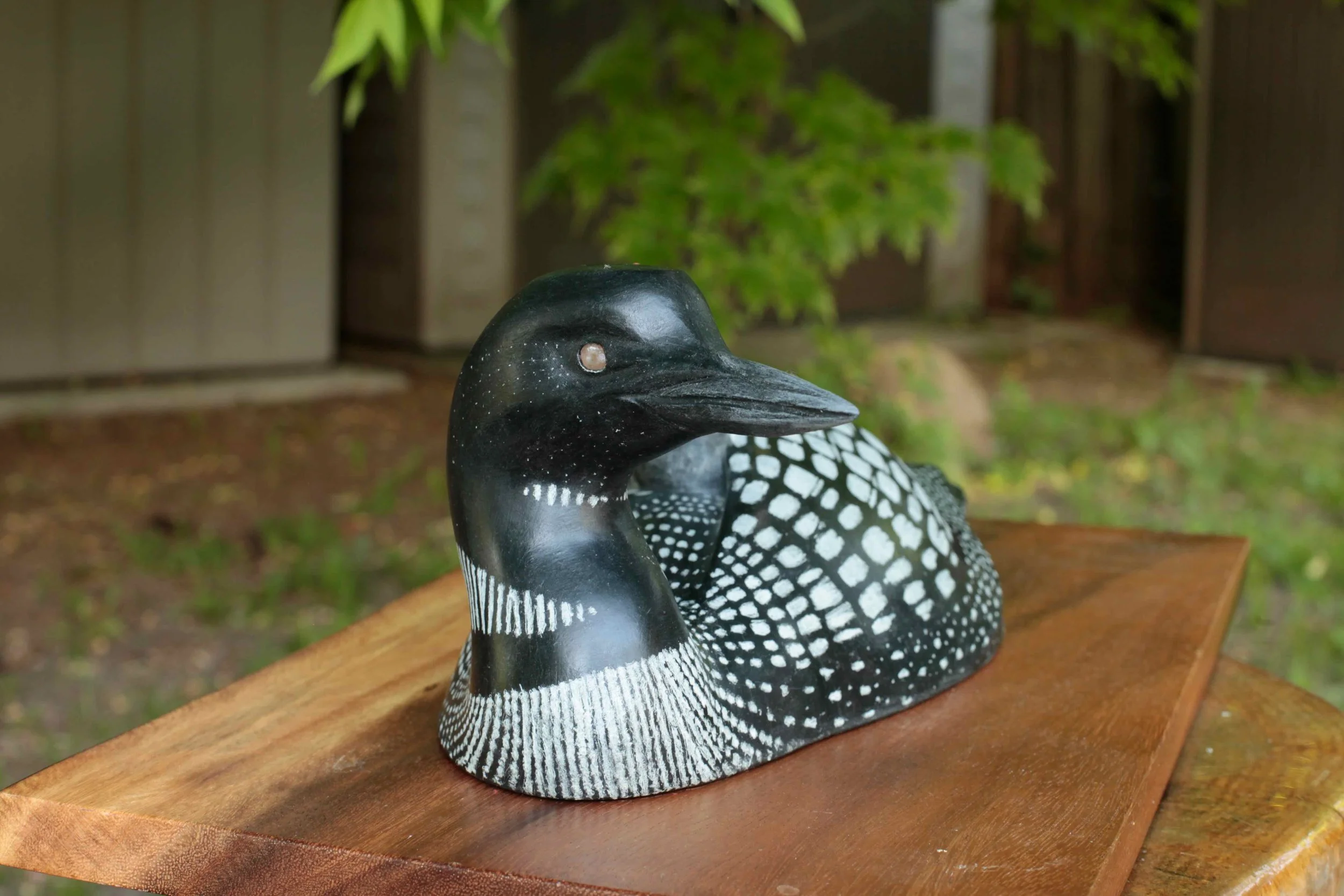
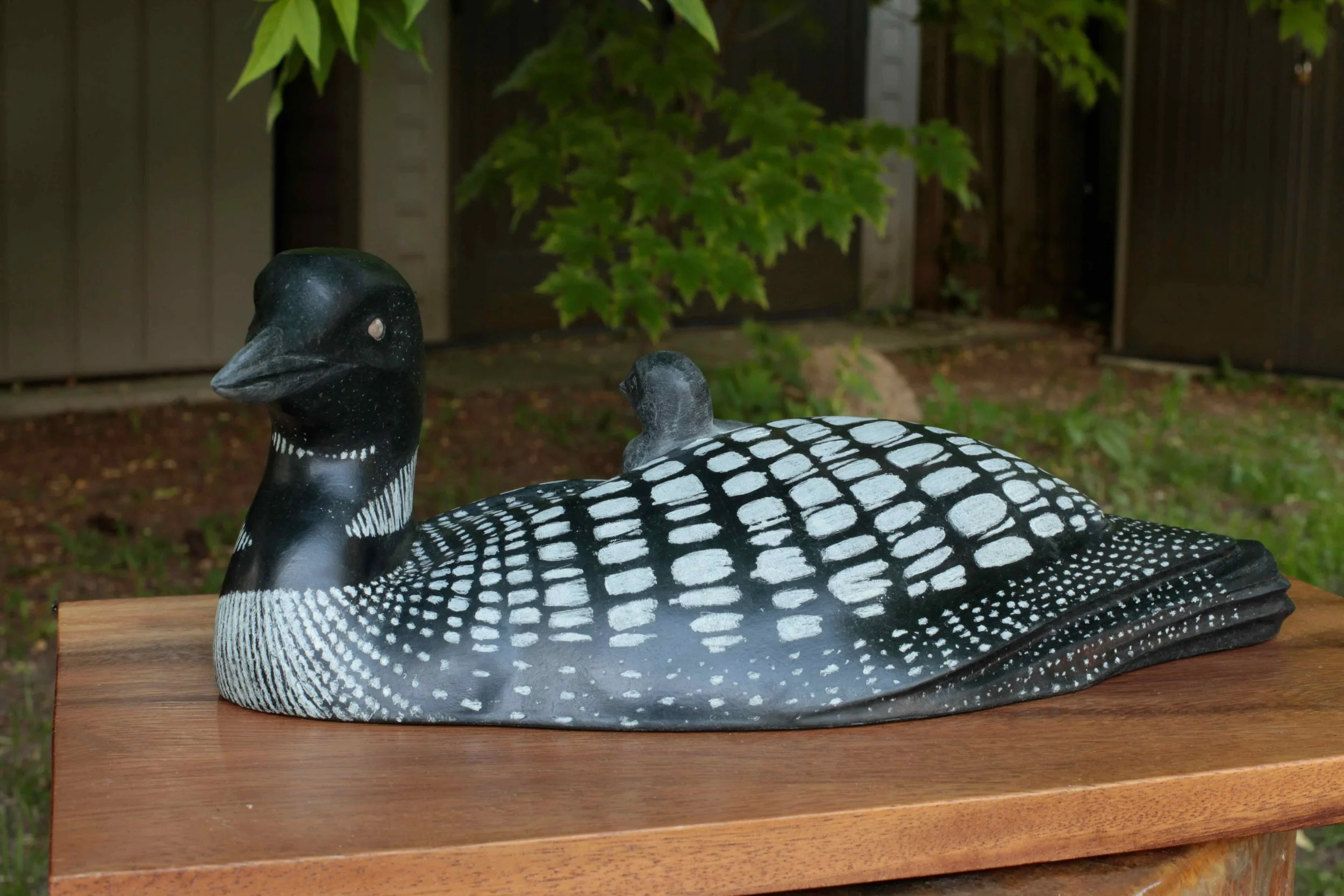
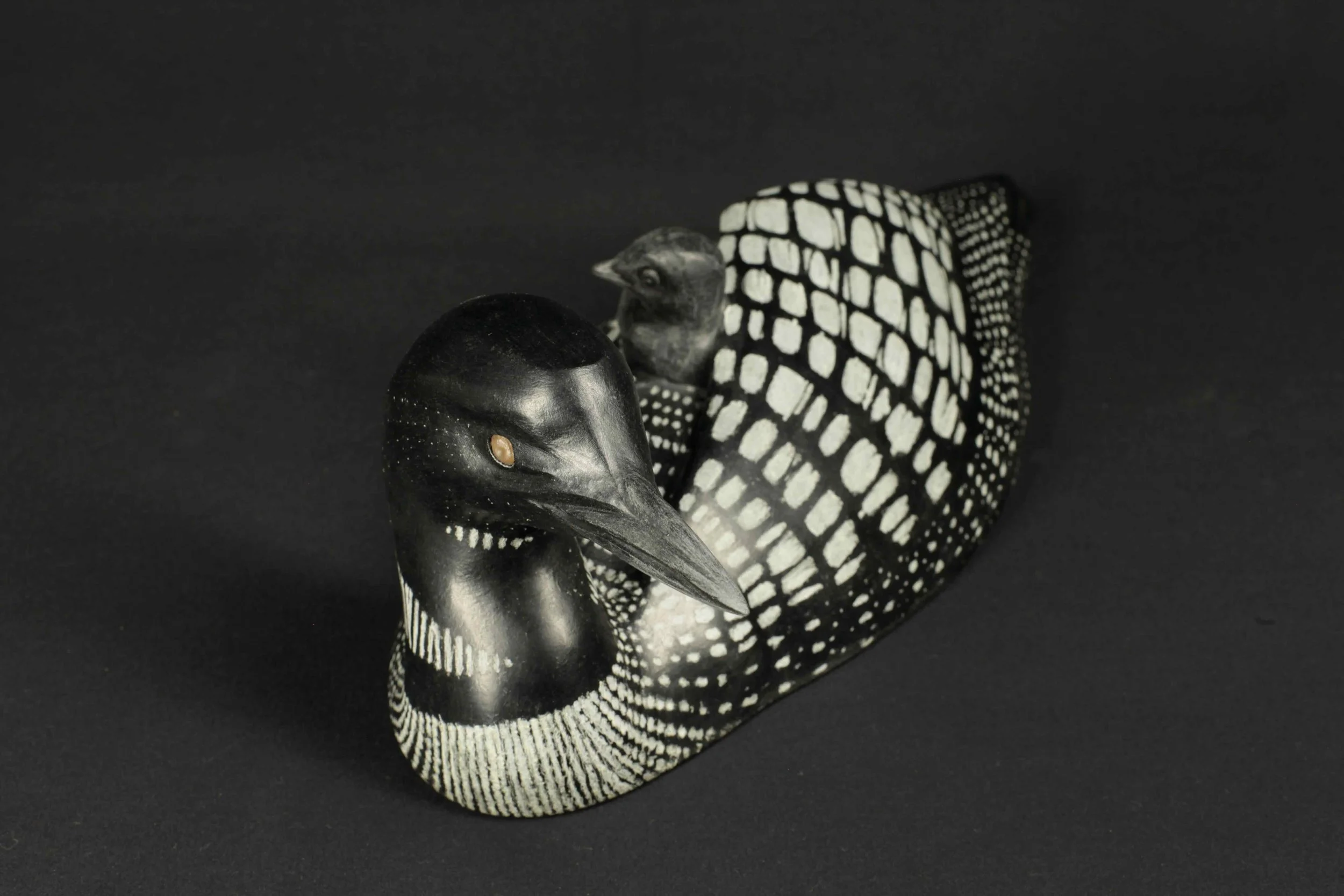
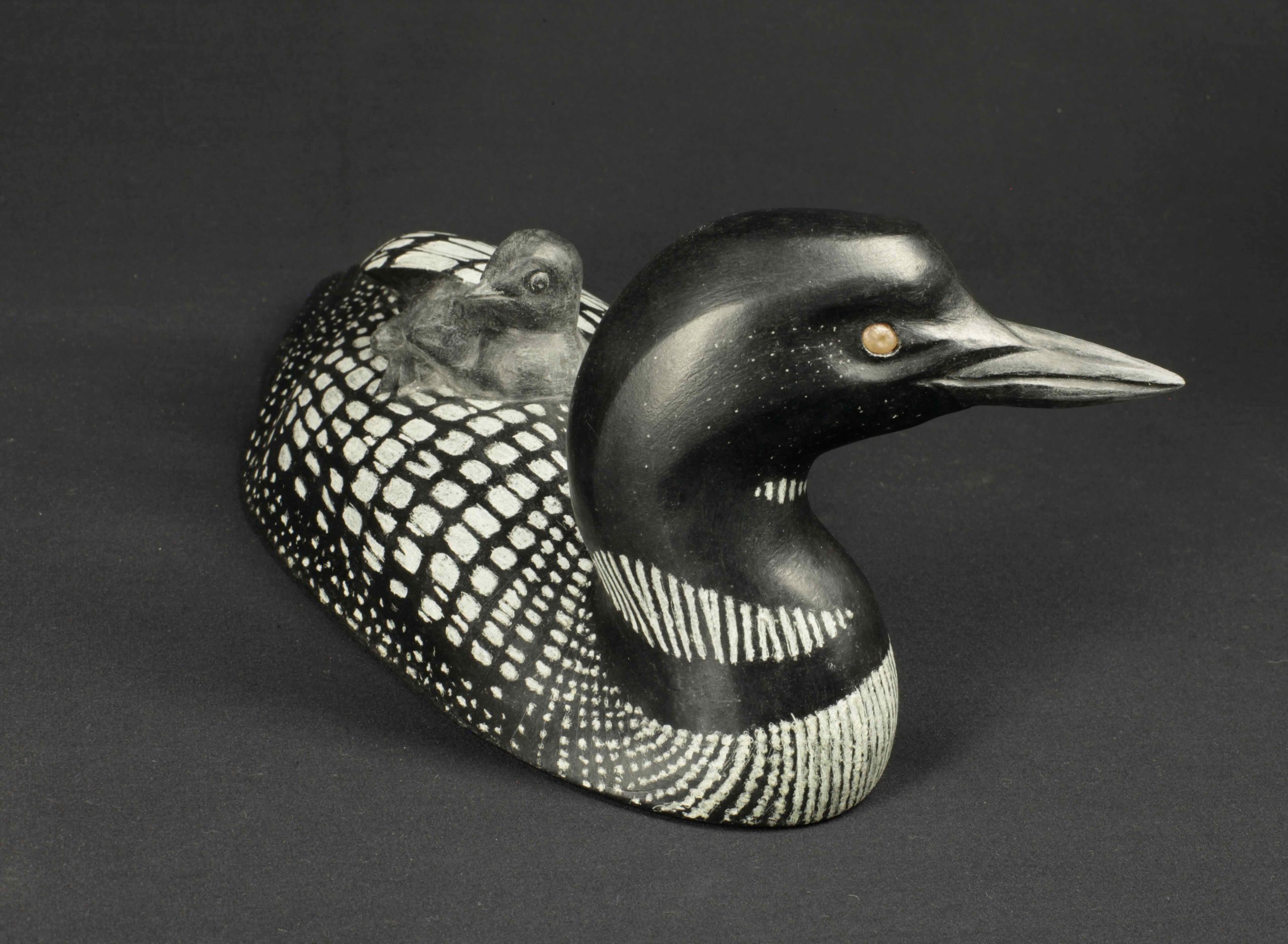
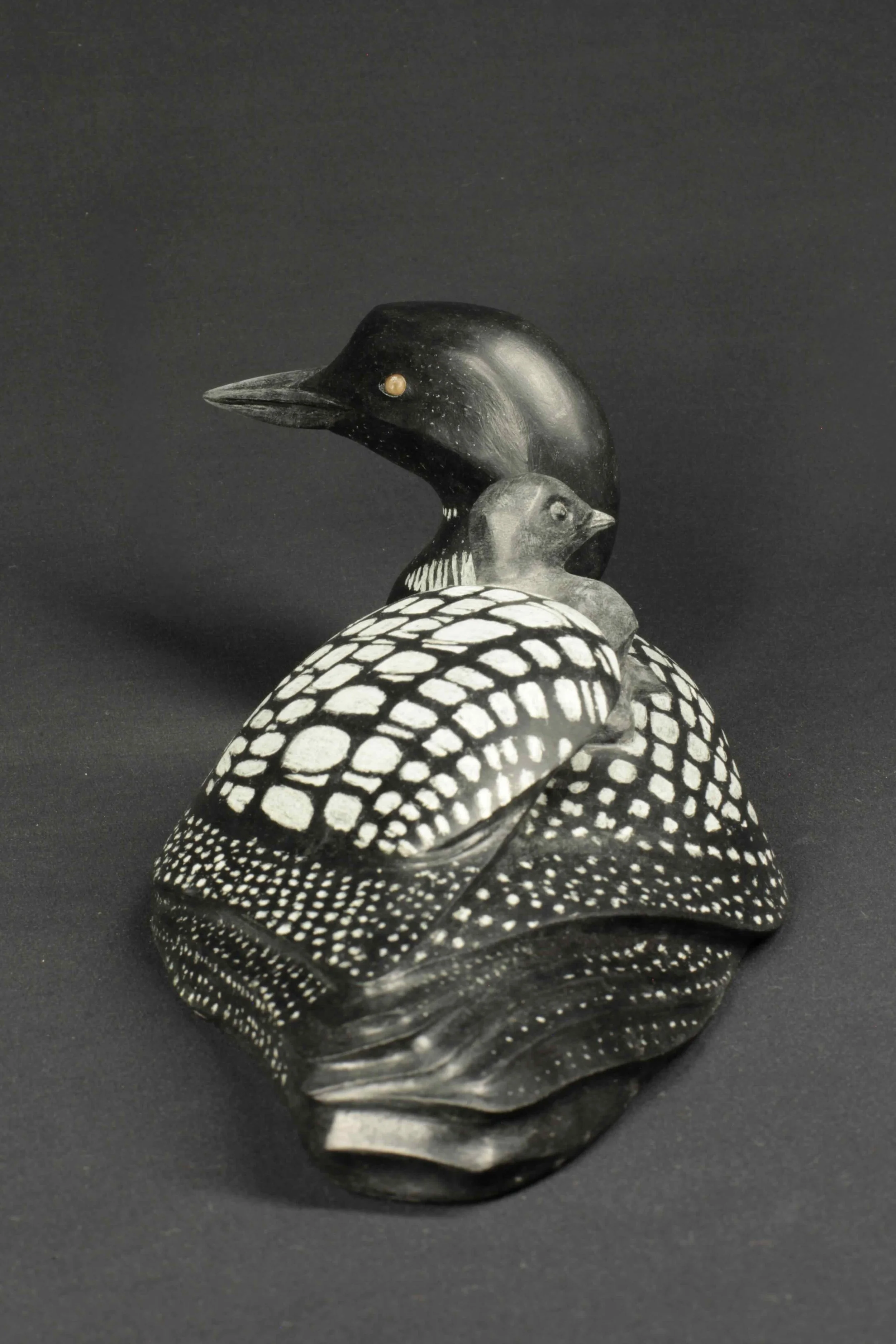
The sculpture features a loon carrying a baby loon on its back, complete with red jasper eyes and carefully etched feather patterning to capture the iconic markings of the bird. It’s a piece that demands patience and attention to subtle beauty. I haven’t really seen this concept approached quite this way before, so I’m allowing it the time it deserves.
There’s still a long road ahead on it, as you’ll probably notice from the progress photos.
And although I probably shouldn’t even mention it yet, there’s also a five-foot hardwood egret slowly emerging in the backyard studio. Steel legs, mounted onto a hand-hewn reclaimed pine base. Another ambitious project with a very long way to go.
That story can wait for another update.
For now, these are just small glimpses into the process — little updates from a busy life still trying to make room for sculpture whenever possible.
Long way to go yet.
— Wesley Booker
White Raven Sculptures

Veritas Composite: Building Beyond Stone
Over the past several years, I’ve been expanding my sculpture practice beyond traditional stone carving into 3D scanning, bronze casting, and now a new hybrid material system called Veritas Composite.
This last week and a half has been a rush into something only my wife fully knows about. All the technical details of how to approach each individual project have been carefully rehearsed in my head — variations of possibilities revisited daily as I work on the Lexus RX line at Toyota Motor Manufacturing Canada here in Cambridge, Ontario.
Over the last five years, I’ve likely contributed to building around 800,000 vehicles. The process is so deeply ingrained in muscle memory that it frees my mind to focus intently on other projects. That’s the goal — to develop another operation that can run fluently alongside my stone carving practice.
Let me put it lightly before revealing too much. Stone carving is a deeply methodical process. My last project reinforced that reality. Working with black chlorite stone — roughly a 2–3 on the Mohs hardness scale — is still demanding. Even with extensive tool use, there is no shortcut through the material. It resists speed. It demands time.
So I began developing something alongside it — something I’ve quietly committed half my efforts toward before even producing true prototypes.
In truth, this has been unfolding for over six years.
It began with experimenting in 3D scanning. Using LiDAR through my iPhone Pro, I started building digital versions of my sculptures. At the time, it felt revolutionary — but the process was crude. I spent hundreds of hours refining just a few models, cleaning scans, improving surfaces, and preparing them for use. Some of these were uploaded online so others could produce their own versions, allowing me to gather feedback and explore new directions.
Two years ago, I invested in a dedicated laptop and a higher-precision 3D scanning system. This newer technology dramatically improved accuracy, reducing cleanup time and allowing me to create far more refined digital replicas of my work.
Around that same time, I took a weekend to experiment with bronze casting — a hands-on introduction to the process. The sand-casting method I explored showed me both the potential and the limitations. While it gave me a foundational understanding, it also made clear that certain levels of detail require more advanced processes.
About a year ago, I began developing a relationship with a professional foundry experienced in detailed bronze work. Their process, including lost-wax casting using resin prints, opened the door to a level of precision I knew I wanted to pursue. I committed to producing my first collector edition bronze of one of my favorite pieces, “Brother.” The process is expensive, requiring significant upfront investment to build inventory, but it’s a step toward making the work more accessible while maintaining quality.
I’ve also connected with a respected foundry in Quebec, known for both small-batch artistry and scalable production methods. Their clarity and experience have given me confidence in exploring multiple directions within casting.
But this all led to something unexpected.
Over time, I began developing my own material process — a hybrid approach combining organic materials, epoxy resins, clay-based applications, structural reinforcement, and layered finishing techniques like airbrushing and washes. Combined with my 3D scan library, this opens the door to creating entirely new works that maintain the spirit of stone, but expand beyond its limitations.
This evolving process has taken on a name:
Veritas Composite.
It’s not a single technique, but rather a flexible system. Sometimes it incorporates glass. Sometimes wire. Sometimes it leans heavily on resin or texture. Each piece becomes its own exploration — unique, hands-on, and far less constrained by the physical resistance of stone.
This direction came into sharper focus after a conversation with Eduard Spera at his gallery in Niagara-on-the-Lake. During our discussion, I asked whether my work might fit within his space. While it wasn’t the right time, his feedback was thoughtful and encouraging. He spoke about his own early years in printmaking beginning in 1991 — the successes, the failures, and the importance of evolving beyond one-off pieces.
One point stood out clearly: relying solely on individual, time-intensive works can limit how far your name travels. To grow, you need ways to expand your reach without sacrificing quality.
That conversation stayed with me.
So here I am, figuring it out.
Building something new. Expanding what’s possible. Finding ways to create work that maintains integrity while allowing it to exist more broadly in the world.
I hope this new venture works out. But to be honest, I’m still figuring it out as I go.
That’s part of the beauty of it.
Art isn’t a fixed path — it’s something shaped by your hands over time. It’s trial, error, intuition, and persistence. It’s identity formed through making.
There’s a quote often attributed to John Lennon that captures this spirit well:
“We’re all just making it up as we go along.”
And in many ways, that’s exactly what this is.
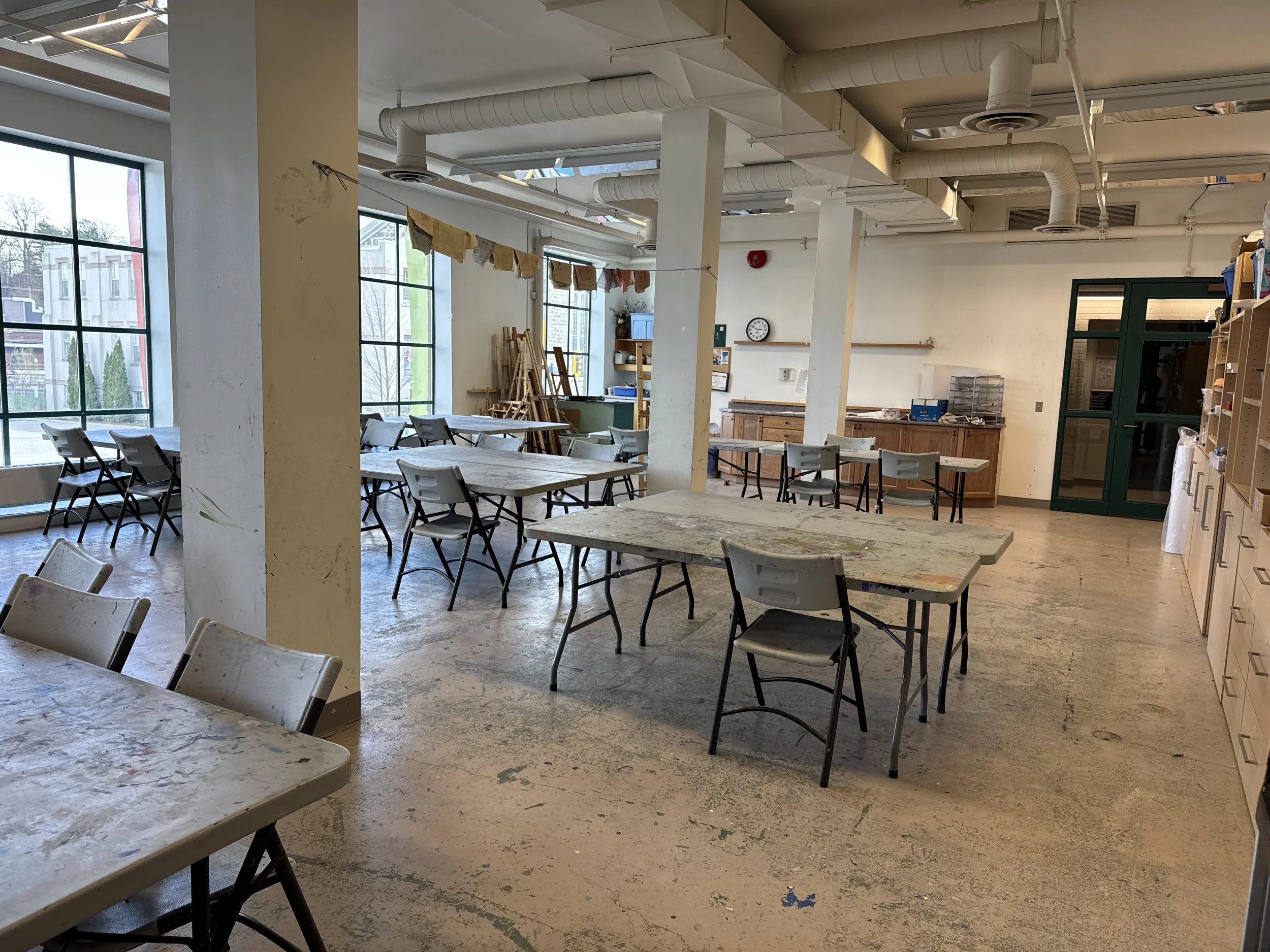
From Vision to Form: Time, Stone, and the Quantum Wave
Today I found myself thinking again about the double-slit experiment and what it might suggest about how we experience reality. If events behave like waves of possibility until they are observed, what does that say about how we create — and how art itself becomes form over time?
In stone carving, nothing appears all at once. It emerges slowly, almost like a wave collapsing into a final shape. Each strike of the tool feels like a moment passing through time, yet in the end, the sculpture is seen as a single unified presence.
It makes me wonder whether our future intentions shape our present actions more than we realize — and whether what we create is something we discover as much as something we make.
Today I found myself perplexed again by the Double-Slit Experiment — one of the most fascinating and mind-bending discoveries in modern physics — and how it relate to how we understand reality itself.
In this experiment, particles behave differently depending on whether they are observed. When unobserved, they appear as waves of possibility, interacting and overlapping. When measured, they appear as fixed points, individual particles, as though each moment becomes defined only when we look at it.
This raises a profound idea:
Are events truly separate and fixed, or are they connected in ways we only recognize when we step back and observe the whole?
We often think of our lives as linear — moments passing one by one, like particles flying through time. Each day, each action, each decision feels isolated. But the deeper we look, the more it seems these moments are not separate at all. They influence one another, overlap, and interact, forming something more like a wave across time.
Even more puzzling, variations of the quantum slit experiment — like the Delayed Choice Quantum Eraser Experiment — suggest that decisions made in the future can appear to influence outcomes in the present. While physicists still debate the interpretation, the metaphor is powerful.
It invites us to consider:
Who we decide to become in the future may shape who we are today.
The artist we envision becoming tomorrow quietly influences the decisions we make now — the stones we choose, the ideas we pursue, the patience we develop. The future begins to pull us forward, shaping the present before the work even exists.
Stone Carving as a Wave Through Time
What I love about stone carving is that it is a slow progression toward form.
Often, it takes careful planning to ensure the sculpture arrives without distortion. Yet despite the planning, the form rarely appears all at once. It emerges gradually, almost like a soft wave taking shape. This process has always reminded me of the wave-like patterns seen in the double-slit experiment — subtle, layered, and evolving.
The tool becomes a guide, helping to find the natural lines that reveal themselves once the anatomy of the subject begins to emerge. Each pass of the chisel removes a small fragment, a tiny moment of time embedded into the stone.
Day by day, the process can appear slow — even tiring to watch. A little here. A little there. Like individual particles passing through the doors of perception.
But outside of time, all of those days begin to blend together.
At the end, the sculpture emerges as a whole — not as thousands of small actions, but as a unified presence. What once appeared as separate moments becomes a single wave, a complete form.
The viewer does not see the individual strikes of the tool.
They see the result.
And in that moment, all the lost days, the dust, the effort, and the careful decisions collapse into a single experience — a piece of time fused into form.
A Piece of Time, Held in Stone
The beauty of sculpture is that it becomes a record of time, but not in a linear way. Instead, it becomes something closer to a memory — or even a wave — where past, present, and intention all converge into a fixed moment.
Each sculpture becomes:
A parable
A story
A moment relived in a personal way
The viewer observes the present form, yet experiences echoes of the past and possibilities for the future.
For this reason, I titled my summer course:
Stone Carving: From Vision to Form
Because this process is often elusive. The vision is not always clear at the beginning. Sometimes it emerges slowly. Sometimes it is shaped by careful planning. Sometimes it feels as though the piece was decided in the future and gradually found its way into the present.
But when it arrives, it is always beautiful in its own way.
Like a wave collapsing into form.
Like time, held in stone.
When My Values Were Dead
A simple critique during an art class — “Your values are dead” — became a lifelong reflection on depth, meaning, and the values that shape both art and character.
“Your values are dead.”
He raised his eyebrows in his unique way, then walked away.
I sat there, confused, staring at my drawing, wondering what I had done wrong. I wasn’t even sure what he meant. I didn’t fully understand what “values” were, at least not in the way he was describing them.
Still, the words stuck with me.
Years later, I find myself thinking about that moment again while carving stone. At the surface level, his comment referred to tonal values — the range between light and dark in a drawing. The darkest tones that graphite can achieve through pressure, or how a 6B pencil can produce far deeper blacks than the HB mechanical pencil I was likely using at the time. When I later asked him about it, he clarified that my drawing lacked contrast. It appeared flat and weak, even though I was carefully trying to distinguish subtle shades within a limited range.
In short, I didn’t have enough depth.
But over time, I’ve come to see that the lesson extended far beyond graphite and paper.
Values, in another sense, refer to truth, beauty, and goodness. They speak to honesty, integrity, kindness, loyalty — the qualities that give depth to a person’s character. Just as a drawing without contrast appears flat, a life without these deeper values can feel similarly hollow.
As I’ve grown, my understanding of this has evolved. The world becomes more complex as time moves forward. What once seemed black and white reveals itself to be layered with nuance and color. Yet, interestingly, this doesn’t diminish the importance of values — it deepens them.
White, after all, is the combination of all colors merged together in fullness. Black, by contrast, is the absence of them. Looking at the world as purely black and white becomes less meaningful when we realize reality is a spectrum. Yet within that spectrum, there remains a need for depth, contrast, and clarity.
Today, I often find myself turning that lens inward.
I wonder whether my art has depth. Whether it reflects something meaningful. Art, in many ways, acts as a lens into the mind of the artist, and then reflects into the mind of the viewer. If there is depth in the life behind the work, perhaps there is depth in the work itself.
To live with strong values today can sometimes feel like an act of quiet audacity. We move forward guided by principles that may not always be popular, especially in a world that often encourages us to move past tradition, authority, or spiritual frameworks. Yet there is something enduring about living according to values that hold us accountable — not because someone is watching, but because we believe they matter.
Our lives are lived from the inside out.
Even when no one sees, we shape who we are. And that shaping inevitably finds its way into what we create.
When we live with depth, life becomes richer. Meaning becomes easier to recognize. Possibilities open. And perhaps most importantly, these values are what hold us together as human beings. They carry us forward through hardship, through growth, and through the cycles of life itself.
I hope, in some small way, that art can reflect this richness. That even simple things — a drawing, a sculpture, a quiet gesture — can remind us of the depth available in the world around us.
Because in the end, values — both in art and in life — are what give everything meaning.
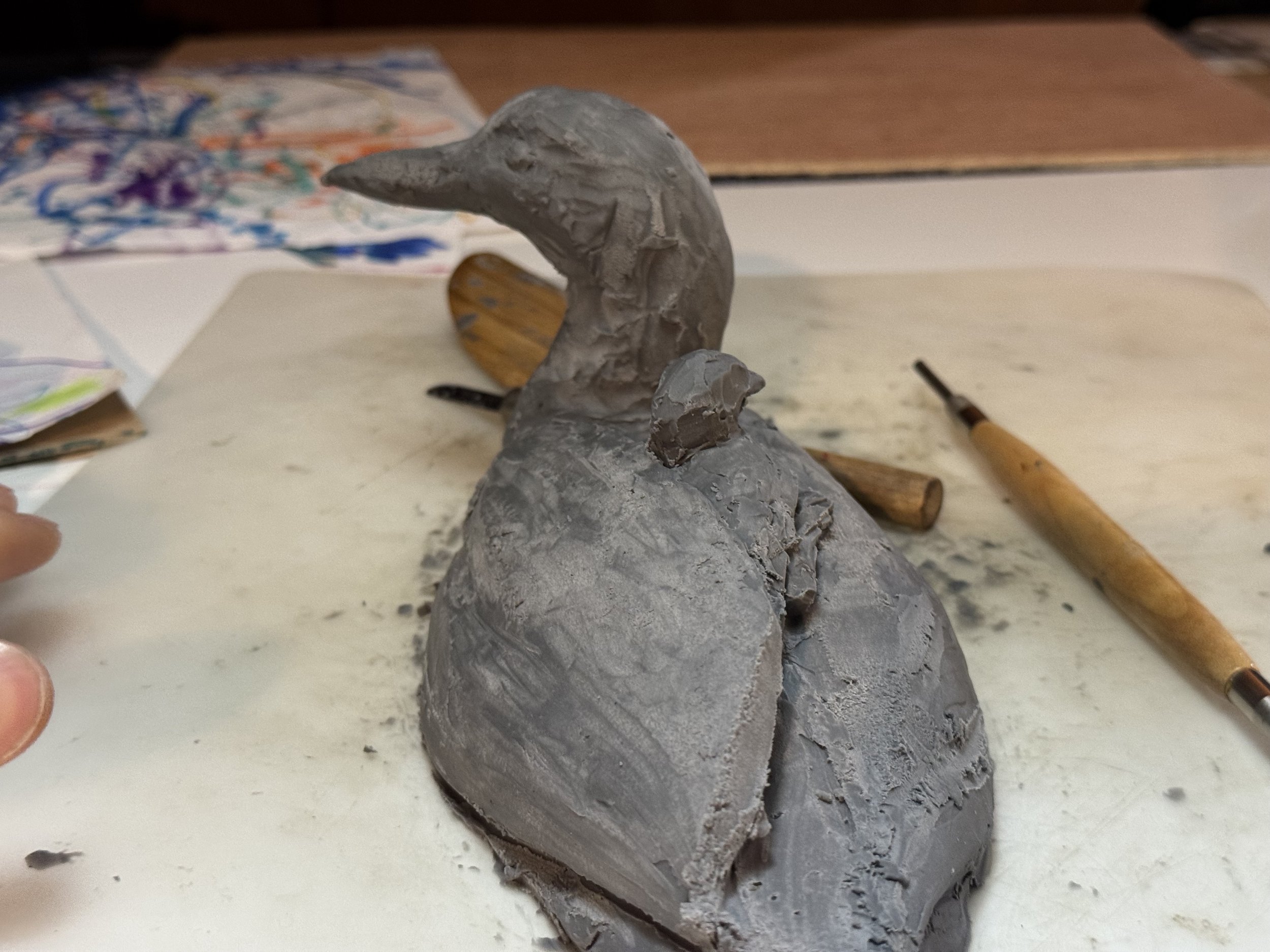
Something from Nothing
Sometimes the smallest act—a gesture so simple it almost feels insignificant—can set off a chain of events that changes everything.
There’s a quote that’s been sitting with me lately:
A true selfless act always sparks another.
I didn’t fully understand it until recently.
Not long ago, I wrote about a small moment that felt, in some quiet way, like a kind of intervention. A cardinal appeared at my window at a time when I had neglected something simple — feeding the birds. It nudged me to act, and I did. It was small, almost trivial, but the moment carried a strange weight to it. Something about it felt… aligned.
At the time, I described it as meaningful. Maybe even a little magical.
But what followed is what truly made me stop and reflect.
Shortly after that experience, I was contacted by a new client — someone generous, thoughtful, and unexpectedly connected to the work I’ve been doing. What struck me most wasn’t just the inquiry itself, but the reason behind it.
He had read my blog.
That alone surprised me. I often write with the assumption that these posts drift quietly into the void — unseen, unread, perhaps only glanced at in passing. But he didn’t just read it. He understood it.
He recognized something in it — not just the work, but the honesty behind it.
We shared similarities. Small details in life that mirrored each other. The kind of things that don’t show up in a portfolio, but somehow matter more than anything presented visually. And in that connection, something opened.
It led to the sale of a piece titled Fighting Chance — a piece that had been waiting quietly during a dry stretch of time.
Now here’s the part that challenged my previous thinking.
I’ve often believed that showing too much honesty — especially vulnerability — could work against you. That people might see it as weakness, something to avoid when making a decision about investing in an artist or their work.
But in this case, the opposite happened.
Honesty didn’t push someone away — it drew them closer.
It created trust. It created connection. And ultimately, it created movement where there had been stillness.
And that’s where the idea of the quote comes back.
One small act — feeding the birds.
One honest expression — writing openly.
One unexpected connection — a reader reaching out.
Each step seemed to lead to the next.
You could call it coincidence. You could call it timing. Some would call it karma.
But I’m beginning to think it’s something a little deeper than that.
There’s a kind of quiet order to things when we act from a place that isn’t calculated — when we do something simply because it feels right. Not for gain, not for recognition, but because it aligns with something internal we can’t fully explain.
And maybe that’s where meaning begins to unfold.
Following this, I felt compelled to give back — not out of obligation, but from a genuine place. Not from the head, calculating percentages or outcomes, but from the heart.
I made a donation to the Nature Conservancy of Canada — an organization that protects and restores natural habitats across the country.
It wasn’t a large amount. But that wasn’t the point.
The hope is simple: that somewhere, a small piece of land is preserved… that a creature finds space to live… that something continues because of it.
Something from nothing.
Or maybe, more accurately — something from something very small.
That’s what I’m learning.
We don’t always see the full chain of events. We rarely understand how one action leads to another. But every now and then, if you’re paying attention, you catch a glimpse of it.
And it’s enough to remind you to keep going.
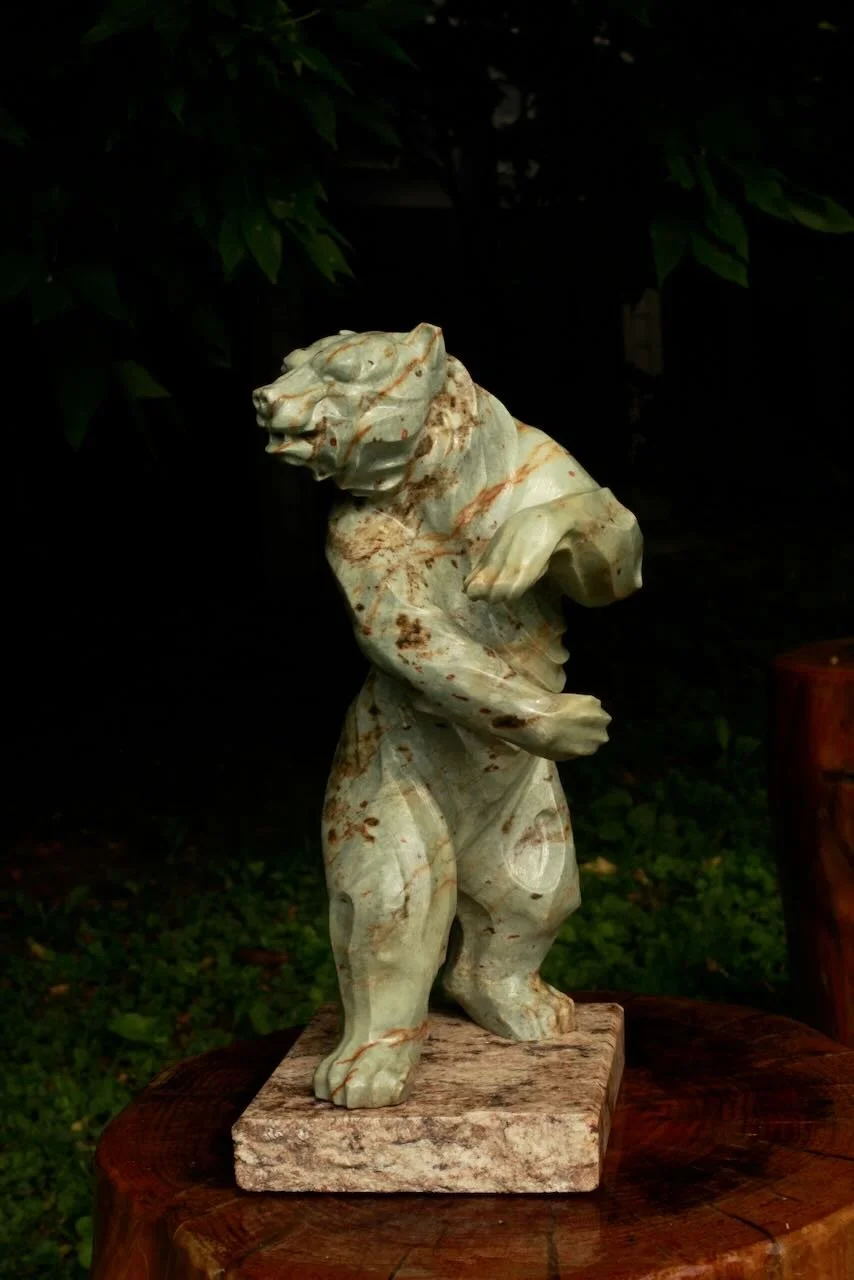
A Cardinal at the Window - The Fortune of the Forest Friends
Sometimes the smallest moments—a bird at the window, a lost object suddenly found—can feel like quiet reminders that we’re not as alone in this world as we think.
I have something to confess — and something to attest to. I’ll start with the latter.
In the chaos of getting ready for the weekend, we needed to give our daughter some medicine for a developing cough. The medication requires a device with a bright yellow cap on the back — large, unmistakable, the sort of thing you shouldn’t easily lose.
My wife called looking for it. My mother-in-law searched for it. I searched for it. We turned the entire floor upside down trying to find this bright yellow cap. Every object around the area had been lifted, flipped, or moved.
It was nowhere.
Now for the confession.
This year hasn’t been a strong one for art sales. Social media has a funny way of making everyone look like they’re wildly successful — “I went viral!”, “I’m a millionaire!”, endless attention-seeking theatrics designed to appease algorithms. But the reality behind the scenes is often quieter.
Economic pressures ripple everywhere. Many artists I know have felt the same downturn. When people tighten their budgets, art is often one of the first luxuries to disappear.
For years I’ve committed to sending 20% of my profits to conservation charities, particularly organizations that protect wildlife habitats like the Nature Conservancy of Canada. But with fewer sales and the constant investment needed to continue carving — stone, tools, equipment — I’ve been operating at a deficit for quite some time.
So this year my giving has been minimal. About $350 total, and even that came from a deficit.
On top of the financial pressure and the usual winter blues, I’ve been slipping in another way too. I haven’t been feeding the birds the way I normally do. Our feeder is usually filled every couple of days, but lately it had gone nearly three weeks without being replenished.
I justified it to myself. If I wasn’t making enough to give to conservation causes, maybe it made sense to ration the bird seed too.
Yesterday something interesting happened.
A cardinal landed in the tree outside our window.
That’s unusual. Cardinals are cautious birds, almost as wary of human movement as blue jays. They usually keep their distance. But this one came close, peering toward the window as if inspecting us.
My wife and I noticed him immediately. He lingered briefly, then flew away.
Something about it stuck with me.
I turned to my wife and said, “I’m going to go feed the birds. He’s probably asking for some.”
So I went outside and filled the feeder.
When I came back inside, I glanced at the spot where I had originally thought I’d left the yellow cap — the one we’d searched for everywhere.
And there it was.
Exactly where I had first remembered putting it.
I asked my wife if she had found it and placed it there while I was outside. She hadn’t. My mother-in-law hadn’t either. Both of them had searched that exact spot earlier, turning over everything nearby.
Yet somehow the cap had appeared in plain sight.
We stood there for a moment, both of us puzzled, replaying the search in our heads. It remains an unsolved mystery — and perhaps that’s how it should remain.
Because moments like this make me wonder if there are things happening in the world we simply don’t perceive.
We spend enormous effort trying to explain the mechanisms of the physical world, trying to make everything measurable, predictable, and provable. Yet sometimes small moments slip through the cracks of that certainty.
For centuries people have spoken about this idea: that we are spiritual beings experiencing a physical world. And when something unusual happens — a bird appearing at the right moment, a need suddenly being met — it nudges us toward that deeper perspective.
In many traditions, cardinals are considered messengers. Symbols of presence. Reminders that something beyond our immediate understanding is paying attention.
It made me think of the story of Elijah in the Bible. During a drought, he hides by a brook, and God instructs ravens to bring him bread and meat twice a day. An unlikely delivery system, but the message is simple: sometimes provision arrives through unexpected channels.
I’ve had similar little gifts from nature before — once finding a dried morel mushroom placed neatly on a back step, as if left there deliberately by some woodland friend.
Moments like these feel like tiny epiphanies. Small reminders that life may hold more connection and meaning than we usually notice.
In the middle of pressure, responsibility, and the constant grind of daily life, we forget that.
Jesus once said:
“Consider the ravens: They do not sow or reap, they have no storeroom or barn; yet God feeds them. And how much more valuable you are than birds! Who of you by worrying can add a single hour to your life?”
Sometimes we need reminders like that.
In the middle of obligations, stress, and uncertainty, it’s easy to forget that we are not entirely alone in this world. We share this land with countless other creatures, and caring for them — even in small ways like filling a bird feeder — is part of our responsibility.
Perhaps when we care for what’s around us, we’re reminded that we are cared for too.
As we care for each other, God will take care of us.
The Toll It Takes
Balancing family, work, and art comes with a cost. A reflection on exhaustion, doubt, and the quiet hope that the sacrifices behind creative work are worth it.
There’s a problem with my life.
I have commitments. A lot of them.
I’m a father to a two-year-old daughter who completely owns my heart. I’m a husband. I’m the handyman fixing whatever breaks around the house. I’m a factory worker stuck on what feels like indefinite overtime. And somewhere in that list — sometimes barely hanging on — I’m also a stone carver.
And if something has to go, it’s always that last title sitting on the chopping block.
The doubt creeps in constantly. Am I even good enough? All it takes is a few broken tools, a round of maintenance and cleanup, and then another brutally hard stone that takes three times longer to carve than expected — and suddenly the whole effort feels impossible.
Most nights the work happens when no one else is around. After a ten-hour shift, after the house quiets down, I’ll drag myself toward the studio with a cup of coffee for courage. Sometimes I get an hour in. Often it’s less. If I were being honest, the time I spend making art is usually borrowed directly from sleep.
In other words, my art is carved out of exhaustion.
That kind of life has a cost. It throws balance out the window. I’ve put off basic things — doctor’s appointments, the maintenance of my own body — the way someone ignores the oil light in their car for too long. I used to run to keep myself grounded, to work out the stress and the aches. That’s fallen away too.
Fun? I’m not even sure what that looks like anymore.
So sometimes I look at this situation and ask myself: what exactly is this all for?
If the goal were money, it would be a terrible trade. The tools alone cost more than the work brings back most of the time. I’ve invested in equipment simply to make the process faster — trying to squeeze creation into the cracks of a life that’s already overflowing.
Financially, it doesn’t make sense.
But there’s something else that keeps me going.
A small, stubborn glimmer of hope that what I’m trying to say through the stone actually matters. That the message buried in these pieces will reach someone. That the time and effort — the literal blood, dust, and aching joints — might carry some kind of meaning beyond the object itself.
Maybe something bordering on spiritual worth.
That hope is thin sometimes, but it’s enough to keep the tools moving.
Because when you commit to making something real, you can’t always measure the value immediately. You just keep carving and trust that somewhere along the line, the work will justify the sacrifice.
At least, that’s the hope.
Because if I’m honest — on nights when the exhaustion hits hardest — I still find myself asking the same question:
Is it worth it?
I truly hope it is.
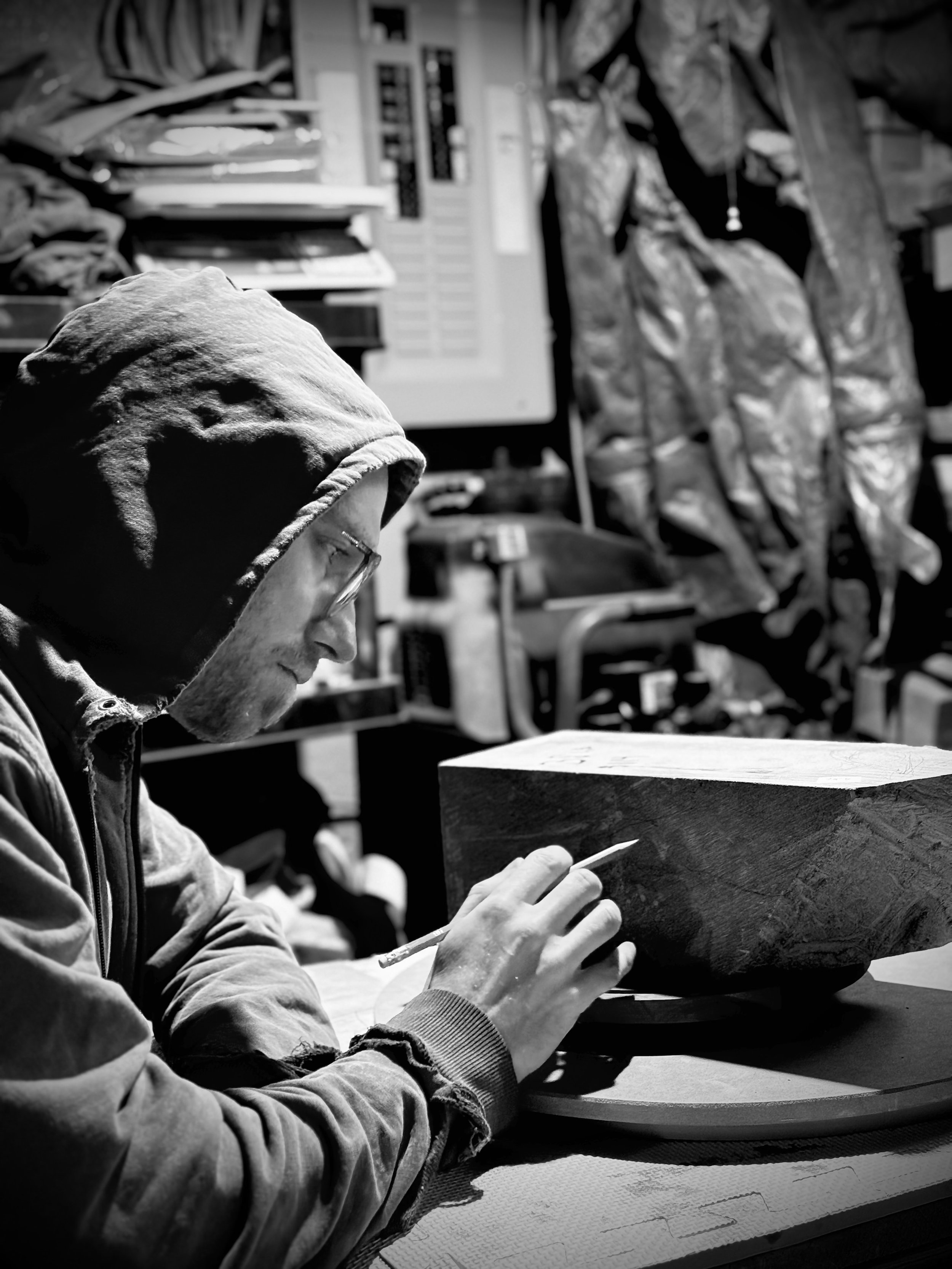

Learning All Over Again — Nocturnae & Clean Again
Each time I return to the owl or the bear, I begin again. Nocturnae and Clean Again explore two distinct personalities in stone — one watchful and nocturnal, the other instinctual and grounded. These sculptures reflect the slow process of learning to feel movement, muscle, feather, and fur from within the stone itself.
Each time I return to an owl or a bear, I’m learning all over again.
No two works of mine are much alike. Part of that is intentional — I leave space before approaching a subject again. I try not to repeat the same pose, the same lines, or even the same mistakes. That space forces me to approach the form as if it were brand new — living, dynamic, and deeply personal.
I’ve carved several owls and bears, as you may have noticed. But these last two feel different. They feel more real to me — not necessarily because they are “better,” but because they carry more life. They speak a little louder when viewed.
I know there is still a long way to go. Not in the sense of making a better sculpture, but in learning to truly feel the life of the barn owl or the polar bear — to carve as if it were my own body. To understand every joint and muscle, every fold of feather or sweep of fur. To sense how they move. How they rest. Even how they might feel.
Growth as an artist is slow and patient. Each day is unique. Allowing the process to unfold in its own time is paramount.
Nocturnae
The word Nocturnae means “belonging to the night.” After long night shifts spent carving, I sometimes feel nocturnal myself.
This piece took years of quiet deliberation. The stone sat for a long time before it revealed itself. When it finally did, it wasn’t obvious or graceful — it showed itself crudely, almost stubbornly. I wish I had a photograph of its original state. You’d be surprised it’s the same work.
But that’s part of being an artist. You gaze into stone the way you might gaze into the stars — until a shape begins to emerge from the chaos of constellations.
The owl, in my mind, is deeply observant. Fused in stillness. Perched high on a rafter or doorframe, trying not to be seen, yet fully aware. It locks its gaze onto someone below, quietly contemplating their thoughts and feelings. There is tension in that stillness — a presence that feels almost psychological.
Clean Again
Where the owl holds silence, the bear carries gesture.
The pose may look playful or even lazy — the slow shuffle after a long day, hindquarters raised, sliding forward to spare a few calories. It’s open to interpretation.
But in truth, the bear is cleaning its fur by dragging its body across the snow. Hence the name Clean Again. It’s a simple, instinctual act. A reset. A return to clarity.
What I love most about these two pieces is their personalities. They are distinct from one another, yet both feel alive in their own way.
Both Nocturnae and Clean Again are currently available and can be viewed in the Available Works section of my website. I invite you to take a closer look — sometimes the life within a sculpture reveals itself more fully when you stand quietly in front of