Taking a Break to Learn Another Craft
And now for something completely different.
I’ve stepped away from stone carving for a little while.
Partly, it’s to make sure I don’t compete with myself creatively. Sometimes the best thing an artist can do is forget what they know for a while, buy the tools they’ve always wanted, learn something completely different, and return with fresh eyes. That’s where I find myself.
This past week was… potty training week.
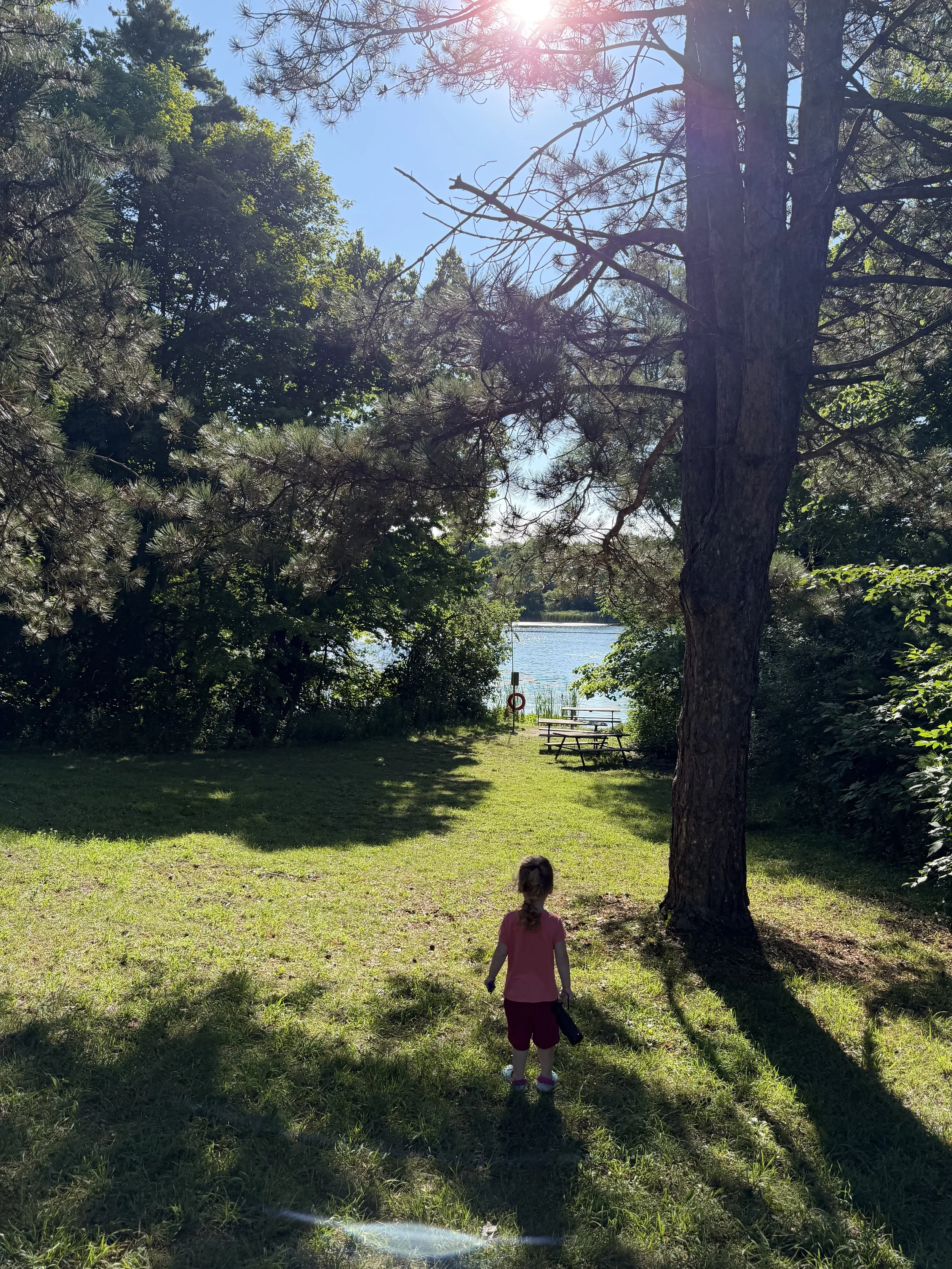
Our two-and-a-half-year-old daughter has been learning one of life’s great milestones, and my wife and I have spent more time encouraging someone over a toilet than I ever imagined possible. I’ll spare you the details.
Being home has its own challenges. Cabin fever has a way of convincing me I should tackle three projects at once. Instead, I’m learning patience. I’ve been spending an hour or two each day making quiet progress on a few different things.
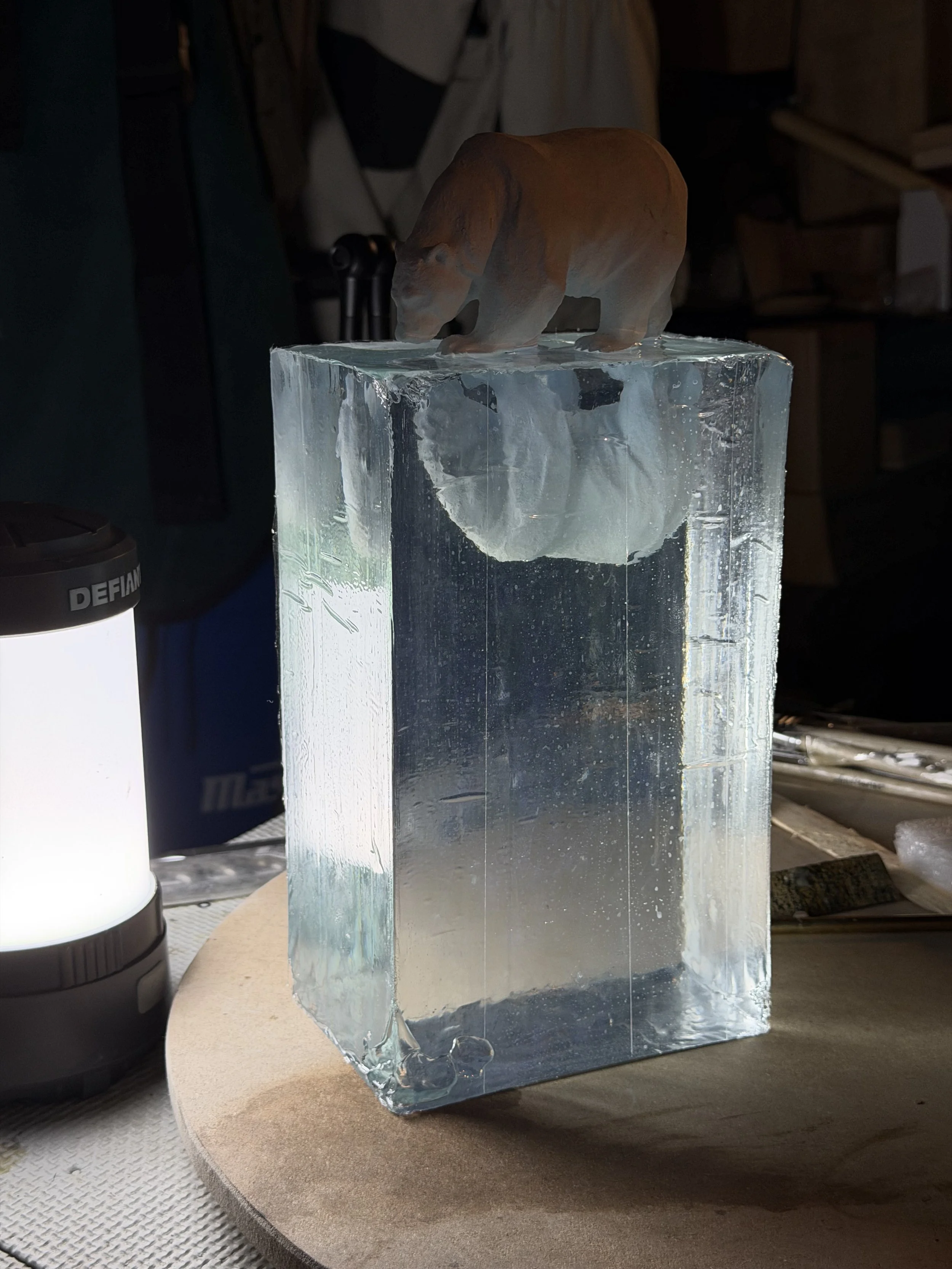
One is the final stages of a new Veritas Composite sculpture.
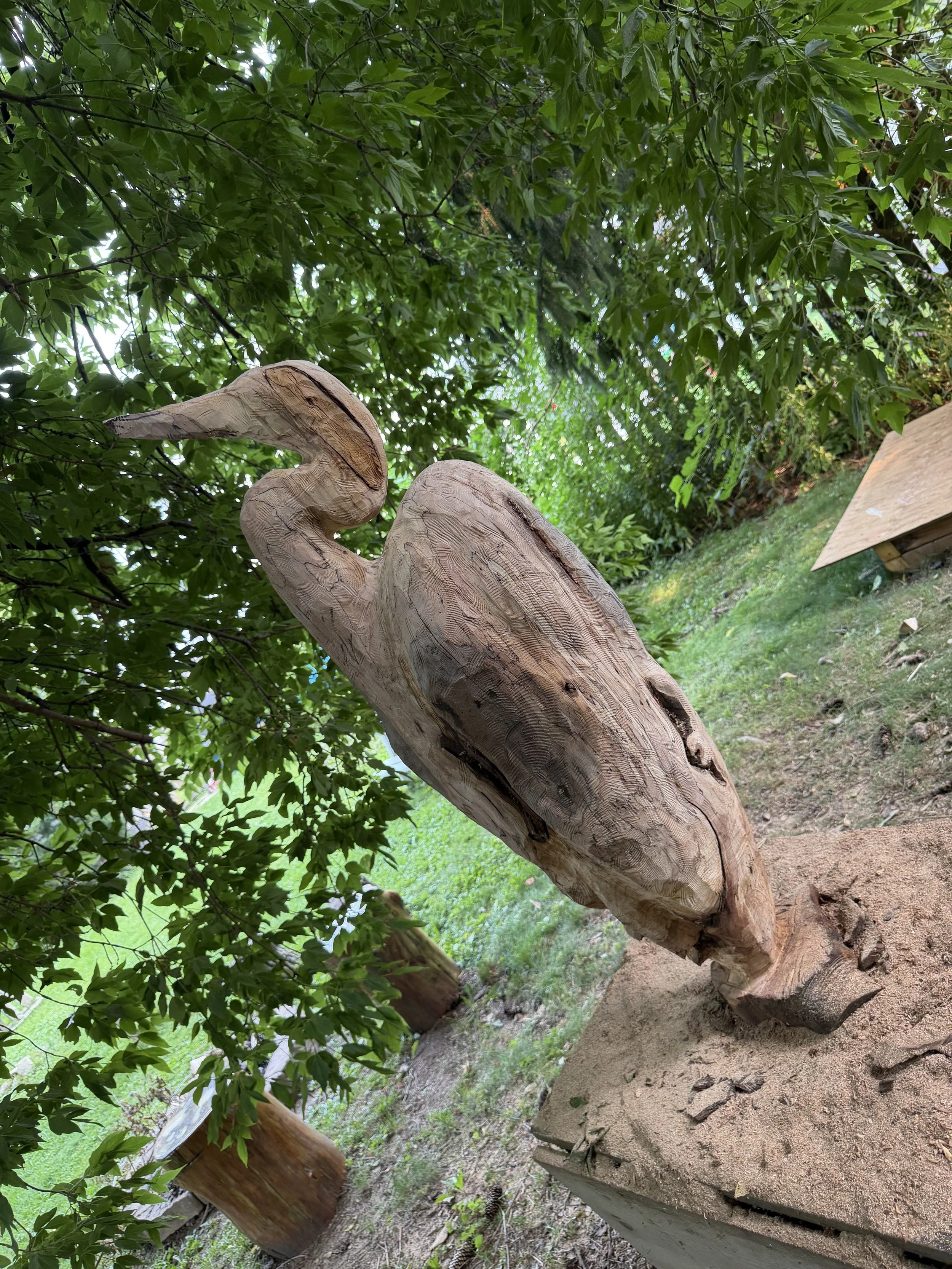
Another is a large Great Egret—slightly larger than life, with a body measuring nearly three and a half feet before the legs are even attached. I’ve reached out to an old blacksmith instructor to help fabricate the steel legs and base. It wasn’t until I stood back and looked at the body that I realized just how ambitious this sculpture had become. Sometimes a project quietly grows into something much bigger than you expected.
The third project, however, has completely captured me.
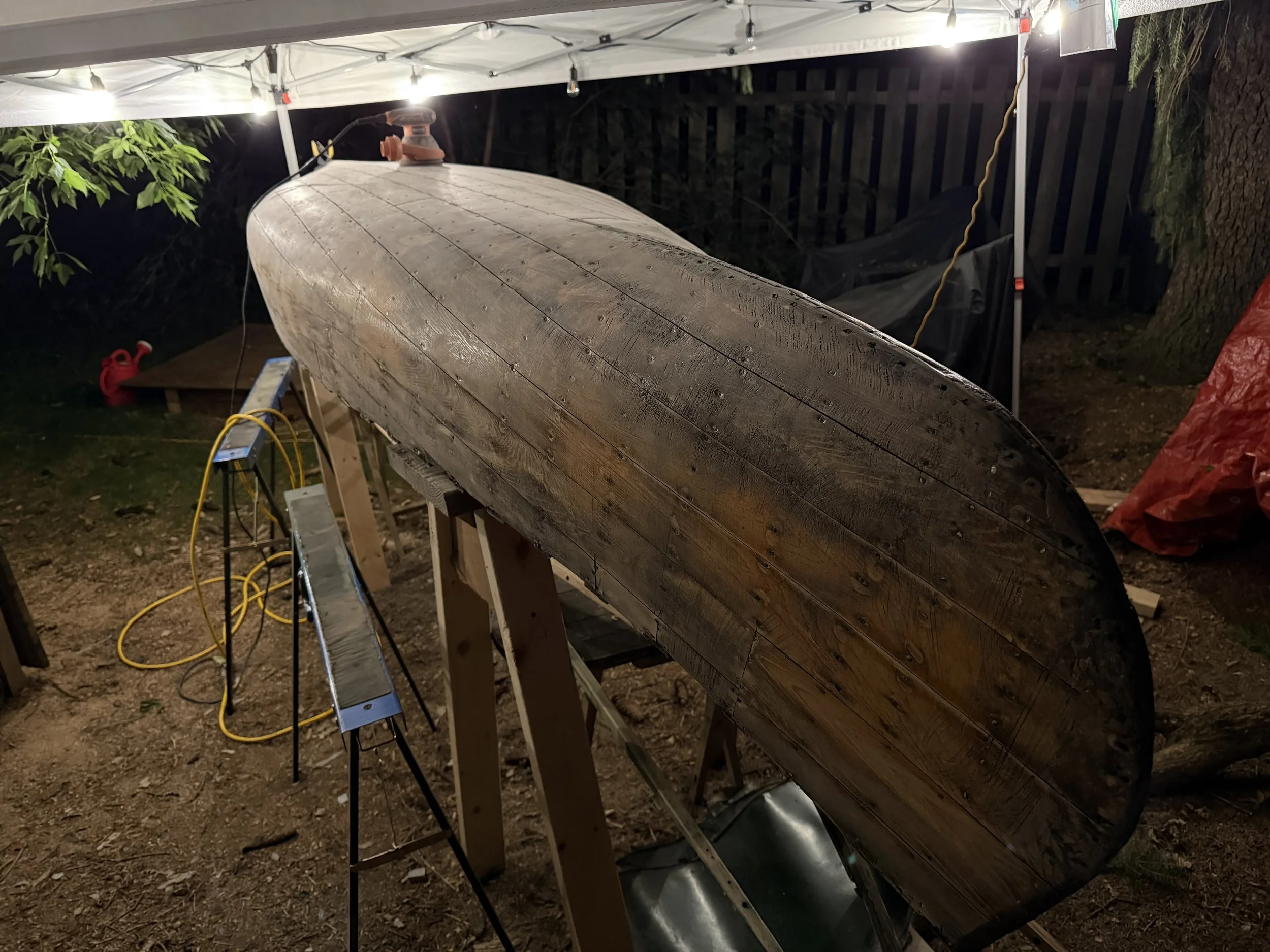
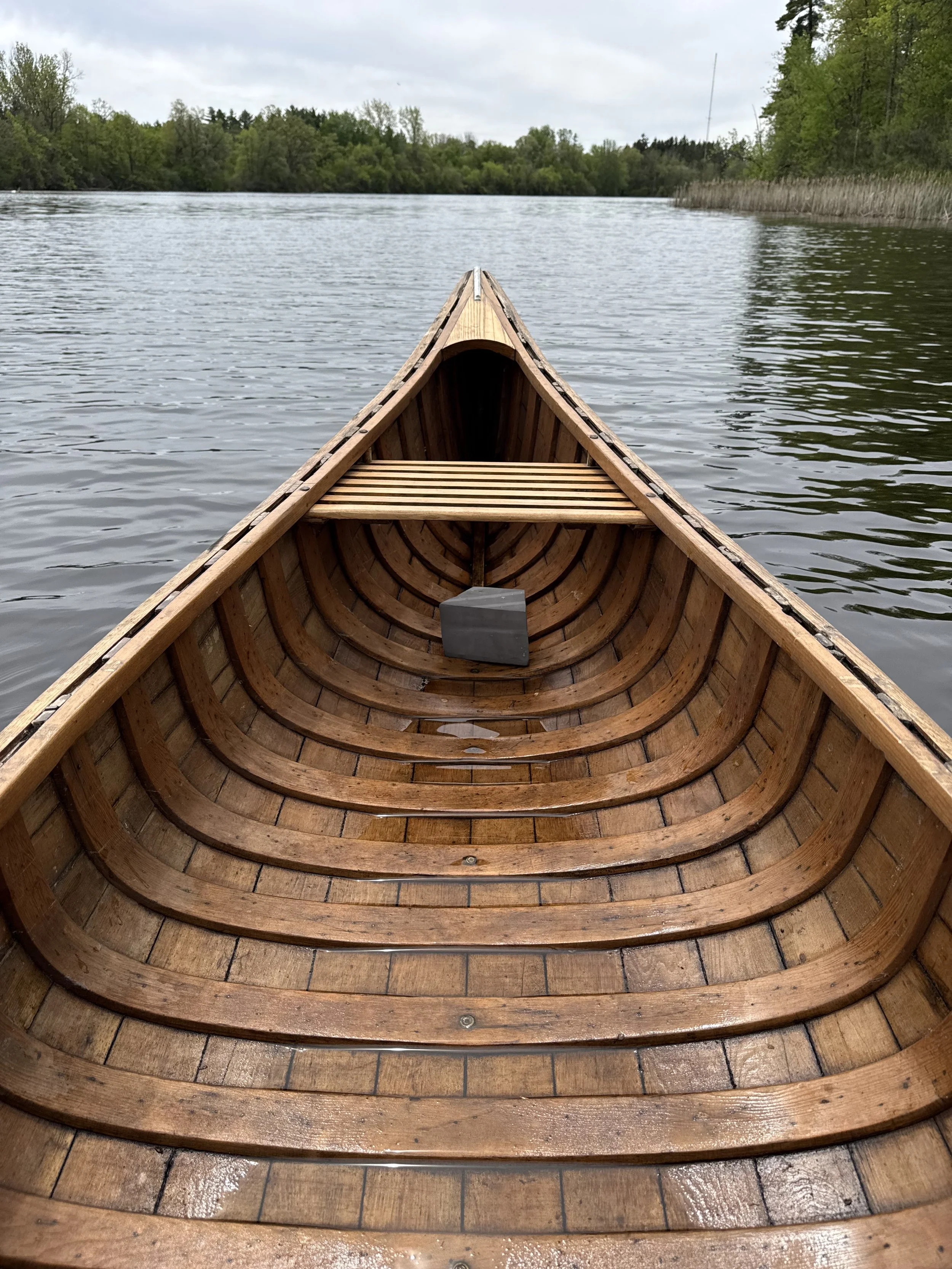
It’s a 17-foot cedar-canvas canoe that I believe is a Chestnut Prospector, though there is no certain way to confirm it. What I do know is that its craftsmanship is exceptional. Details like the single-piece inwales, outwales, and keel reveal a level of work that is becoming increasingly rare.
The more I study it, the more I feel responsible for restoring it properly.
I bought one of the most comprehensive books I could find on cedar-canvas canoe restoration. At first I thought I was simply removing the old canvas, restoring the wood, and installing new canvas. I quickly discovered that every one of those steps branches into dozens more. There are countless small decisions that determine whether the canoe will last another few years—or another generation.
It has been humbling.
I won’t mention how much I’ve spent gathering supplies.
But I still remember the first time I slid the canoe into the water after buying it for $750 from a seller on Kijiji. He hadn’t cared for it the way he claimed, but he was honest about one important thing: before he owned it, it had spent decades hanging safely in the rafters of his aunt’s barn. Because of that, it survived in remarkably good condition compared with most cedar-canvas canoes of its age.
The first paddle made me smile.
Not because it was perfect, but because I could already see what it could become.
Working on this canoe has become my break from stone carving, but it has also reminded me why I love making things in the first place. I’m learning another person’s craft. I’m studying the decisions made by builders long before I was born, trying to understand why each piece was shaped the way it was.
It also connects me to Canada’s history. Long before cedar-canvas canoes, voyageurs travelled incredible distances in enormous birchbark canoes held together with spruce roots, bark, and pine pitch. The cedar-canvas canoe became the evolution of that tradition—a practical, durable craft built for hard travel and generations of use.
Mine is only seventeen feet long, small enough that I can load and paddle it alone. It reminds me of the sixteen-foot plastic canoe my parents owned when I was younger. I spent many days on the water in that canoe, and restoring this one feels like reconnecting with a part of myself I hadn’t realized I missed.
The funny thing is that none of this feels very different from stone carving.
Both are old crafts.
Both ask for patience over speed.
Both reward careful hands more than hurried ones.
We live in a time that celebrates instant results, but the things that endure still ask for time. Coffee beans are still grown, picked, roasted, and prepared with care. Farmers may harvest with machinery now, but that simply shifts the craftsmanship into designing, building, and maintaining the equipment that makes the harvest possible.
The work never truly leaves our hands.
Whether we’re carving stone, restoring a canoe, growing food, or building something entirely different, our feet are still planted in the same earth as those who came before us.
So here’s to the craft—whatever yours may be.
May you follow it farther than you ever imagined it could take you.
And when the work asks for patience, give it freely.
One careful step at a time, until the path has finished telling you where it was leading all along.