Mr. Clean and the Freedom of Getting Messy
On childhood, the natural world, creative disorder, and the structures that keep us from living.
There is an odd memory that continues to return to me throughout my life. It is a junction point between relief and humour, a familiar crossing in the road that I find myself turning back toward whenever I need to question the nature of the culture we inhabit.
In some ways, it seems to divide me into two people.
One belongs to a life that feels original and natural: a life of freedom, play, satisfaction, and connection to the world as it is. The other belongs to a life that is rigid, stressful, and demanding, offering only occasional glimpses of freedom—just enough to convince me that I belong within the world it has constructed.
Yet I wonder whether these two worlds are real distinctions at all, or merely identities I have invented between the past I remember, the present I struggle to inhabit, and the future I am trying to reach. Perhaps I am chasing a future that will eventually lead me back to the past, provided I can grow through the discomfort that adulthood seems to demand.
Whatever the answer, I keep returning to one particular afternoon in my childhood.
The Rituals of Being Clean
When I was young, I developed an unusual attentiveness to the small things in life I could control. These details offered a sense of safety in a world where acceptance sometimes felt conditional.
Even the position of my bedroom door mattered. Leaving it open by just the right amount allowed enough air to circulate and let in the right amount of noise in the morning. I wanted to wake neither too early nor too late. It was a small arrangement, but one that gave me a sense of order over something otherwise beyond my control.
Chores carried a similar significance. Keeping things sufficiently tidy felt almost ceremonial, like a rite of passage into a world where I might be accepted. Personal hygiene became a kind of secret code—a means of protecting myself from unwanted attention, disapproval, or the possibility of being regarded as somehow less worthy.
Looking back, I can see how these habits offered more than cleanliness. They offered reassurance. If I could keep the little things in order, perhaps I could keep the larger world from turning against me.
But there was another world waiting for me, one that operated according to an entirely different set of rules.
Three Hundred Acres of Freedom
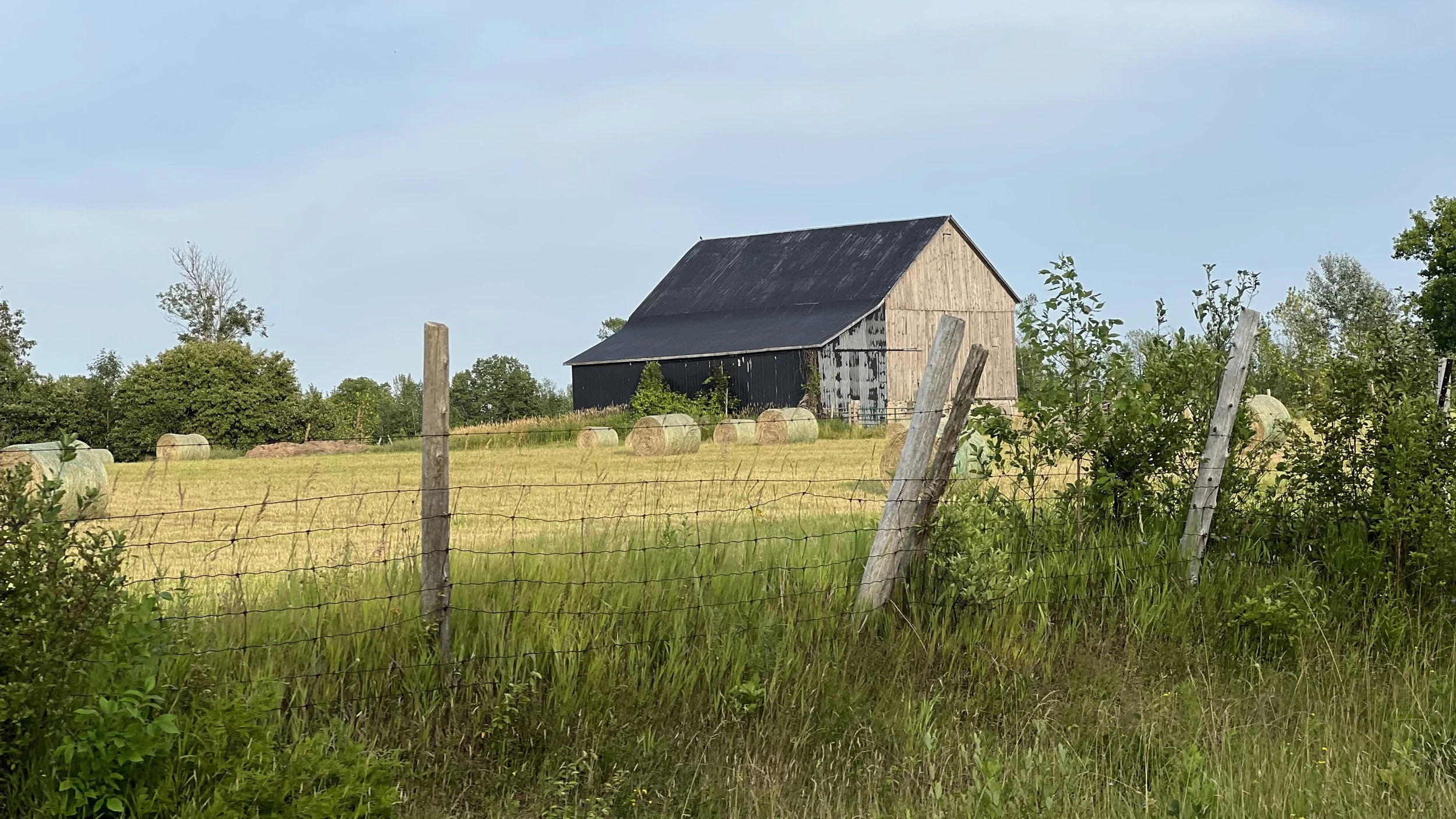
Through my church, I became friends with a family of four boys who lived on a cattle farm. They were a close-knit group, the oldest a little older than me and the youngest about six years younger. Their family often invited me over after church for lunch, to spend the afternoon together, or for supper before returning to the evening service and eventually being dropped off at home.
Those visits opened up a world that I could hardly have imagined within the confines of my own routines.
There were fields to explore, a small channel connecting to the lake where we could swim, fishing, paddle boating, and the occasional sinking of that very paddle boat. There was paintball, and later, three-wheeling along the back trails, sometimes pushing our luck until we found ourselves waist-deep in mud, trying to get through a puddle without getting bogged down.
The property covered hundreds of acres. I suspect there was more of it that I never explored than I ever managed to see.
We had the kind of freedom that seems increasingly difficult to describe as an adult. The days were filled with whatever we could find to do. There was no elaborate plan for making the afternoon meaningful. We simply went outside and allowed the world to provide us with something to experience.
Some of those adventures were over far too quickly. I remember wishing that certain afternoons could have lasted longer, without understanding that the wish itself would become one of the defining feelings of adulthood.
Eventually, we grew up. We attended high schools in different regions, and although we remained friends, the distances between us grew with the responsibilities of work and adult life.
The fields remained where they were, but we no longer belonged to them in quite the same way.
Mr. Clean Meets the Manure
I was probably in Grade Five when the incident occurred.
We were sitting on the back of a tractor-trailer that we occasionally hitched a ride on to get around the farm. I remember one of my friends teasing me about how clean I always was. He called me Mr. Clean, making a joke of the way I seemed to care so much about keeping myself presentable.
His point was simple enough: if I wanted to have fun with the rest of them, I needed to stop worrying so much about getting dirty.
We were out in the fields, where cow manure was simply another part of the landscape. It was something to dodge, step over, or occasionally encounter in ways that were less than pleasant. To my friend, it was hardly worth thinking about.
Eventually, I grew tired of being teased. Fine, I thought. If being clean was keeping me from enjoying myself, then I would give it up.
My friend responded immediately.
He grabbed a handful of dried manure from the trailer and tossed it into the air above our heads like confetti, cheering as the pieces came down around us.
I still remember my reaction.
I flinched, brushed the bits from my clothes and hair, and protested, “Not like that!”
It was hardly a heroic surrender to the natural world. I had agreed to let go of my cleanliness, only to discover that I had not meant it quite so literally.
But something changed in that moment.
I had been forced to confront the difference between the idea of letting go and the actual experience of doing so. It was one thing to agree that dirt should not prevent me from enjoying life. It was another to have dirt falling onto my head.
And yet, beneath the humour of the incident, there was a lesson I have spent years trying to understand.
Life is messy. Work is messy. Play is messy. The things that matter often require us to enter into the disorder of the world rather than remain safely outside it.
Sometimes, you have to get your hands dirty before anything worthwhile can happen.
The Necessary Disorder of Making Things
I have come to recognize that this memory is a turning point I return to whenever I struggle with my own need for order.
There is a difference between maintaining a useful structure and becoming imprisoned by the need to keep everything structured. One allows life to function. The other can prevent life from happening at all.
Of course, I have not resolved this distinction. It is often difficult to know when disorder is necessary and when it has simply become an obstacle.
Every task has its own relationship with chaos. Materials must be gathered, tools must be found, ideas must be tested, and mistakes must be made before a finished work can emerge. Eventually, the disorder needs to be brought back into a workable arrangement. A clean workspace allows the next stage of the process to begin.
But the creative process rarely moves in a straight line from order to order.
In my stone-carving studio, I have spent much of the past year pushing the boundaries of what I can accomplish within the space available to me. New projects, new techniques, and new possibilities have accumulated alongside the tools and materials required to pursue them.
My basement studio is hardly three hundred acres of open farmland. It is a small space in which I have tried to make room for an increasingly ambitious practice. Soon, I hope to expand into an open pavilion-style structure, with curtained walls to help contain the dust while allowing more room to work.
The desire behind that expansion is not simply to create a cleaner or more impressive studio. It is to make room for the work itself.
Still, there comes a point when the mess begins to take more than it gives. Time disappears searching for misplaced tools. Projects become buried beneath other projects. Materials that were meant to serve a purpose become obstacles. Hours of activity produce little tangible progress.
The creative disorder that once opened possibilities becomes a system of its own, demanding time, energy, and money merely to maintain itself.
And that is where the distinction matters.
The goal is not to eliminate disorder. It is to recognize when disorder is serving the work and when the work has become subservient to it.
There is a difference between a studio alive with possibility and a studio that has become a monument to unfinished intentions.
I am still learning where that line lies.
When the Rules Become More Important Than Life
There is a related tension I find in the Biblical narratives, particularly in the way Christ confronts the religious authorities of his time.
Again and again, he challenges those who place the observance of religious law above the needs of the people standing before them. The Pharisees become figures through whom we can examine the danger of mistaking the rules for the purpose they were meant to serve.
In these accounts, the question is not simply whether a law should be followed. It is whether following it has become an excuse to neglect compassion, mercy, and the humanity of others.
Christ’s message repeatedly points toward a relationship with the divine that cannot be reduced to the approval of religious authorities or the successful performance of prescribed rituals. The hope he offers is that God is not distant from the people, waiting behind a wall of human requirements, but present among them.
The distinction is profound.
A structure intended to help people live meaningfully can become a structure that prevents them from living at all. A ritual intended to deepen a relationship can become a substitute for the relationship itself. A law intended to serve life can eventually be treated as though life exists to serve the law.
I recognize something of this pattern in my own habits.
The small rules I established in childhood were not inherently bad. Cleanliness, organization, and routine can all be useful. They become restrictive when their purpose is forgotten and their observance becomes an end in itself.
Perhaps the same is true of the larger systems we inhabit.
We construct rules, institutions, expectations, and standards to help us navigate the world. Over time, however, we can become so occupied with maintaining these structures that we lose sight of the life they were supposed to support.
We become caretakers of the framework rather than participants in the experience it was built to contain.
And in doing so, we can lose something of our capacity to help one another, to work freely, and to recognize what is needed in the moment.
The City and the Country
I have often felt this tension most strongly in my life as a city dweller.
There is a particular discomfort in feeling that one’s character must be maintained for the benefit of an audience. To remain clean, composed, productive, and presentable can begin to feel like a performance, as though I were a mannequin in a shop window or merely the frame for someone else’s painting.
The life I experienced as a child was not free of work, hardship, or responsibility. It was not some perfect, untouched paradise. But the relationship between work and experience felt more immediate. There was land to cross, water to swim in, animals to care for, and mud to get stuck in. The world offered its challenges directly, without requiring so many layers of interpretation.
In the city, I sometimes feel caught in a different kind of cycle.
We construct systems, maintain them, tear them down, and rebuild them in the name of progress. The process becomes so consuming that it is difficult to ask whether we are moving toward a more fulfilling life or simply becoming more efficient at maintaining the machinery of our own existence.
The city gathers the fruits of the country and concentrates them into systems of exchange, production, and consumption. Yet in doing so, it can distance us from the natural processes that make those fruits possible in the first place.
I do not mean that city life is without value, or that returning to the country would resolve every difficulty. The problem is not geography alone. It is the possibility that our environments, wherever they are, can become so dominated by maintenance and expectation that we lose contact with the things that make life feel alive.
The result can be a strange kind of unfruitfulness: a life filled with activity but starved of the experiences that make activity worthwhile.
Sometimes it feels like breathing the same stale air inside a building for months without ever opening a window.
Suffocating.
Finding My Way Back
I wonder now whether that afternoon on the tractor-trailer was about more than cleanliness.
Perhaps it was an early encounter with the tension between the person I thought I needed to be and the person I was free to become.
I wanted to be accepted. I wanted to be safe. I wanted to avoid the discomfort of being judged or found wanting. These are understandable desires, and I do not think I need to condemn the younger version of myself for having them.
But I also wanted to play.
I wanted to swim, fish, explore, and spend entire afternoons doing things that had no purpose beyond the experience itself. I wanted to belong to a world in which the occasional mess was simply part of being alive.
Growing older has given me responsibilities that cannot be dismissed. My work as a sculptor requires discipline, planning, and the willingness to confront difficult practical realities. Materials cost money. Time is limited. A studio must eventually be organized. A sculpture must be brought to completion.
Freedom does not mean abandoning these things.
It means finding a way to serve them without allowing them to consume everything else.
Perhaps the task is not to return to childhood, but to recover something of the relationship with life that childhood made possible. To approach work with seriousness without making seriousness the whole of life. To keep a studio functional without demanding that every moment of the creative process be orderly. To participate in the world without surrendering the parts of ourselves that do not fit neatly within its expectations.
I am still trying to learn this.
Some days, I suspect that the future I am chasing is not really a future at all. It is an attempt to recover something I once knew instinctively: that life is not meant to be lived entirely in preparation for living.
There is work to be done, but there are also fields to explore. There are tools to put away, but there are also things worth making a mess for. There are rules that help us live together, but there are also moments when compassion requires us to look beyond them.
And sometimes, when I find myself worrying too much about keeping everything in its proper place, I remember that boy sitting on the back of a tractor-trailer, surrounded by open fields, being called Mr. Clean.
I remember his reluctant surrender, the flying manure, and the indignant protest that followed.
Not like that!
I can still laugh at it.
But I also wonder whether the answer was always hidden in the joke. I did not need to become careless, nor did I need to abandon every desire for order. I needed to learn that a little mess was not the end of the world.
Sometimes it was the beginning of an experience I would remember for the rest of my life.
And perhaps that is what I am still trying to make room for: a life in which the structures I build support the living, breathing experience of being here, rather than becoming walls around it.
A life in which I can work, create, and take responsibility without forgetting the freedom that made any of it worth pursuing in the first place.
A life with enough room to get a little dirty, to breathe fresh air, and to remember that I belong to the world—not merely to the systems we have built around it.