Finding Life in Form
I have been thinking lately about something that I believe is fundamental to sculpture: the importance of finding forms that feel alive.
When we carve stone, we are asking something relatively inert to appear as though it contains life. Whether the subject is an animal, a plant, a human figure, or something completely abstract, the form itself must possess some quality of movement, growth, tension, rhythm, or balance.
Before the detail, there must be life in the shape.
I was reminded of a story from high school. A young student was painstakingly painting a field of poppies, carefully placing each flower as though she were planting them one by one. She had invested enormous effort into the individual flowers, but had become absorbed in the details.
Our art teacher came over and told her that the painting needed ground beneath it. Then, to demonstrate what he meant, he took a broad brush loaded with darker tones and swept it across much of the painting.
She was horrified.
Yet there was something important in that moment. Sometimes, in our effort to perfect the individual parts, we lose sight of the thing that makes the whole work function. Details are important, but they must serve the larger form. Every mark has to belong to something.
I think sculpture works in much the same way.
A sculpture can be technically accurate, beautifully finished, and full of carefully rendered details, yet still feel strangely lifeless. Conversely, a very simple form can immediately capture our attention without telling us exactly what we are looking at.
Try standing thirty feet away from a sculpture less than a foot tall. Before asking what it represents, ask yourself whether the shape itself makes you want to come closer.
Perhaps it resembles a shell, a growing plant, a folded body, a wave, a seed, or something you cannot quite name. What matters is that some quality within the form catches us. We recognize something—not necessarily an object, but a quality of life.
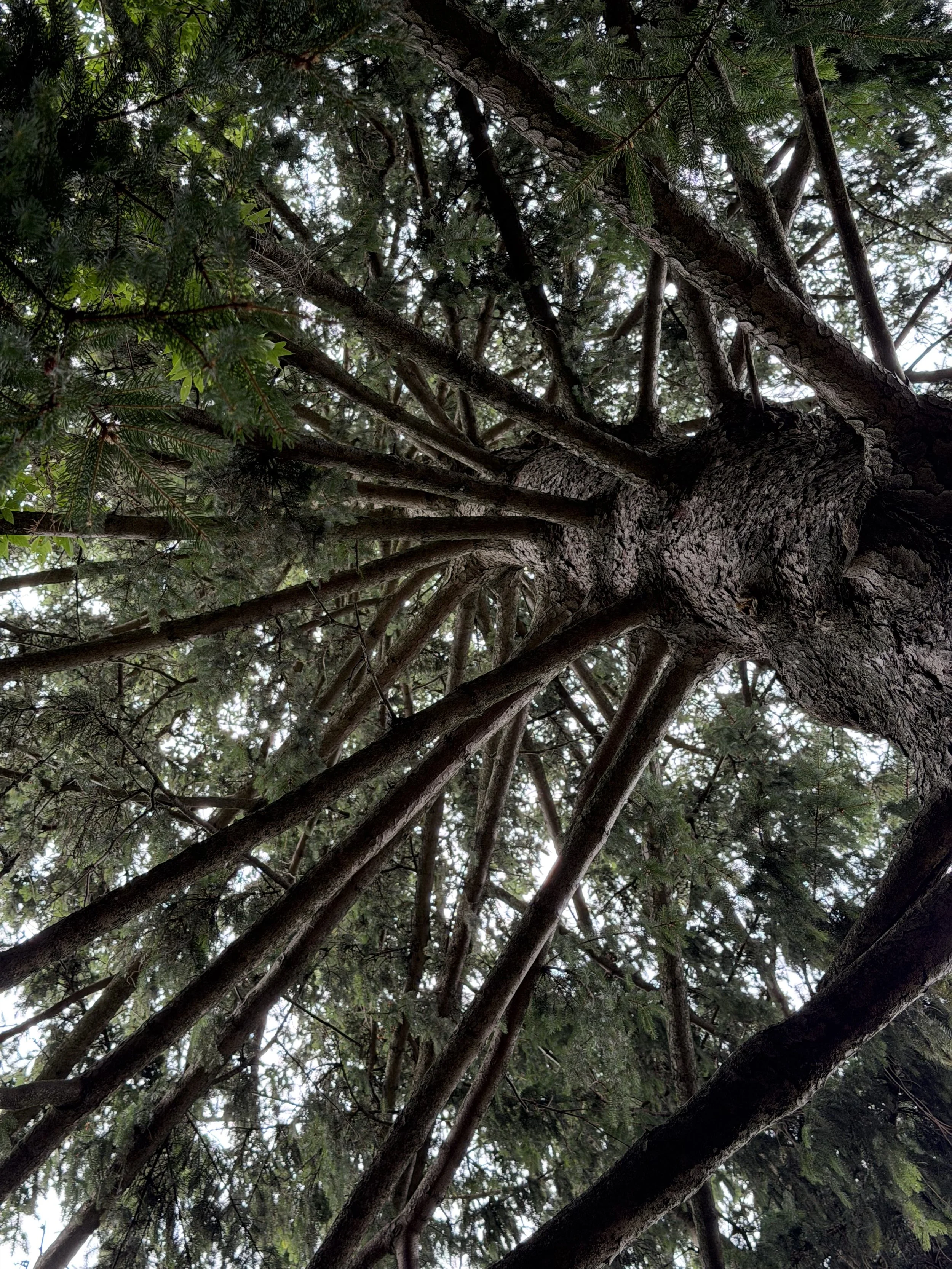
Nature is filled with forms that do this. Curves, spirals, branching structures, asymmetry, repetition, rhythm, growth and balance appear everywhere. We are surrounded by shapes that communicate movement and vitality without having to literally depict a living thing.
This is part of what makes nature so compelling to us. We don't simply look at it. We respond to it.
As sculptors, I believe we can use that response.
The challenge is not simply to make stone look like something. It is to find the underlying form that makes that thing—or even an abstract shape—feel alive.
This becomes especially important when working in stone. Stone is hard, heavy, and fundamentally inert. Yet through carving, we can give it the appearance of movement, softness, growth, tension, or even breath. We can make something that cannot move appear as though it is about to.
That, to me, is one of the great possibilities of sculpture.
The search for those living qualities within a form should therefore come before almost everything else. Detail, texture, and finish can enhance a sculpture, but they cannot rescue a form that never had life in it to begin with.
So when you are outside, slow down and look.
Notice the curve of a branch, the spiral of a shell, the posture of an animal, the way a leaf unfolds, or the shape of a stone worn by water. Pay attention to the forms that draw your eye before you even understand why.
Don't necessarily try to copy them.
Study them.
Feel what it is about them that suggests life, and then carry that understanding back into your own work.
Because perhaps the real goal of carving is not to make stone resemble life.
It is to make stone feel alive.