
Veritas Composite: Building Beyond Stone
Over the past several years, I’ve been expanding my sculpture practice beyond traditional stone carving into 3D scanning, bronze casting, and now a new hybrid material system called Veritas Composite.
This last week and a half has been a rush into something only my wife fully knows about. All the technical details of how to approach each individual project have been carefully rehearsed in my head — variations of possibilities revisited daily as I work on the Lexus RX line at Toyota Motor Manufacturing Canada here in Cambridge, Ontario.
Over the last five years, I’ve likely contributed to building around 800,000 vehicles. The process is so deeply ingrained in muscle memory that it frees my mind to focus intently on other projects. That’s the goal — to develop another operation that can run fluently alongside my stone carving practice.
Let me put it lightly before revealing too much. Stone carving is a deeply methodical process. My last project reinforced that reality. Working with black chlorite stone — roughly a 2–3 on the Mohs hardness scale — is still demanding. Even with extensive tool use, there is no shortcut through the material. It resists speed. It demands time.
So I began developing something alongside it — something I’ve quietly committed half my efforts toward before even producing true prototypes.
In truth, this has been unfolding for over six years.
It began with experimenting in 3D scanning. Using LiDAR through my iPhone Pro, I started building digital versions of my sculptures. At the time, it felt revolutionary — but the process was crude. I spent hundreds of hours refining just a few models, cleaning scans, improving surfaces, and preparing them for use. Some of these were uploaded online so others could produce their own versions, allowing me to gather feedback and explore new directions.
Two years ago, I invested in a dedicated laptop and a higher-precision 3D scanning system. This newer technology dramatically improved accuracy, reducing cleanup time and allowing me to create far more refined digital replicas of my work.
Around that same time, I took a weekend to experiment with bronze casting — a hands-on introduction to the process. The sand-casting method I explored showed me both the potential and the limitations. While it gave me a foundational understanding, it also made clear that certain levels of detail require more advanced processes.
About a year ago, I began developing a relationship with a professional foundry experienced in detailed bronze work. Their process, including lost-wax casting using resin prints, opened the door to a level of precision I knew I wanted to pursue. I committed to producing my first collector edition bronze of one of my favorite pieces, “Brother.” The process is expensive, requiring significant upfront investment to build inventory, but it’s a step toward making the work more accessible while maintaining quality.
I’ve also connected with a respected foundry in Quebec, known for both small-batch artistry and scalable production methods. Their clarity and experience have given me confidence in exploring multiple directions within casting.
But this all led to something unexpected.
Over time, I began developing my own material process — a hybrid approach combining organic materials, epoxy resins, clay-based applications, structural reinforcement, and layered finishing techniques like airbrushing and washes. Combined with my 3D scan library, this opens the door to creating entirely new works that maintain the spirit of stone, but expand beyond its limitations.
This evolving process has taken on a name:
Veritas Composite.
It’s not a single technique, but rather a flexible system. Sometimes it incorporates glass. Sometimes wire. Sometimes it leans heavily on resin or texture. Each piece becomes its own exploration — unique, hands-on, and far less constrained by the physical resistance of stone.
This direction came into sharper focus after a conversation with Eduard Spera at his gallery in Niagara-on-the-Lake. During our discussion, I asked whether my work might fit within his space. While it wasn’t the right time, his feedback was thoughtful and encouraging. He spoke about his own early years in printmaking beginning in 1991 — the successes, the failures, and the importance of evolving beyond one-off pieces.
One point stood out clearly: relying solely on individual, time-intensive works can limit how far your name travels. To grow, you need ways to expand your reach without sacrificing quality.
That conversation stayed with me.
So here I am, figuring it out.
Building something new. Expanding what’s possible. Finding ways to create work that maintains integrity while allowing it to exist more broadly in the world.
I hope this new venture works out. But to be honest, I’m still figuring it out as I go.
That’s part of the beauty of it.
Art isn’t a fixed path — it’s something shaped by your hands over time. It’s trial, error, intuition, and persistence. It’s identity formed through making.
There’s a quote often attributed to John Lennon that captures this spirit well:
“We’re all just making it up as we go along.”
And in many ways, that’s exactly what this is.
What Is Worth Preserving? On Art, Meaning, and the Refusal to Become a Machine
In an age of AI, CNC machines, and endless replication, a stone carver reflects on what truly gives art its worth. A meditation on message, meaning, and creating from the heart.
What is worth? What truly matters?
For the artist—whose life’s work is to interpret the world and reveal it back to others as faithfully as possible—these questions are unavoidable. We are lenses, shaped by perception, memory, belief, and experience. What we see, and how we choose to show it, matters.
Yet most people live at the surface.
We absorb culture, news cycles, feeds, and opinions as they’re handed to us—rarely slowing down, rarely going inward. Depth is traded for immediacy. Noise replaces meaning. And somewhere beneath it all, the question of what is actually worth saying gets buried.
Values matter.
They are the reason we take the stairs instead of the elevator—straining upward when no one is watching. They are the quiet force behind endurance, behind choosing difficulty for the sake of growth. Joseph Campbell called it the Hero’s Journey. But what is that journey for an artist?
I hope it goes beyond monetization.
Not producing merely to meet demand.
Not making objects to satisfy an algorithm or a market trend.
But creating for the message—not just the medium.
I was once asked a question that haunts many traditional craftspeople:
“Why carve stone by hand when a CNC machine could do it faster?”
I gave the expected answer—about time, intention, uniqueness, and how collectors value the human touch. All true. But the deeper answer came later.
We are not machines.
We are not CNC routers.
We are not AI models assembling images from databases of copies of copies.
We are the mind, the temperament, the patience, the struggle, and the heart behind the message.
A machine can replicate form.
It cannot excavate meaning.
AI generates images by averaging what already exists. CNC machines execute instructions flawlessly—but blindly. They do not wrestle with doubt. They do not pause in reverence. They do not fail, recover, or change course because something felt wrong.
What we do—what artists do—is hollow meaning out of the depths of lived experience and place it on display. That message can be copied, replicated, automated—but only after it has first been found. And that finding is human.
Yes, our labor is slow.
Yes, it is tedious.
Yes, it often feels like Renaissance work carried out on a 21st-century timeline.
Shortcuts are tempting—and sometimes necessary. But the goal has never been speed. The goal is clarity. Honesty. Saying something that matters.
Stone carving may look old. It may not appear revolutionary. But it is not the medium that matters—it is what is said through it. And often, even the artist doesn’t fully understand the message at first.
It must be done with the heart.
We carve our own stream, even knowing it will eventually join a river shaped by countless others. But the water is clean where it emerges. It is yours. No one can tell you where it leads—but it must be followed.
Some call this “following your bliss.”
Others call it vocation.
It is that thing you would do even if it paid nothing. Even if it cost you comfort. Even if it demanded sacrifice. Not for ego—but for service. For offering something true to others. And for aligning with something larger than yourself.
Remember this:
You matter.
Your message matters.
And the world does not need one more copy of a copy.
Do not let what you carry be lost.
Learning to See for Yourself
David Hockney once said that being an artist is a privilege — an act of interpreting life itself. In an age of viral spectacle and hollow fame, learning to see and create for yourself may be the most honest rebellion an artist can make.
David Hockney once said in an interview:
“I think a lot of people would like to be artists. What you’re doing is interpreting life. You’re interpreting your experience, and it’s a privilege in a sense to be able to do that.”
I believe this is profoundly true. Awakening to the ability to see the world — and then recreate that reality through your own hands — is a gift worth cherishing. There is so much in this life that needs to be learned, taught, and passed along, and each of us does this in a way as unique as our own personality. The way you see is not a flaw. It is perfect in its own way.
Anyone who has spent time in an art class knows this instinctively. Place a group of people in front of the same reference image, give them the same medium, and ask them to copy what they see. The results will always be wonderfully different. Yes, skill levels vary — but that’s not the point. What matters is that each person is learning how they observe, interpret, and project what they see. Every attempt deepens perception. Every repetition refines understanding. Growth happens not through imitation alone, but through honest self-reflection layered into the process.
What troubles me about much of contemporary art culture — especially in art schools and viral platforms — is the growing admiration for what I’d call effortless spectacle. Work that requires little time, little discipline, and little practical investment, yet thrives on flashy presentation and algorithmic manipulation. Attention becomes currency. Funding follows clicks. Eventually, the work itself becomes secondary to the performance around it.
At some point, it no longer matters whether the artist has depth or skill — only that they appear important. Prices inflate like speculative assets, untethered from meaning, until repetition alone cements their place in textbooks. The system validates itself.
And here’s the uncomfortable truth: sometimes we need to call it out.
If a piece of art doesn’t resonate after an honest, patient attempt to understand it — if it fails to speak in any meaningful way — it’s possible you’re not missing something. It’s possible you’ve been duped. When art requires a tour guide, a manifesto, or relentless self-promotion just to justify its existence, it may be the surrounding noise doing the heavy lifting — not the work itself.
Your attention is valuable. You don’t owe it to the algorithm. You don’t owe it to trends. You don’t owe it to charisma, bravado, or carefully curated personas. Too often, the art becomes inseparable from the figure behind it, and the object itself loses its voice.
The antidote to this isn’t cynicism — it’s practice.
Learning to make art for yourself, in your own way, is one of the most awakening acts you can undertake. It teaches you how to see clearly. It sharpens discernment. It reconnects you to what feels honest and alive. Creating isn’t about chasing recognition — it’s about becoming the thing you once wished existed.
Learn to see for yourself.
Create for yourself.
That’s where meaning still lives.
Details Matter: From Studio Setup to Digital Presence
Days off often feel like a tug-of-war between carving, enjoying the moment, and keeping up with the details of life. From ticks in the grass to cords in the studio, every detail matters. Recently I streamlined my workspace and updated my portfolio with new works—because the digital presence is just as important as the physical.
The tug-of-war on a day off is real. Part of me knows I need to get downstairs to carve, but the other part just wants to sit outside, sip coffee, and enjoy the breeze. The details matter, though—and I’ve learned the hard way. The last time I ignored the “small stuff,” I missed a tick no bigger than a poppy seed on my foot.
Yesterday’s energy went into prepping my studio: setting up a new carving table, arranging cords and lights, and streamlining everything for safety and efficiency. I like things neat, with each tool exactly where it needs to be. Now the space is ready for the work ahead.
In the spirit of “details,” I’ve also updated my portfolio with a few pieces that hadn’t been shared before—outside of the occasional blog mention. In today’s world, we live in two spaces: the physical galleries where art can be experienced in person, and the digital spaces where it must also live to be found. I don’t have the time or resources to run a shop of my own, so my sculptures find homes in galleries. But managing an online presence has become its own kind of craft, and it takes just as much dedication.
So take a look through my updated portfolio when you can, and explore the new works I’ve added. My efforts in both stone and digital spaces feel more meaningful when they’re seen. And if you’re curious, you can always find more through my YouTube process videos, my Instagram feed, or even on Facebook and Threads. Every detail adds up—and hopefully, each step reveals more of the story behind the work.

Setbacks, Curiosity, and the Pursuit of Love
Setbacks are illusions, signposts rather than barriers. Life and art both challenge us, but through curiosity and reflection, we discover meaning—and love.Setbacks are illusions, signposts rather than barriers. Life and art both challenge us, but through curiosity and reflection, we discover meaning—and love.
Some days test us harder than others. Setbacks are never easy—and here I am again, feeling like I’ve been pushed a step back.
In the ICU, I had already dealt with the frustration of losing the use of my right arm thanks to an IV placed right in the crook of my elbow. The relief of having it removed didn’t last long—now a medline in my bicep leaks red a day later, tender and restrictive. I can’t even lift my daughter. That loss of simple function puts stress on both my wife and I.
Yet these moments force me to return to what I’ve been writing about lately: the importance of rest, of taking the time to be still. In life, I’ve learned to approach disappointments with a degree of acceptance, but they still sting. It reminds me of an old Chinese idiom: complacency serves the old Gods. I’ve always felt it has a double meaning—old habits demand reformation if we want to make vows to something new. So, what in my life needs to change?
This same question lives in my art. I look at a piece and ask: What needs to shift? How can I make it more meaningful? Is the anatomy in motion correct? How can I bend the rules to deliver a clearer, sharper message? There’s always something I’ve been avoiding, and that avoidance is usually the very thing I need to confront.
Recent reflections—especially from being a father—have convinced me of one truth: curiosity demands we sometimes “mess it up a little” (to borrow Willem Dafoe’s words). My daughter’s unfiltered drive to explore, even at the risk of breaking something, is driven by excitement. In art and life, that same drive often comes from love—a love of discovery, a love of beauty, and the love we hope to give and receive.
A year before my Aunt Janice passed, she wrote on a chalkboard: “I would be silent if I would be loved.” I believe, when she left, she felt all the love that had been hidden over a lifetime. Art, in all its forms, can reveal that love—shining through the noise of our busy lives. So if you read anything today, let it be this: you are loved.
In the end, setbacks are illusions—signposts rather than barriers. A fallen tree across the path doesn’t end the journey; it just asks us to walk around it, perhaps greet it with a smile. All things are temporary and fleeting, but they deserve our respect and gratitude. We may not know why an obstacle appeared, but we keep moving forward for the same reason we started: to find and give love.

Rest and Rejuvenation: Time to Relax
The Merovingian in The Matrix once said, “Ah yes, who has time? But then if we never take time, how can we ever have time?”
This week, I was on vacation—a rare stretch of hours alone, free from the usual demands. While the artist in me itched to fill that time finishing one or two pieces, I chose instead to take a little space for myself. Between family and house-related tasks, I carved out moments to refuel, and let me tell you—I needed it.
I had forgotten what it feels like to truly get lost in time. To just be. The Merovingian in The Matrix once said, “Ah yes, who has time? But then if we never take time, how can we ever have time?” That line has always stuck with me. As artists, as parents, and even just as individuals, we often feel like our time is owned by others. Whether by deadlines, loved ones, or responsibilities, it’s rare to feel that time is truly ours.
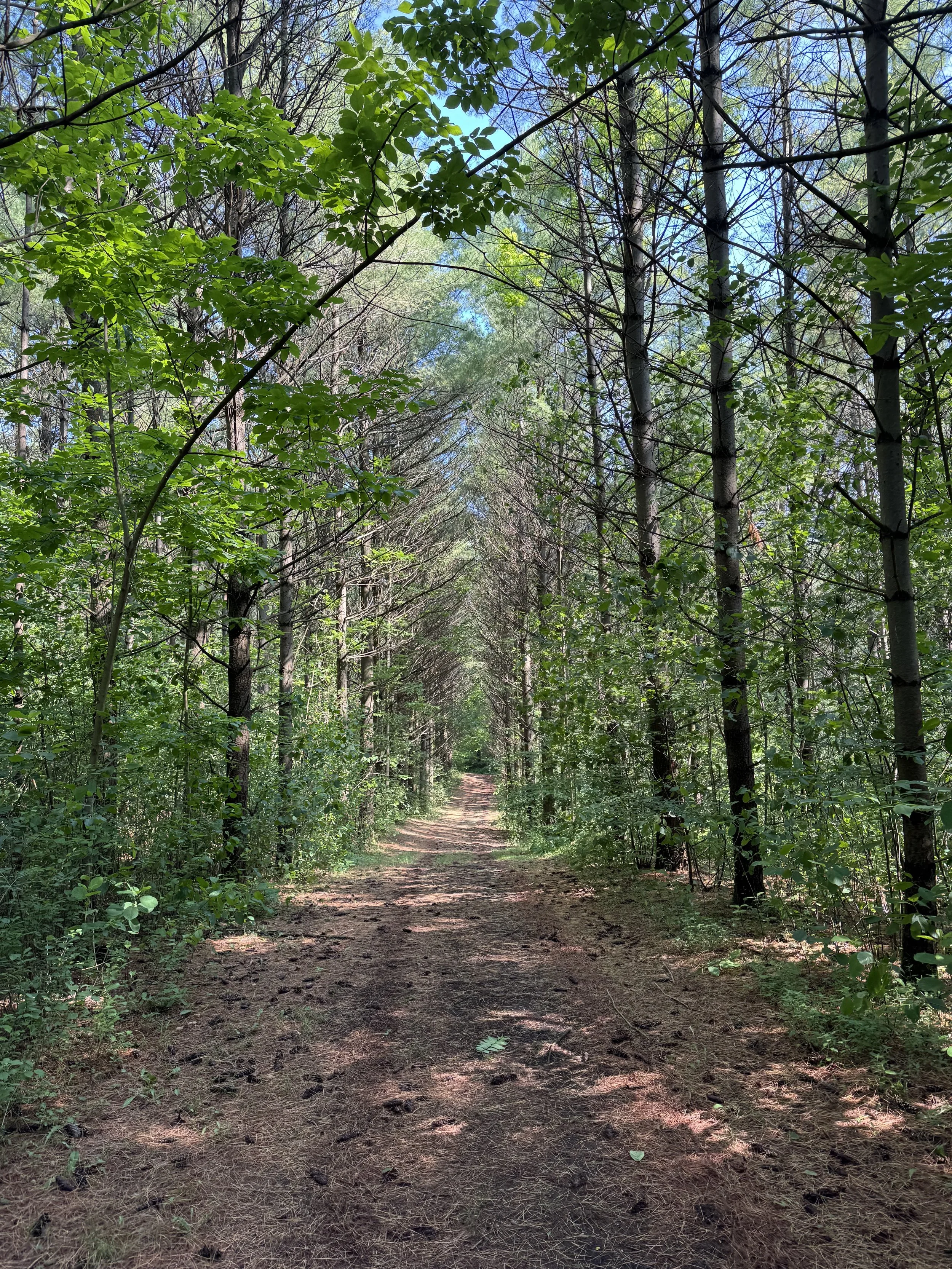
Taking a couple of days to myself, I found a kind of heaven. A morning run followed by a long swim, surrounded by the forest, grounded my feet and cleared my mind. I was alone with the sound of the water and the scent of the trees, and it reminded me of something essential: why I create.
Those moments brought me back to what matters most—the core of who we are. Some might call it the original self, the “face we had before we were born.” Others might see it as the facets of identity that shape us, each one contributing to the whole. For me, it’s both. It’s reconnecting with the part of me that exists outside of the noise, outside of the expectations, and simply is.
Life’s pressures can be transformative. They have the power to turn coal into diamonds—if we let the process unfold. But it can be an unbearable weight without the balance of rest and rejuvenation. Taking that time isn’t just about catching our breath; it’s about remembering why we’re here and rediscovering the motivation to create.
And when we create, not for someone else, but for ourselves, we breathe new life into our work. Rest isn’t a luxury; it’s a necessity for art, for growth, and for living fully. Let’s take the time to reclaim it.
