The Red Button: Asking for Help and Finding Strength in Vulnerability
After nine days in the ICU with a third-degree heart block, I learned one of life’s hardest lessons: pressing the metaphorical “help” button isn’t weakness—it’s courage.
Can we all agree on something? Life in the 21st century—especially here in Canada—can be overwhelming.
Maybe that’s why I’ve spent my career at one of the world’s most awarded automobile plants (Toyota Motor Manufacturing Canada), where constant improvement is a way of life. Every day is about refining the process, making things better, and working hard to be among the best. And outside of work, I try to do the same—whether as a stone carver, a father, or a husband.
But here’s the truth: no matter how hard we strive, life can bring us to a halt.
Earlier this year, I spent nine days in the ICU with a third-degree heart block, likely caused by Lyme disease. I was unprepared for the helplessness. At first, it was disorienting and discouraging, but I slowly learned to settle in, making my hospital bed a temporary home. And I survived those days not through my own strength, but because of the countless people who supported me.
Beside my bed was a red button—a call button for the nurses. I used it sparingly, knowing they were constantly busy, but it was the most important tool I had in that room. It connected me to help when I couldn’t manage on my own.
That red button is a powerful metaphor for life.
We all have one—some way to reach out when we’re struggling—but pressing it can feel humiliating. We want to be the grown-up, the strong one, the helper. We don’t want to admit we’re small or in need. Sometimes we wait until no help is around.
But civilizations weren’t built by people who never needed anything from each other. They were built by hands that worked together.
There’s a page from The Boy, the Mole, the Fox and the Horse by Charlie Mackesy that says it perfectly:
“What’s the bravest thing you’ve ever said?” asked the boy.
“Help,” said the horse.
Even the strongest among us sometimes need to admit: “I can’t do this alone.” And just as importantly, we need to remember that we are also the help for someone else.
In a world that’s increasingly mechanized and efficient, producing all the “stuff” we could ever want, we can still end up feeling stuck. What moves us forward isn’t technology—it’s each other.

Setbacks, Curiosity, and the Pursuit of Love
Setbacks are illusions, signposts rather than barriers. Life and art both challenge us, but through curiosity and reflection, we discover meaning—and love.Setbacks are illusions, signposts rather than barriers. Life and art both challenge us, but through curiosity and reflection, we discover meaning—and love.
Some days test us harder than others. Setbacks are never easy—and here I am again, feeling like I’ve been pushed a step back.
In the ICU, I had already dealt with the frustration of losing the use of my right arm thanks to an IV placed right in the crook of my elbow. The relief of having it removed didn’t last long—now a medline in my bicep leaks red a day later, tender and restrictive. I can’t even lift my daughter. That loss of simple function puts stress on both my wife and I.
Yet these moments force me to return to what I’ve been writing about lately: the importance of rest, of taking the time to be still. In life, I’ve learned to approach disappointments with a degree of acceptance, but they still sting. It reminds me of an old Chinese idiom: complacency serves the old Gods. I’ve always felt it has a double meaning—old habits demand reformation if we want to make vows to something new. So, what in my life needs to change?
This same question lives in my art. I look at a piece and ask: What needs to shift? How can I make it more meaningful? Is the anatomy in motion correct? How can I bend the rules to deliver a clearer, sharper message? There’s always something I’ve been avoiding, and that avoidance is usually the very thing I need to confront.
Recent reflections—especially from being a father—have convinced me of one truth: curiosity demands we sometimes “mess it up a little” (to borrow Willem Dafoe’s words). My daughter’s unfiltered drive to explore, even at the risk of breaking something, is driven by excitement. In art and life, that same drive often comes from love—a love of discovery, a love of beauty, and the love we hope to give and receive.
A year before my Aunt Janice passed, she wrote on a chalkboard: “I would be silent if I would be loved.” I believe, when she left, she felt all the love that had been hidden over a lifetime. Art, in all its forms, can reveal that love—shining through the noise of our busy lives. So if you read anything today, let it be this: you are loved.
In the end, setbacks are illusions—signposts rather than barriers. A fallen tree across the path doesn’t end the journey; it just asks us to walk around it, perhaps greet it with a smile. All things are temporary and fleeting, but they deserve our respect and gratitude. We may not know why an obstacle appeared, but we keep moving forward for the same reason we started: to find and give love.

Healing Hands: ICU Recovery, 3D Sculpting, and the Art of Creative Resilience
When you have hands, you might as well use them—especially when you’re stuck in the ICU.
During my recovery, once I was allowed to move around a bit more, I found myself with hours to fill. My brother gifted me watercolor pens, so I started with a quick sketch of the view out my window. But my real creative lifeline was my trusty tablet. With it, I could chip away (virtually, at least) at projects I’d been meaning to finish for ages.
One of those projects was a 3D scan of a sculpture I’m particularly attached to—an owl that, someday, will be cast in bronze. I spent hours smoothing every curve and contour, step by step, until it was as flawless as a baby’s cheek. Right now, the casting will have to wait until I recover the income I lost from weeks away from work, but when it happens, I have no doubt it’ll be worth it. As someone on Instagram put it, “It’s gonna be dope.”
In between owl polishing sessions, I dove into a longstanding creative itch: freeform abstract sculptures. The first piece that spoke to me was all about feminine, divine movement—rising like a flower or flame, almost phoenix-like. I spent extensive time refining its flow and proportions. The rest were experiments, pure and freeing, the kind of designs that might someday emerge in stone or be directly cast in bronze. Some shapes simply belong in metal with a patina that stone could never match.
Strangely enough, these hours in the hospital became a pocket of unexpected creative joy. Sure, I had Netflix, Disney+, and Amazon Prime at my fingertips, but I’m glad my hands went to work instead. Aside from a couple of films and too many YouTube deep-dives into near-death experiences, most of my time went into making something.
And in the end, that felt like the best medicine.
What do you think? Leave me a comment below—I’d love to hear your thoughts.


From ICU to Inspiration: Reflections on Life, Art, and Stone Carving
After ten days in the ICU with a heart blockage caused by Lyme disease, I returned home with a renewed perspective — and a chisel still calling my name. In the quiet, I’ve been thinking about the slow pace of stone carving, the speed of the modern world, and the one currency we truly take with us: love.
It’s Monday morning. My little girl is at daycare, and for the first time in a while, I’m alone with my thoughts. The house is quiet. My pace is slow — and perhaps that’s exactly how it should be after narrowly escaping death.
Just a short while ago, I spent ten days in the ICU with a third-degree heart blockage caused by Lyme disease. I left the hospital with nothing but an IV in my arm and the bravery to pump antibiotics into my veins for two more weeks. It sounds frightening, and in many ways it was, but since that episode I’ve learned some things that have settled deep within me. The reason behind the experience, however, still feels like a mystery — one I may or may not solve in this lifetime.
Now, it’s as if I’ve been dropped back into my life with the pause button pressed. I can’t return to work yet, which feels like both a limitation and a gift — time to tackle the long-neglected corners of my home and life:
Building a shed to make more room in the backyard.
Clearing the basement.
Organizing my studio.
The recurring theme is space.
I’ve read that the greatest deterrent to spiritual stagnation is being too busy. Jesus said it’s nearly impossible for a rich man to enter the kingdom of heaven. And King Solomon — said to be the richest man in history — observed that idle hands lead to poverty. It seems the chase for wealth often leaves us stuck in the dirt. In truth, love is the only currency we truly share, and connecting with our spiritual selves is the first step to understanding God.
Art has a way of pulling these questions to the surface. Facing the thin edge between life and death has made me think often about life after death. I’ve wrestled with feelings of failure for not achieving more with my artistic goals — yet perhaps it’s better that we don’t fully understand how our “idle hands” might create more meaningful work on spiritual planes. A carving may seem small in the grand scheme of things, but it can hold deep meaning for someone — a reminder of who they are and why they matter.
Stone carving, by its very nature, is slow and deliberate. In a world that moves faster every day — propelled now by AI in ways more powerful than even the invention of the personal computer or the internet — it’s worth asking: What is the value of all this progress without consciousness and spirituality?
This morning, coffee in hand, I realized that happiness might be as simple as being content with what’s already in front of you. I won’t carve today — I still need to rest — but even the thought of taking a chisel and hammer to the 600-pound block of limestone in my backyard brings me comfort.
If you’re reading this, let it be a reminder: you are not made of stone. One day, the consciousness you know as “you” will be lifted out. And when that happens, you will bring nothing but the love you gave — and take only the love you were given.
That’s what I hope my work, and this blog, carry for you.
Synchronicity of Events: A Time to Pause, Break, and Listen
Sometimes it feels like there’s a silent timer running in the background of your life — ticking down without warning. You ignore it to protect your sanity, tell yourself to push through. But eventually, the signs become too loud to ignore, and the truth sets in: you’ve been steering straight into a storm you didn’t want to admit was forming.
Let me reel back.
Three weeks ago, I was preparing to teach the HSAD stone carving course — a full class, heavy trailer, and more than enough material to cover. But just before it began, I was hit with the lingering effects of hand, foot, and mouth disease, followed by a strange, throbbing foot issue that left me sweating through the night.
Still, I pushed through. Taught through the pain. Walked like I had no toes. I finally got checked at the hospital — they ruled out anything major and handed me Advil. The pain didn’t go away. More symptoms followed. At a walk-in clinic, I requested a Lyme test. It was dismissed.
And then — everything changed.
Six days ago, I walked into the ER with an alarmingly low heart rate. One look at the monitor, and I was rushed straight through triage. No delay. No doubt. IVs, monitors, wires — a full emergency response. I had entered a life-threatening third-degree heart block. It wasn’t a full stop, but it was a hard slowdown. One I couldn’t ignore anymore.
And honestly? I’d seen it coming.
The day before the hospital, I was riding my bike with my daughter. I noticed my front derailleur cable wasn’t shifting properly. When I checked it, it was frayed — down to one remaining strand out of ten. One more shift, and it would’ve snapped. I stood there, staring at it.
I was the cable. Hanging on by a thread.
I often pay attention to these things — synchronicities, symbolic echoes in the physical world. This time, I nearly missed the message. This breakdown didn’t just happen. It had been quietly manifesting for weeks — maybe longer.
Now, in the stillness of recovery, I feel something else forming.
The test results for Lyme are still pending. If they come back positive, we’re on the path to recovery. If not, there’s more to uncover. Either way, something inside me is changing. I can feel it. My pace. My attention. My understanding of what’s worth pushing through — and what’s not.
This hasn’t been easy. I’ve missed work. Lost income. I’ve even seriously questioned whether I should pause stone carving altogether for a while — not from defeat, but from intuition. I’ve been forcing things lately. Going into the studio after night shifts. Rushing delayed projects. Ignoring my body’s quiet warnings.
And now, I’m listening.
So I offer this to you:
Pause.
Reflect.
What in your life is frayed down to one last strand? What are you pushing through that maybe — just maybe — needs to be surrendered?
We are not alone in this. We’re threads in the same fabric — woven through timing, circumstance, and shared experience. Sometimes the breakdown is the only way forward.
Right now, I feel deeply supported by those closest to me. I feel the version of myself I’ve known slipping away… and something new forming in its place. My art will change with me. So will my path.
Let’s pay attention — before life forces us to.
Let’s move forward — not perfectly, but intentionally.
We’re in this together.

Signs on the Breeze
There’s something I’d like to whisper—something a little woo woo, maybe, but deeply real to me. Over the years, I’ve come to recognize a quiet form of reassurance from the universe—odd, circumstantial signs that arrive just when I need them most. It’s as if something, or someone, is letting me know that I’m cared for, that I’m on the right track—even when I don’t feel like it.
Sometimes life feels messy. Sometimes I’m just tangled in my own perfectionism—my tendency to want things a certain way, my stubbornness disguised as persistence. But often, through that mess, something strange and beautiful happens: a sign, a moment, a reminder. In my life, it often comes in the form of a feather. Not just any feather—but a dove’s.
The mourning dove has become a personal symbol. Their grace, their presence, their way of moving through the world defies logic. And somehow, when one of their feathers appears—dropped gently in the middle of a walk, at the edge of a step, or beneath a tree—it feels like a breadcrumb trail. A quiet confirmation that I’m not alone. That I’m allowed to walk forward confidently, even when I can’t see what’s ahead.
It’s oddly poetic. Long before I ever saw Forrest Gump, I felt this way. But I’ve always loved that scene—the feather floating through the air, Forrest saying:
“I don’t know if we each have a destiny, or if we’re all just floating around accidental-like on a breeze, but I think maybe it’s both.”
That line hits home. I think maybe it is both. That we’re guided, and yet still free. That we’re meant to walk a path, even when it’s not always visible.
This past week, I saw several of those reminders. And I realized that, since I was a child, I’ve been collecting them—not just physically, but emotionally. Each feather, each moment, each little sign has helped keep my head and heart together. A small reassurance that life will work out, even when I’m not sure how.
So if you’re reading this, I hope you find your version of a feather too. Something simple, subtle, but meaningful enough to remind you: you’re not lost. You’re right where you’re supposed to be.

From “Stuck” to Strides: Looking Back, Looking Ahead
Five years ago I couldn’t have imagined where I’d be — and now I’ve carved, sold, taught, and grown in ways that feel surreal. So here’s to the next five, with my sights set even higher.
There’s a certain dark humour in admitting I felt “stuck” when asked where I saw myself in five years. But sitting with that for a while made me realize — I’ve already moved miles beyond where I thought I’d be five years ago.
I’ve shown at a gallery in the stunning Old Port of Quebec City. I’ve carved live at events there and back home in Cambridge. My range has grown so much that my old website became obsolete — I had to build a new one just to keep up with the work. And I’ve sold more pieces than I can usually keep pace with.
Oh, and we added a new family member along the way. :)
So here’s to the next five years — and the next leap.
I’m setting my sights on a few new milestones:
• A larger studio space to carve and create across multiple mediums
• A stronger bronze portfolio
• Representation in a Toronto gallery and one in the U.S.
• More teaching — especially at HSAD
• A public commission in a GTA city
That’s not too much to ask, right?
“Aim small, miss small” — but set the course. The rest follows. I’m putting it out there now: in five years, I’ll be an established name in the Canadian and American stone carving community. Bigger moves will come — but this is the foundation I’m laying now.

Carving at Haliburton: A Week of Dust, Discovery, and Deep Work
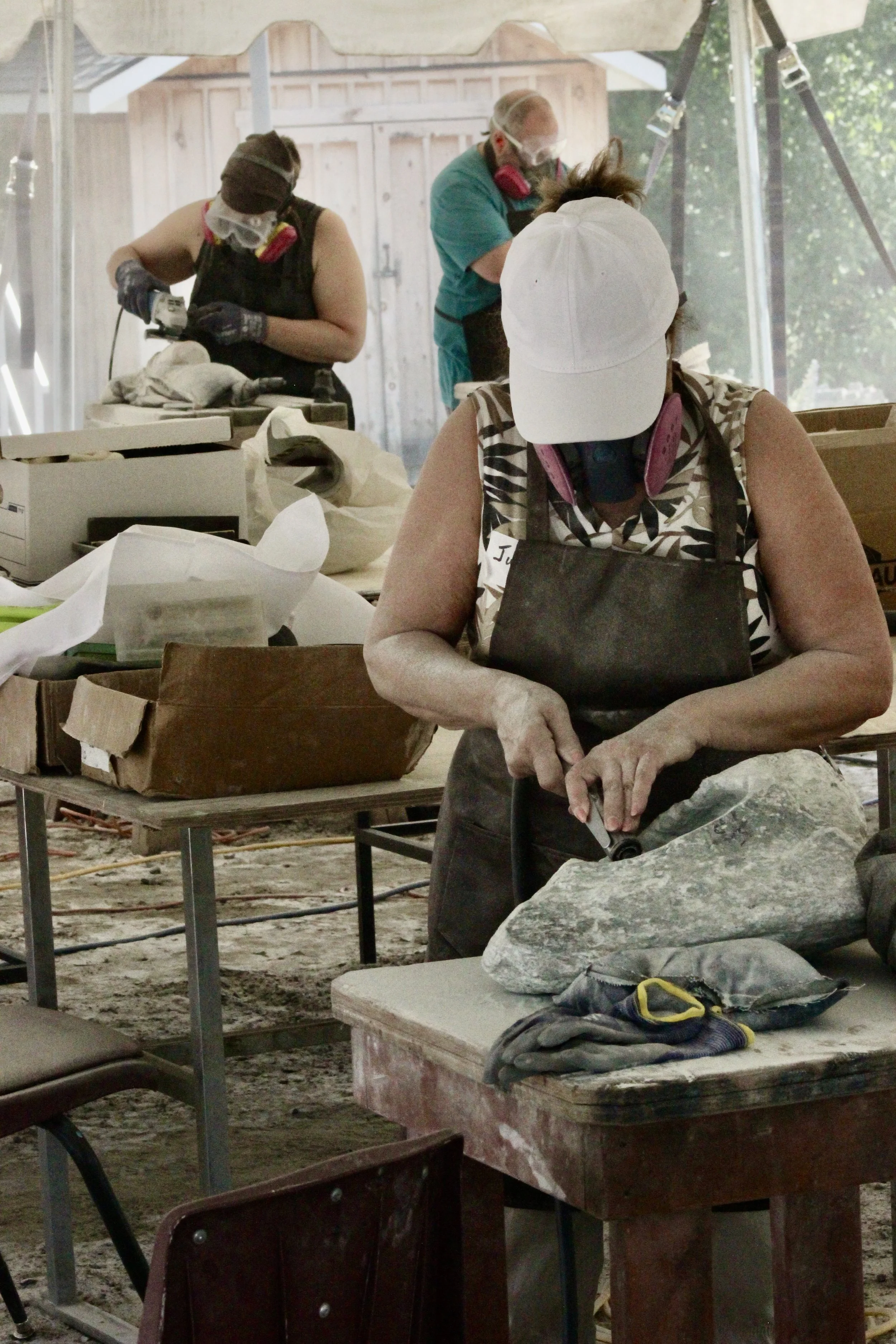
This past week at the Haliburton School of Art + Design was one I won’t soon forget. As a first-time instructor at HSAD through Fleming College, I arrived with a plan, a truckload of tools, and a deep love for this craft — but nothing could have prepared me for how much I would learn from the group I was lucky enough to teach.
We started the week from square one. Most of the students had never touched a stone with the intent to sculpt it, let alone used tools like die grinders, pneumatic chisels, or oscillating sanders. But when I laid the stones out — and with the help of a generous local supplier who brought more — the class dove in headfirst. There was no hesitation, only curiosity and a hunger to discover what was hidden inside each block.
Our days were full. We covered everything from sketching and plastercine (oil-based clay) modeling to hands-on work with angle grinders, sanders, riddlers, rifflers, and every tool in the modern stone carver’s arsenal. It was intense. Loud. Dusty. Hot. (Very hot — with a few booming thunderstorms thrown in for good measure.)
But under the shelter of the tent and the camaraderie of the group, no one lost steam.
What stood out most wasn’t the technical growth (though that was impressive) — it was the personal journey each student took. The subject matter for each sculpture came from within. I didn’t assign themes or concepts. Instead, I acted as a guide — helping troubleshoot tool techniques, pacing the flow of each day, and offering structure where needed. The work, however, was entirely theirs.
Some finished pieces. Some got close. Some brought home extra stone to keep going. All of them left with more than what they came with — not just in terms of skill, but in confidence and expression. That’s what this course was truly about.
And as for me — I left with a full heart, a few sore muscles, and even more appreciation for the Haliburton community. The faculty and staff at the college were endlessly helpful, making the logistics smooth for a first-timer like myself. I found a sense of belonging in quiet chats with fellow instructors and in watching students bond over shared frustrations and breakthroughs.
It reminded me why I carve. Why I teach. Why this space — tucked in the trees, buzzing with deer and conversation — is one I’ll keep returning to. (Side note: I did in fact walk beside a deer that was just 7 feet away. I now have a strange dream of petting one. Maybe even riding one. One day :)
Until next time, Haliburton. I hope to return again — as a teacher, as an artist, and maybe even as a deer whisperer.
If you’re curious about the process, check out the short video https://youtu.be/bcZHjPNr-yA?si=uCXUMT_Dlp3gKmK8 and visit www.whiteravensculptures.com or https://flemingcollege.ca/school/haliburton-school-of-art-and-design/course-calendar? for next year’s course details and updates.
Haliburton: A Sea of Memories
Maybe that’s my future: something a little broken, a little weathered, but still beautiful. Held together by memory, fueled by the hope of passing something down to those who want to know it.
I’ve been sifting through parts of myself lately—fragments of who I once was and maybe still am, buried somewhere beneath the weight of responsibility and time.
The other day, someone asked me a serious question—one of those cliché icebreakers you laugh off in most settings: “Where do you see yourself in five years?”
I answered honestly, blankly: “Stuck.”
We laughed. I didn’t.
The truth is, I feel it deeply. I wish the answer weren’t true. But sometimes, life feels like it’s paused in a place you can’t name.
I’ve returned to Haliburton—this little town tucked in Ontario’s cottage country, where my younger self once wandered in a very different kind of fog. After high school, when I had no clue what path to take, I came here and took the most unexpected leap I could find: an art course in a college buried in the boonies.
It turned out to be one of the best choices I ever made.
Back then, I was timid, uncertain, and raw. Leaving home was the first shock. I had always drawn comfort and identity from my family. But when I arrived here, I discovered a new kind of connection—one rooted in creativity, openness, and the shared vulnerability of people trying to find themselves through their work. The arts community became a second home.
I remember painting late into the evenings, and to my surprise, being accepted to display those paintings in a local gallery. Looking back, I think the work was awful—but that’s the beauty of evolution, isn’t it?
Now, years later, I’m here again. This time, I’m the teacher. I just finished teaching 12 people how to carve stone. It went incredibly well. They enjoyed it. I enjoyed it. It felt meaningful.
And yet, as I sit alone at the same friendly bar where I had my first drink, sipping what might be the best craft beer I’ve ever tasted, I can’t shake the feeling. Stuck.
The roles I carry—as a husband, a father, an artist—are heavy and rich with purpose. But they also stretch me thin. Progress in this life of art feels hard-won, and I wonder: how far can I go? Can this really grow into something more?
Sometimes, I just want to help others see what they can’t yet see in themselves. But then I turn the mirror inward and ask, what is it in me that can’t come out? And is it worth seeing?
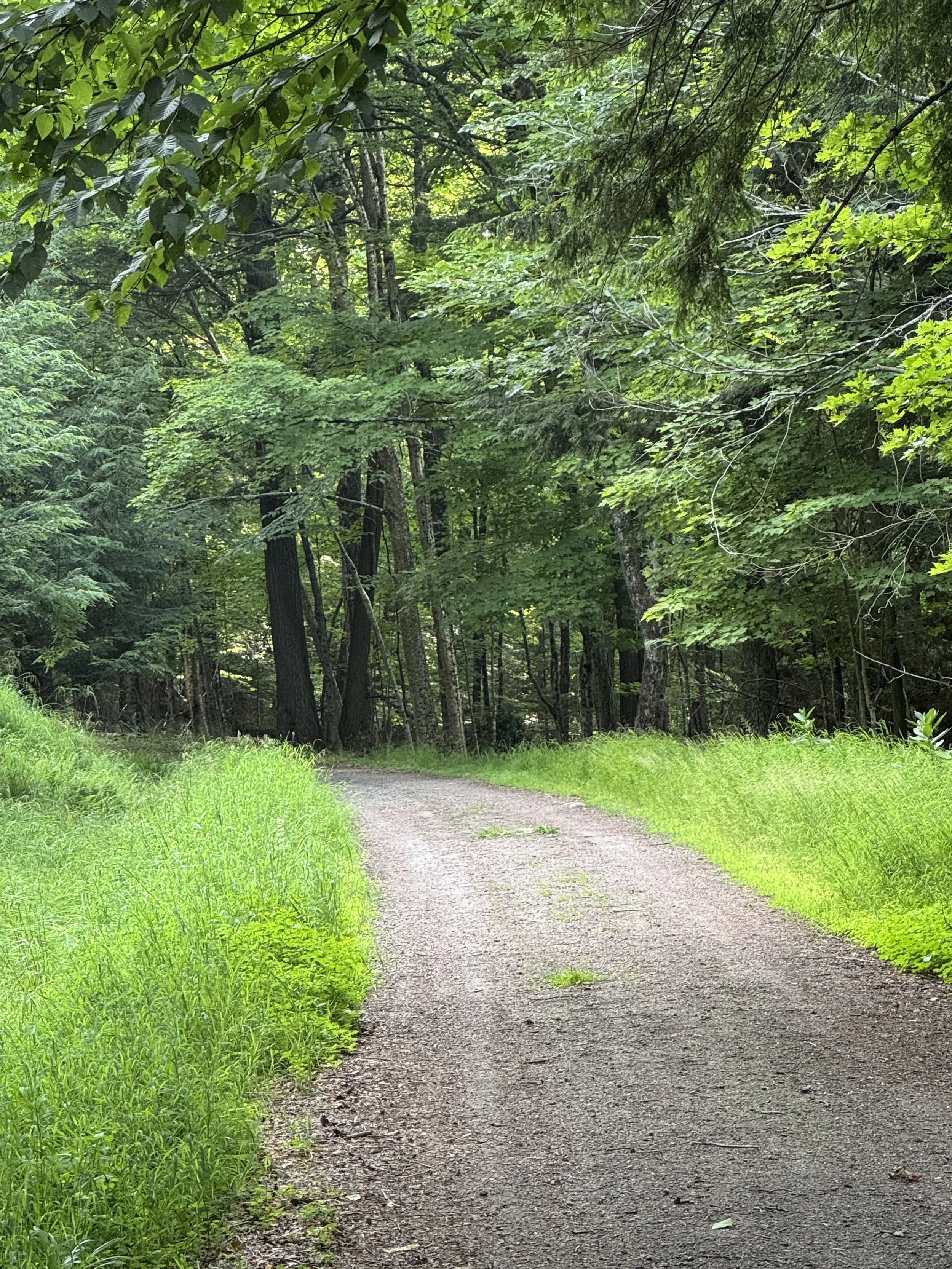
Today, I visited the cabin where I once stayed as a student. It’s boarded up now, but the forest surrounding it still sings the same soft, green song. I startled a deer as I stepped onto the deck, the leaves rustling underfoot.
The place felt broken—but still beautiful. And maybe that’s the metaphor I needed.
Maybe that’s my future: something a little broken, a little weathered, but still beautiful. Held together by memory, fueled by the hope of passing something down to those who want to know it. Maybe my daughter will come here one day and live her own version of this story.
That thought makes me happy.
So here I am, sitting with the past and present in both hands. Teaching others, creating again, and holding out hope that somehow this all leads to something more. And maybe—even if I feel stuck now—I’m still moving.

Into the Heat: Preparing for Another Stone Carving Journey
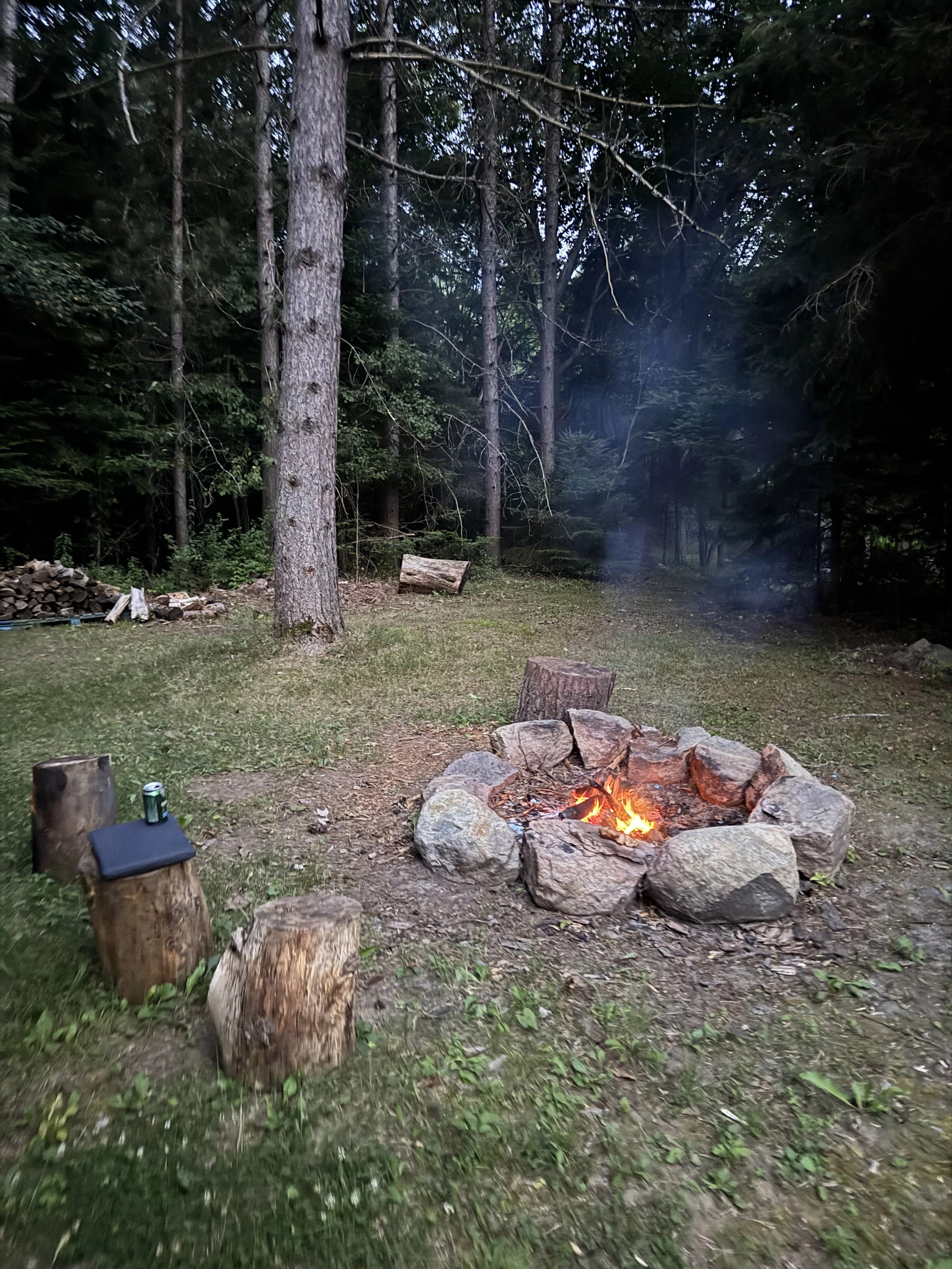
I sit comfortably amidst a swarm of mosquitoes, a campfire flickering in front of me—old, familiar grounding tricks to settle myself in the whirlwind of preparation and movement. There’s a sense of calm in this small chaos, a way of remembering who I am when life feels full tilt.
Yesterday, I pushed through what felt like the hottest day of the year—hauling tools, packing materials, and loading the trailer with everything I could possibly need for the week-long stone carving course I’ll be teaching at the Haliburton School of Art + Design (HSAD). It was exhausting. The kind of heat that makes the body ache and the air feel thick. Still, I pressed on, sweating through the process with that stubborn mix of dedication and anticipation.
I’m fairly sure I’ve packed everything… minus a few small items I can pick up along the way. But in a way, this feels a lot like the old pioneering spirit—trekking long distances to do something meaningful and radical. Teaching stone carving to a new group of creative minds isn’t just a job; it’s a calling. It’s a return to something elemental.
Today, I arrived on campus and saw the tent I’ll be working under for the week. It was better than I remembered—tucked in the shade, with a steady breeze and just the right kind of sunlight, the kind that warms without scorching. Even at 29 degrees, the environment feels balanced, like nature is giving us permission to do this work.
I’ve started to set up the essentials, laying the groundwork for what I hope will be a week of discovery, growth, and inspiration. There’s still more to do, but I trust that things will fall into place. That’s often the rhythm of this kind of work—you prepare, you adapt, and then you let the process unfold.
It’s always a bit surreal, standing at the edge of something like this. A blank stone, a group of new faces, and the possibilities that come from shaping something raw into something meaningful.
More updates to come as the week unfolds. But for now, I’m letting the fire crackle, watching the smoke rise, and holding space for what’s to come.
Pushing Through: When the Storm Comes Before the Break
Today’s been a tough one. No way around it—I’m feeling drained, worn out, and just barely hanging on. I had this brief moment, not long ago, where I thought I had dodged the worst of it. My wife and 1.5-year-old daughter were both hit hard with hand, foot, and mouth disease, and I naively believed maybe—just maybe—it might pass me by. But here I am, four days later, bracing for the storm.
It’s been a rough season. Since daycare began, we’ve been introduced to the motherload of viruses—old ones, new ones, and strange hybrids of the two. Some days it’s a mystery: is it the flu? A cold? Both? Add in stomach bugs with symptoms that make you question the laws of biology, and… yeah. It’s been a ride.
Now, of course, this happens just before something I’ve truly been looking forward to: teaching a stone carving course at the Haliburton School of Art + Design. I’ve been prepping for weeks, mentally gearing up to guide and support a group of students who are brave enough to pick up tools and dive into a craft that demands patience and presence. And now I find myself praying for strength—literally. If you’re the type to send a word to the universe or the big guy upstairs, I’ll take all the help I can get. I’d love to be able to talk clearly. Eat real food. Maybe not look like I crawled out of a hospital ward.
But I’ll be there. Tylenol in my pocket. Face covered if need be. Because that’s what we do when we care deeply about something—we show up, even if we’re cracked and aching.
There’s a line I’ve always loved from Cast Away, right after the storm clears and the main character finds himself adrift but still alive:
“And I know what I have to do now. I’ve got to keep breathing because tomorrow the sun will rise. Who knows what the tide could bring?”
That’s where I’m at. This feels like the storm. But the tide might just be carrying something good.
So here’s to pushing through. To holding on. To knowing that even when things feel heavy, something better might be just over the horizon. The wind will shift. The stone will be carved. The sun will rise.

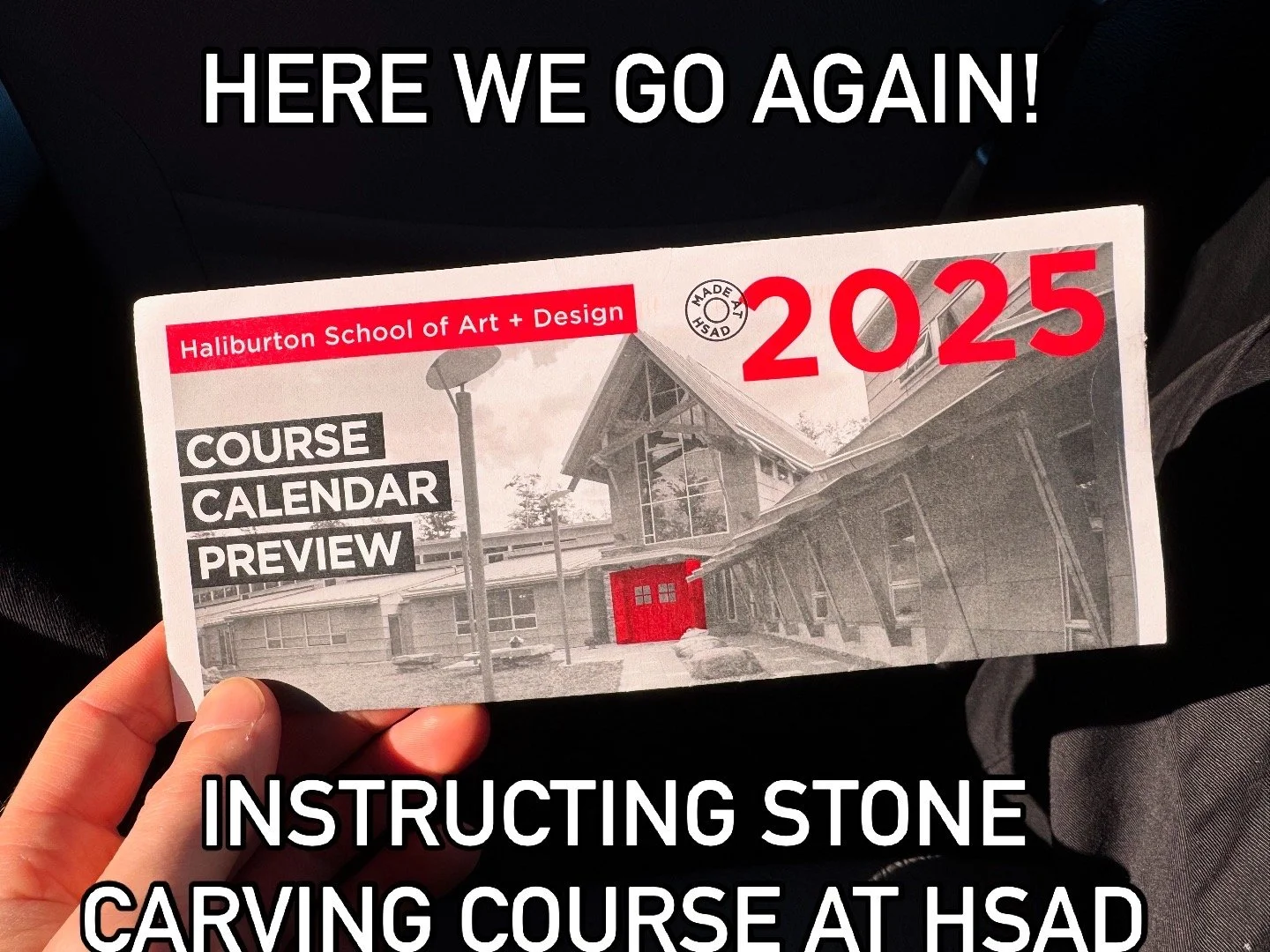
Teaching at HSAD: Honing the Craft Together
Stone carving isn’t just about shaping stone—it’s about honing yourself along the way. And that’s exactly what I hope to pass on.
I’m looking forward to an exciting week ahead as I prepare to teach a stone carving course at the Haliburton School of Art + Design (HSAD). With 13 students signed up, there’s been a lot of behind-the-scenes prep to make sure everything is ready—but I’m doing my best not to overthink it.
Each time I teach, my goal is simple: to offer students the tools, guidance, and space they need to explore stone carving in their own unique way. Stone carving isn’t one-size-fits-all. It’s a personal process, and I want each student to find their rhythm, their style, and their confidence.
We’ll be working with softer stones, which makes the learning curve more forgiving and the experience more enjoyable—especially for beginners. Alongside that, I’m introducing both traditional and modern tools so students can experiment with what works best for them. My plan? To give them everything they can handle—and a little more.
What I’m most excited about, though, is simply meeting everyone. It takes courage to step into something like stone carving, especially in a fast-paced world that doesn’t often make space for slow, deliberate craft. So to gather with a group of creative minds who are willing to engage, get messy, and try something new—that’s something special.
The setting at HSAD only adds to the experience. Nestled in the beauty of Ontario’s cottage country, the fresh air and peaceful environment help unlock something important in all of us: focus, clarity, and creativity.
I’ll share more once the week wraps up, but for now, I’m just grateful to be part of this tradition. Stone carving isn’t just about shaping stone—it’s about honing yourself along the way. And that’s exactly what I hope to pass on.
Stay tuned for the stories and sculptures that emerge.
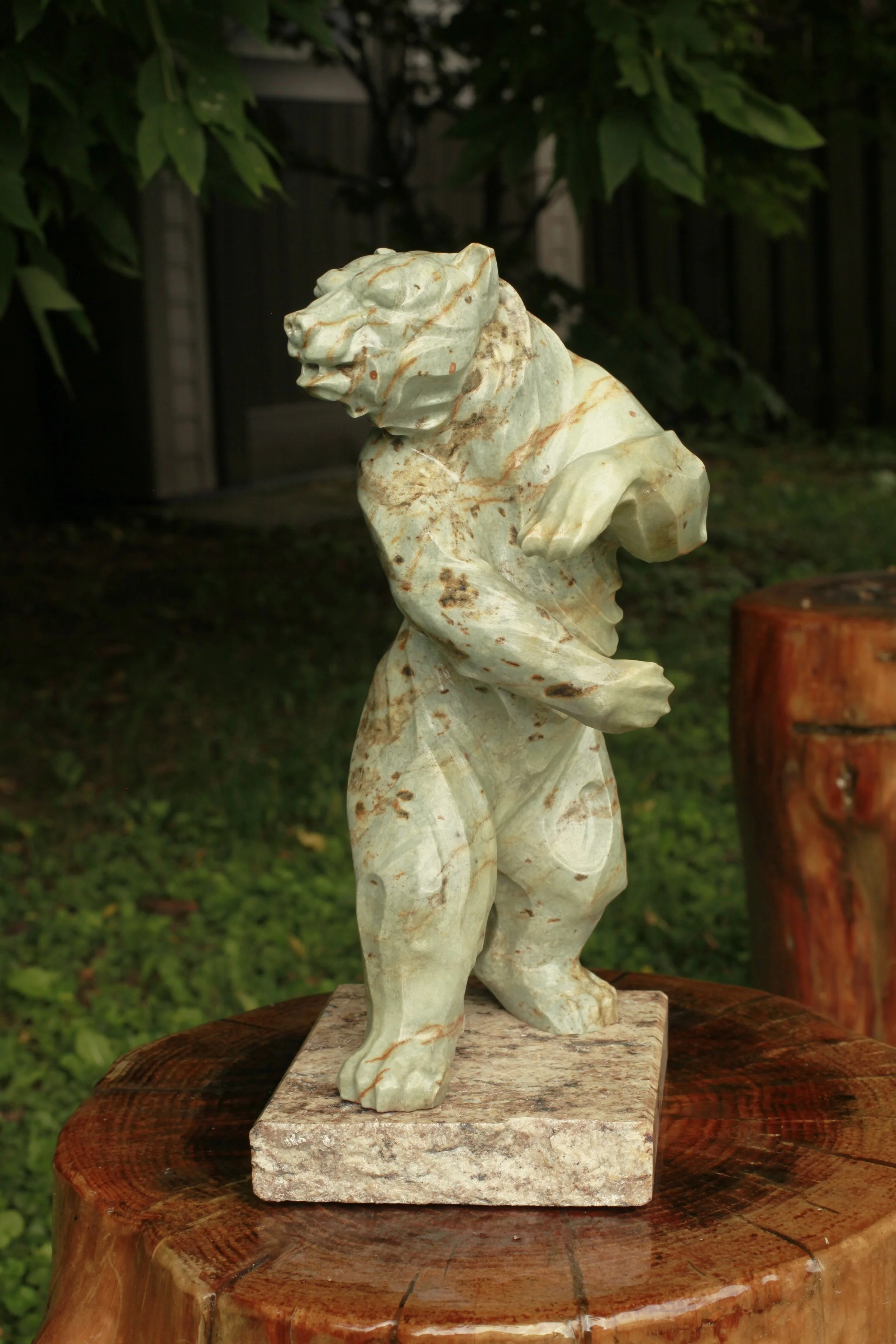
Finding Strength in Stone: The Story Behind “Fighting Chance”
Creating “Fighting Chance” marked a new chapter in my journey as a stone carver. For the first time, I ventured into a standing pose for a bear—a challenge I had long considered but never attempted. The result is a sculpture that not only reflects the immense power of this majestic animal but also mirrors a moment of transformation in my own life.
Bears, though often quiet and composed, possess an unstoppable force when they choose to reveal it. This duality of strength and restraint is what inspired me to focus on the movement and form of this piece. Every contour was carefully refined, with special attention given to ensuring the lines remained dynamic and strong, yet not overwhelming. The soapstone’s natural textures and hues added a unique character, elevating the sense of raw, untamed power.
At the time I created this sculpture, I was facing challenges that required me to tap into my own reserves of strength. “Fighting Chance” became a deeply personal expression of resilience—a reminder that strength doesn’t need to be on display to exist, but when it is called upon, it can be truly transformative.
This piece stands as a testament not only to the enduring spirit of the bear but also to the quiet power within all of us, waiting to rise when we need it most.
Finding Your Way Through Mistakes
Today was one of those days for me—a day that tested my patience and resilience. My hands trembled in the aftermath of a mistake, but I held my ground.
Mistakes are part of the journey. When they happen, it’s tempting to fall into a spiral of blame. But the truth is, blame won’t help us grow or get closer to the results we want. Instead, taking a step back to understand the factors behind the outcome can make all the difference.
Today was one of those days for me—a day that tested my patience and resilience. My hands trembled in the aftermath of a mistake, but I held my ground. I reminded myself that every stumble is an opportunity to learn, not a reason to quit.
Quitting is the only way we truly fail. Over the years, I’ve faced countless reasons to give up, moments where the weight of it all seemed insurmountable. But I’ve realized that this pressure exists because what I’m pursuing matters. It’s a sign that I’m striving for something meaningful.
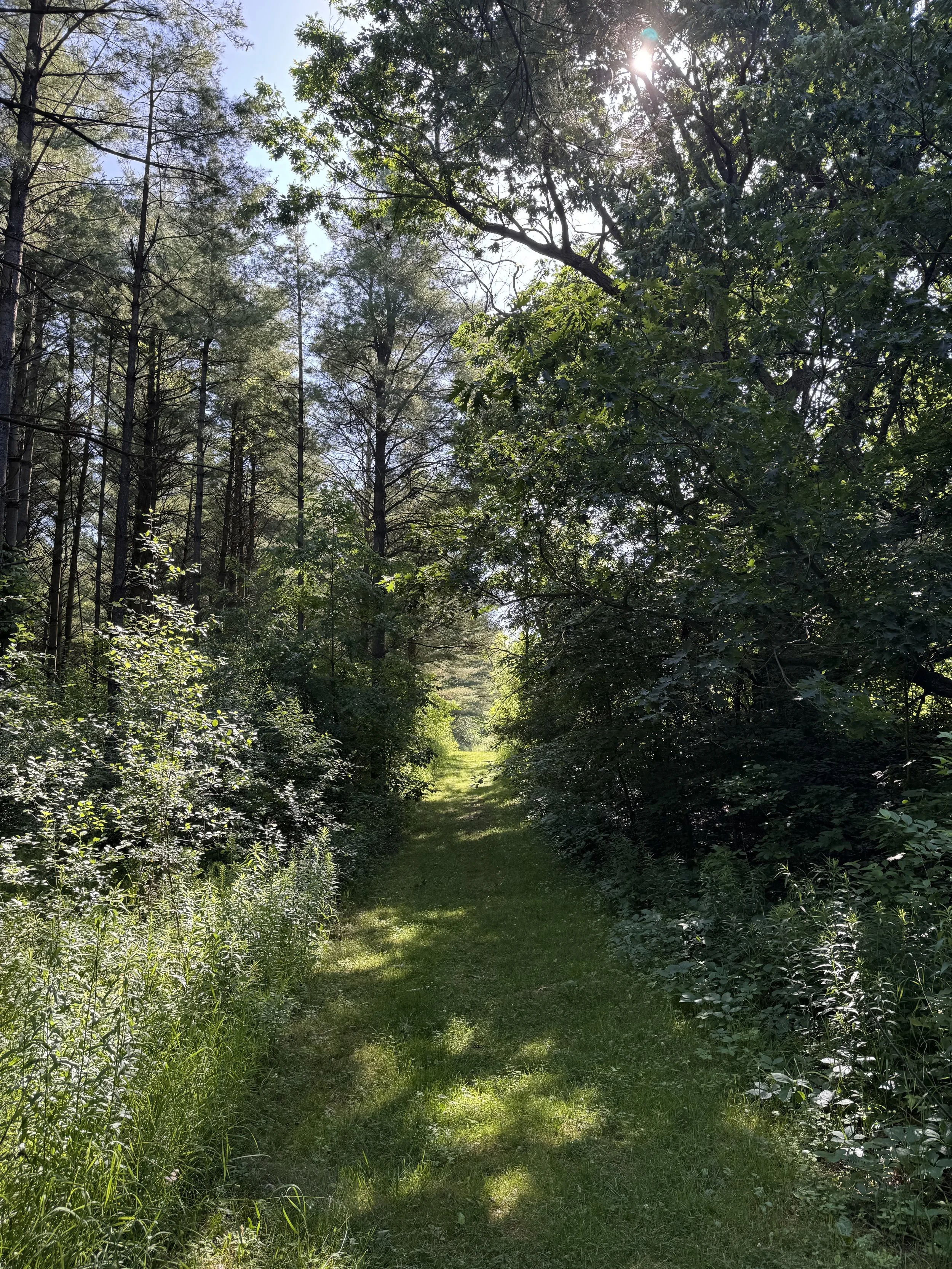
To anyone reading this, remember: your tomorrow is waiting for you. Even when the path ahead isn’t clear, keep moving. As a Native American story reminds us, “If you are lost in the forest, the trees will find you.” Trust your instincts and take one step at a time.
Mistakes don’t define us—they shape us. Keep going. You’re stronger than you know.
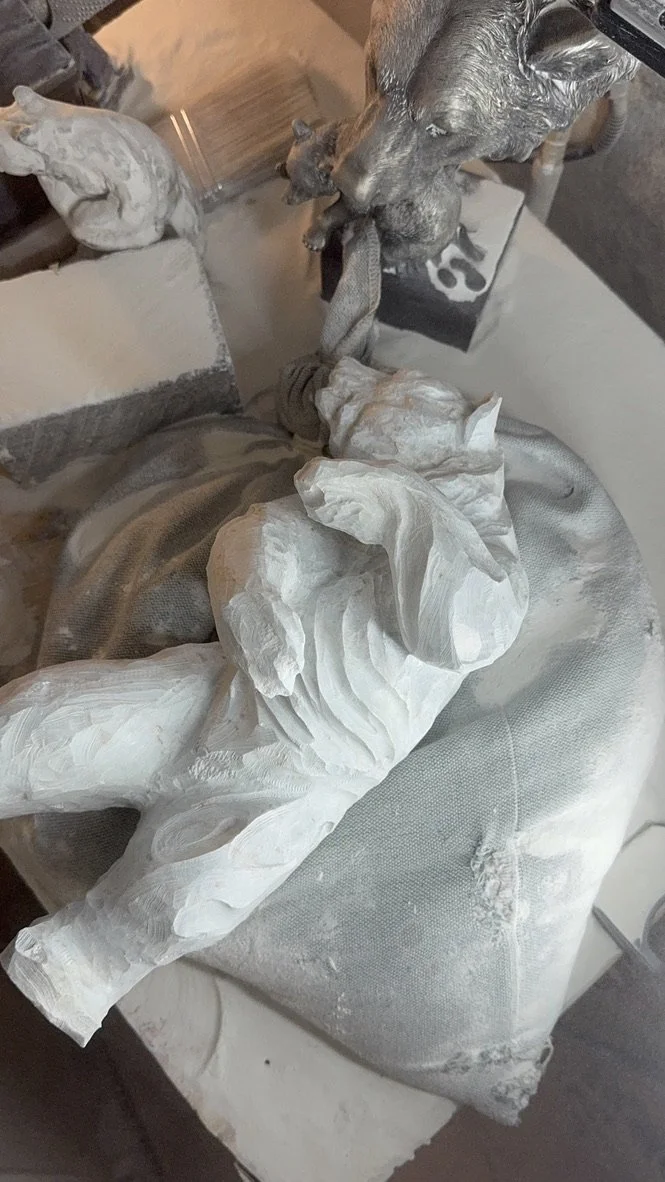
A New Bear Takes Shape: The Challenge of Carving Boldly
Working on a new piece is always a gamble. There’s a fine line between success and setback, especially when exploring a fresh posture or anatomical details.
I’m embarking on a new piece, and as always, it’s both exhilarating and nerve-wracking. This particular sculpture features a more aggressive pose, modeled after the anatomy of a black bear—a creature native to Ontario and familiar to me from years spent living near the North Channel.
Black bears have always fascinated me. They’re often described as the ghosts of the forest—present yet unseen. While we’re warned about their presence, encounters are rare. When a black bear does stand up, though, it’s an awe-inspiring sight. Their posture is strikingly human-like, a mix of power and presence that demands attention. Capturing that force in stone is my current challenge.
Working on a new piece is always a gamble. There’s a fine line between success and setback, especially when exploring a fresh posture or anatomical details. Things can go off track in two main ways: moving too cautiously and being afraid to remove material, or moving too aggressively and making critical mistakes. Finding the balance between these extremes has been one of my greatest hurdles as a carver.
Revisiting a familiar subject, like the bear, brings its own set of challenges. While the subject remains the same, the approach must evolve. Each new piece requires a fresh perspective—forgetting the methods of the past and embracing the current moment. Time and experience create a necessary distance, allowing me to rediscover the subject in a way that feels authentic and new.
Even when things go awry (and they sometimes do), there’s always a way to salvage the work. Stone carving teaches resilience; even a devastating break can lead to unexpected creativity and solutions.
So here’s to this new bear—a bold and aggressive stance that reflects the power and spirit of its real-life counterpart. I’ll keep you updated as the piece progresses. It might end up in a gallery, or perhaps I’ll hold onto it. Either way, I’ll share more when it’s finished.
If you’d like to stay updated on this piece and future works, subscribe to my newsletter. I’ll share the journey with you!
Rest and Rejuvenation: Time to Relax
The Merovingian in The Matrix once said, “Ah yes, who has time? But then if we never take time, how can we ever have time?”
This week, I was on vacation—a rare stretch of hours alone, free from the usual demands. While the artist in me itched to fill that time finishing one or two pieces, I chose instead to take a little space for myself. Between family and house-related tasks, I carved out moments to refuel, and let me tell you—I needed it.
I had forgotten what it feels like to truly get lost in time. To just be. The Merovingian in The Matrix once said, “Ah yes, who has time? But then if we never take time, how can we ever have time?” That line has always stuck with me. As artists, as parents, and even just as individuals, we often feel like our time is owned by others. Whether by deadlines, loved ones, or responsibilities, it’s rare to feel that time is truly ours.
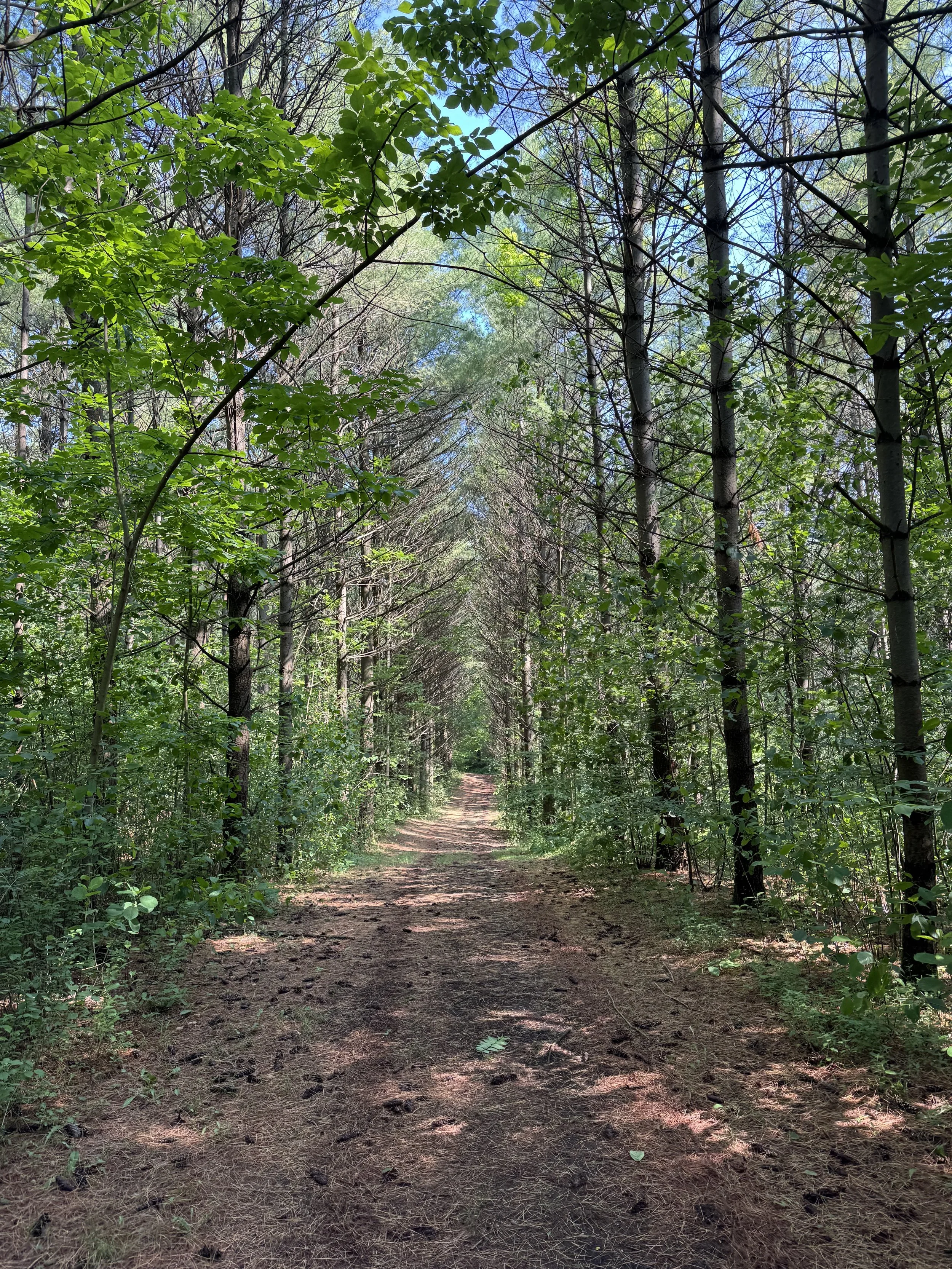
Taking a couple of days to myself, I found a kind of heaven. A morning run followed by a long swim, surrounded by the forest, grounded my feet and cleared my mind. I was alone with the sound of the water and the scent of the trees, and it reminded me of something essential: why I create.
Those moments brought me back to what matters most—the core of who we are. Some might call it the original self, the “face we had before we were born.” Others might see it as the facets of identity that shape us, each one contributing to the whole. For me, it’s both. It’s reconnecting with the part of me that exists outside of the noise, outside of the expectations, and simply is.
Life’s pressures can be transformative. They have the power to turn coal into diamonds—if we let the process unfold. But it can be an unbearable weight without the balance of rest and rejuvenation. Taking that time isn’t just about catching our breath; it’s about remembering why we’re here and rediscovering the motivation to create.
And when we create, not for someone else, but for ourselves, we breathe new life into our work. Rest isn’t a luxury; it’s a necessity for art, for growth, and for living fully. Let’s take the time to reclaim it.

Balance: Validation and the Artist’s Journey
But here’s the catch: the harder we chase validation, the more it eludes us.
I’m sitting here quietly, savoring a rare moment of calm while my 1.5-year-old daughter naps. She’s wonderfully curious and imaginative—qualities I adore—but her light sleeping means even the faintest sound, like a fork clinking against another, can wake her. It’s in these moments of stillness that I reflect, not just on parenthood, but on my life as an artist.
This quiet space holds a question: how do I use this time? Do I tackle the drawing downstairs that’s been in progress for over a year? Head to the stone carving studio to hammer out a little more work? Plan lunch, update my website, or buy that thing I’ve been meaning to order? Or maybe—just maybe—I should pick up a book and grant myself the grace of relaxation.
Yet here I am, writing instead. Writing about the challenge of balancing life as an artist with everything else that comes with it, particularly the question of validation.
Validation is a peculiar beast. Most artists crave it, though we often try to pretend we don’t. We seek recognition—not necessarily from the world, but from somewhere, from someone, as proof that our work matters. But here’s the catch: the harder we chase validation, the more it eludes us.
Some of the most remarkable art is born when the need for validation falls away. When an artist moves past the noise of striving, the work becomes something more—a pure reflection of thought, spirit, and intention. It’s as though the medium itself takes over, effortlessly bringing the vision to life.
This balance—between external validation and internal purpose—is one of the artist’s greatest challenges, especially in the modern era. Today’s world rewards visibility, speed, and self-promotion. But the timeless truths of artistry remain unchanged: meaningful work comes not from chasing approval, but from integrating life into the process.
When life is woven into the work, it transcends ego. It stops being about what others think and becomes a dialogue between the artist, the medium, and the world. Critics and cultural trends don’t define the value of art; its worth lies in its message and its capacity to resonate.
If the message doesn’t connect today, that doesn’t mean it never will. Art is both timeless and patient. As artists, our job is to keep working, to refine both our craft and ourselves. When those two elements align, validation becomes irrelevant. The work speaks for itself.
So here’s to balance. To creating with intention, living with curiosity, and letting go of the need for outside affirmation. Because when art is free of ego and full of life, it has the power to change the world—and maybe even the artist who created it.
Journey to Quebec City: Art, Adventure, and Reflection
This journey reminded me of something my late high school art teacher, Al Wright, once said: “To become a master, you have to make a million mistakes.”
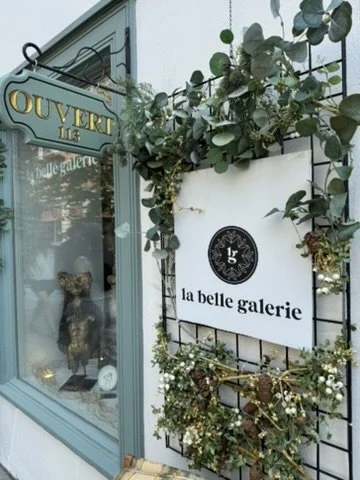
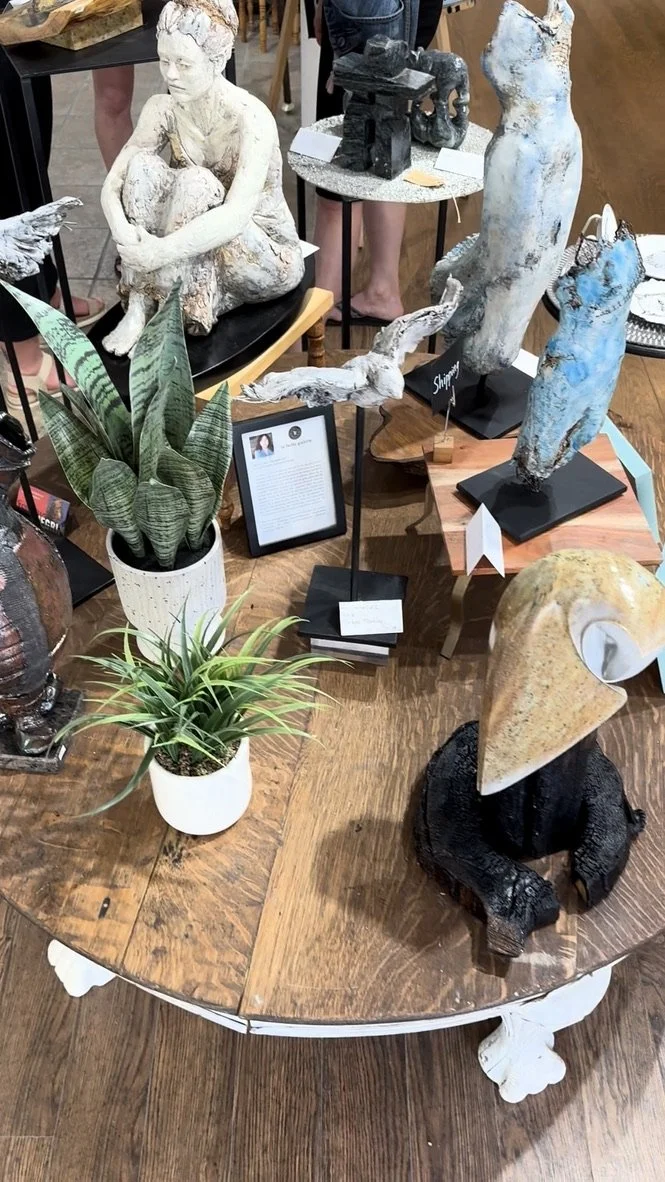
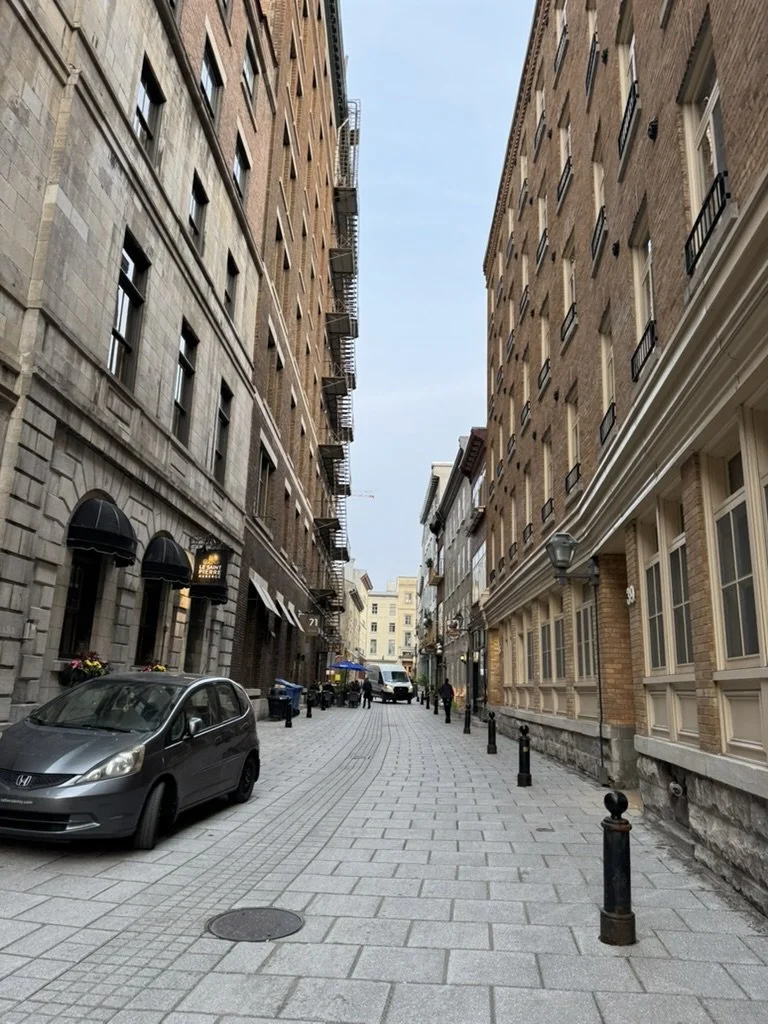
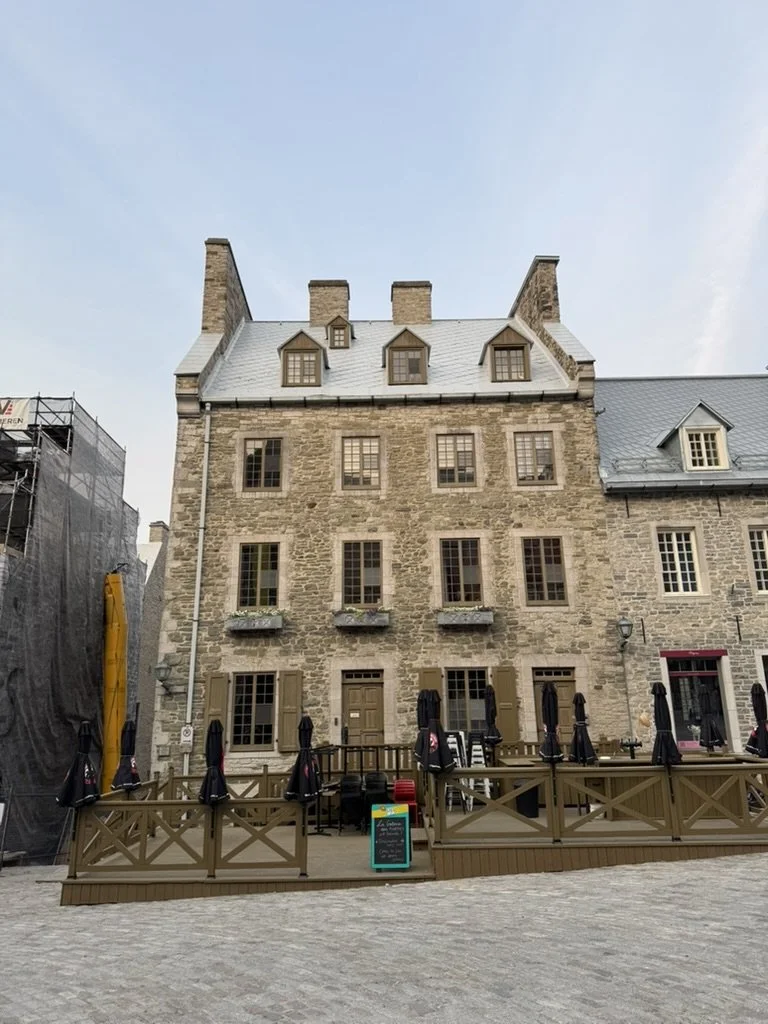
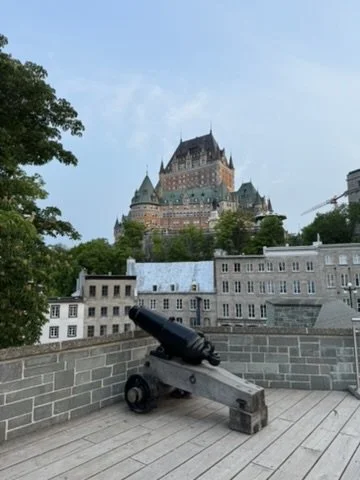
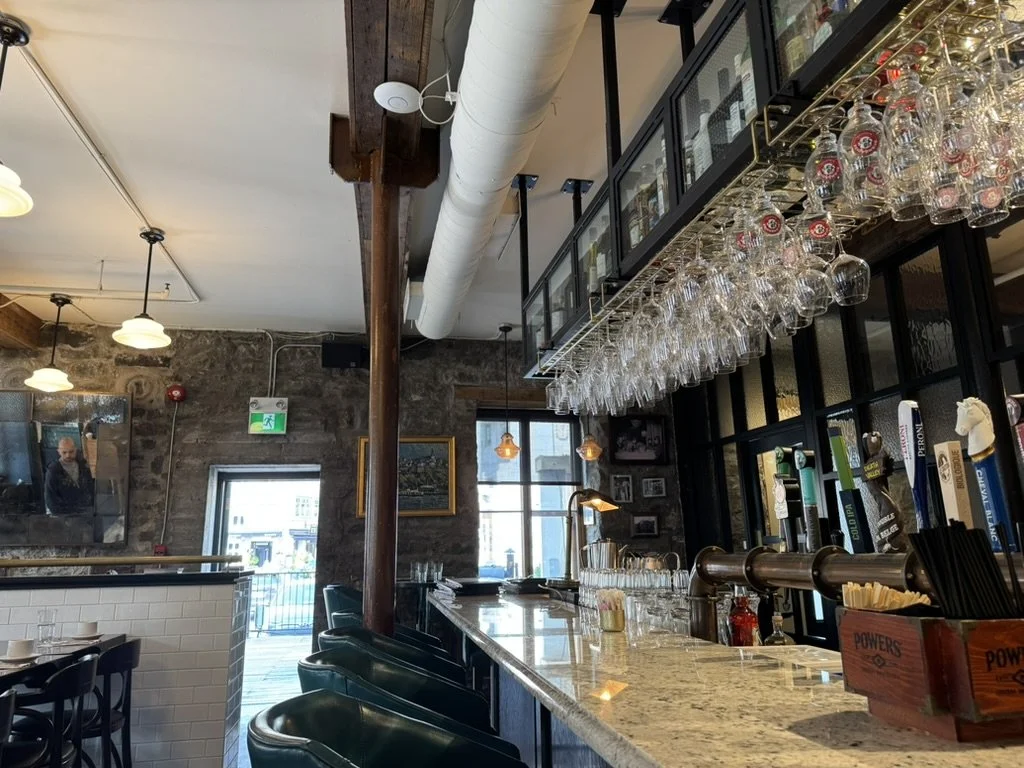
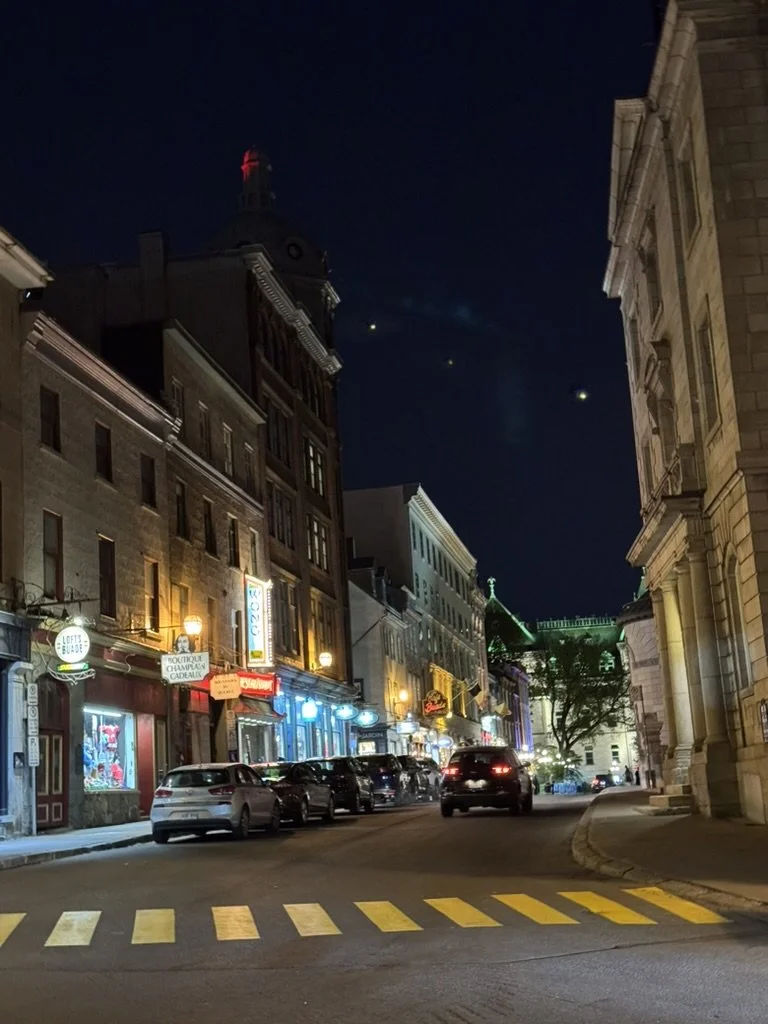
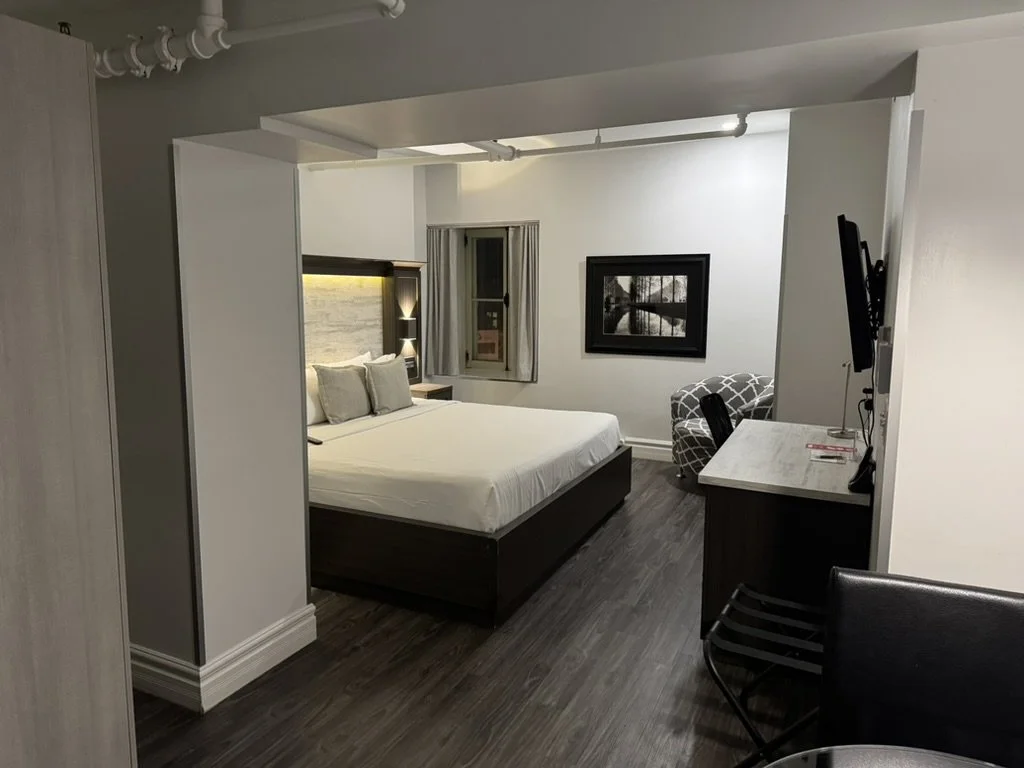
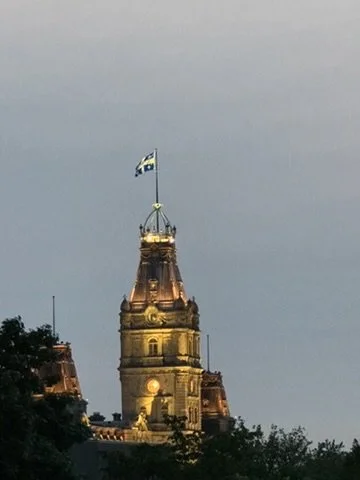
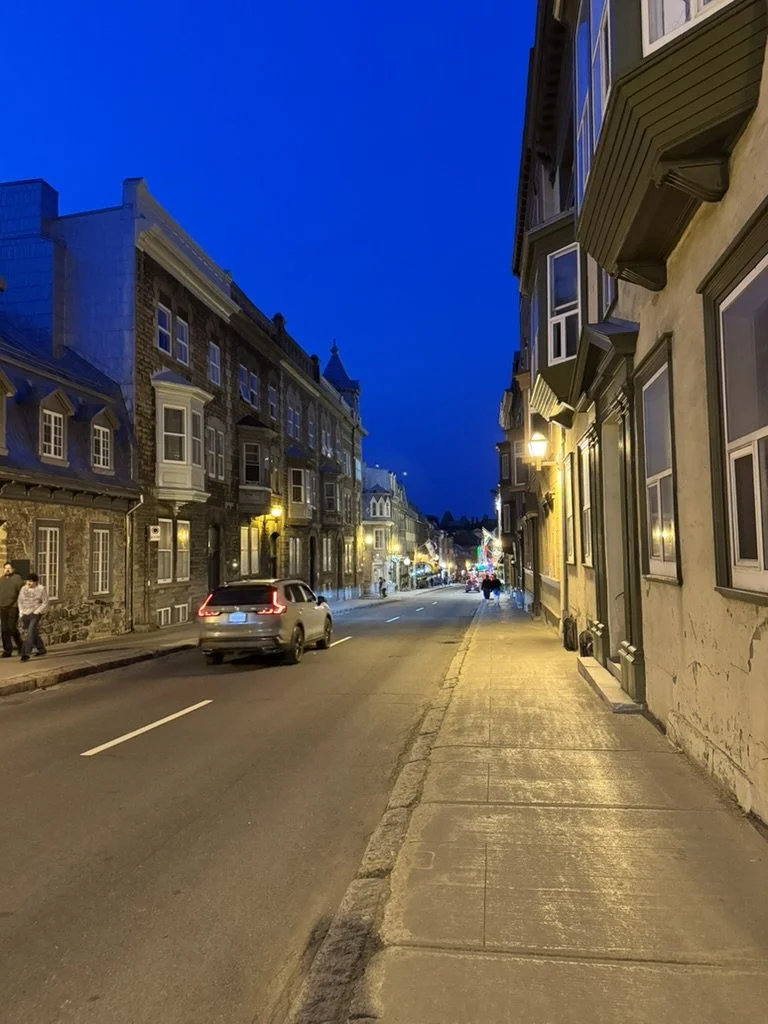
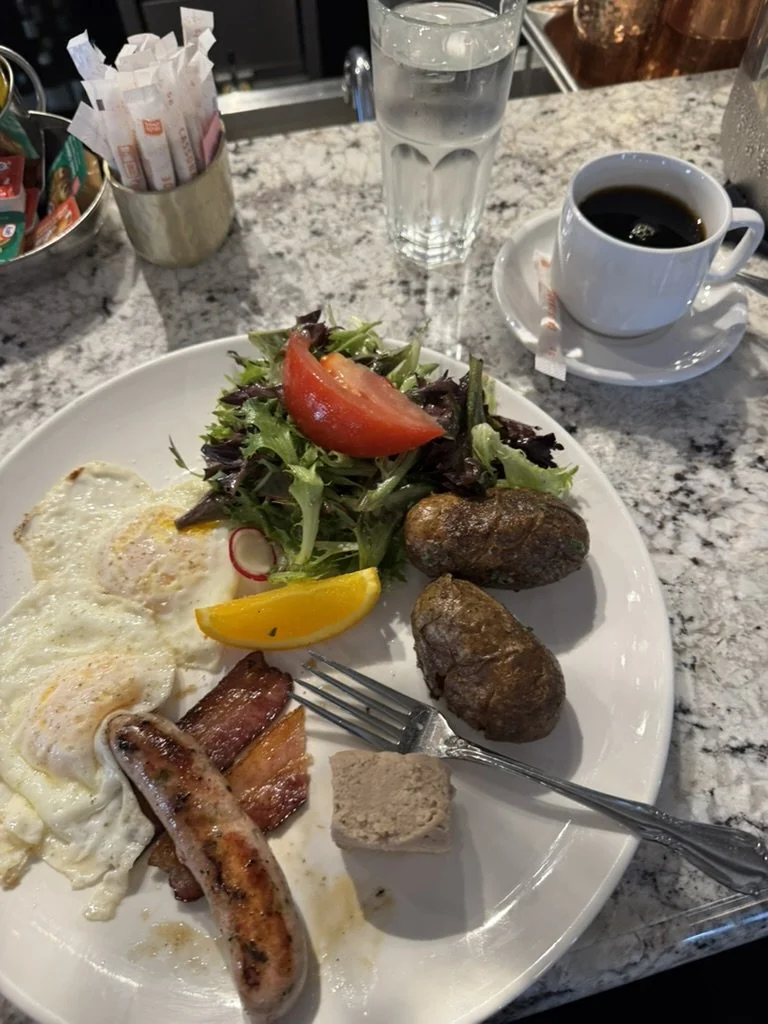
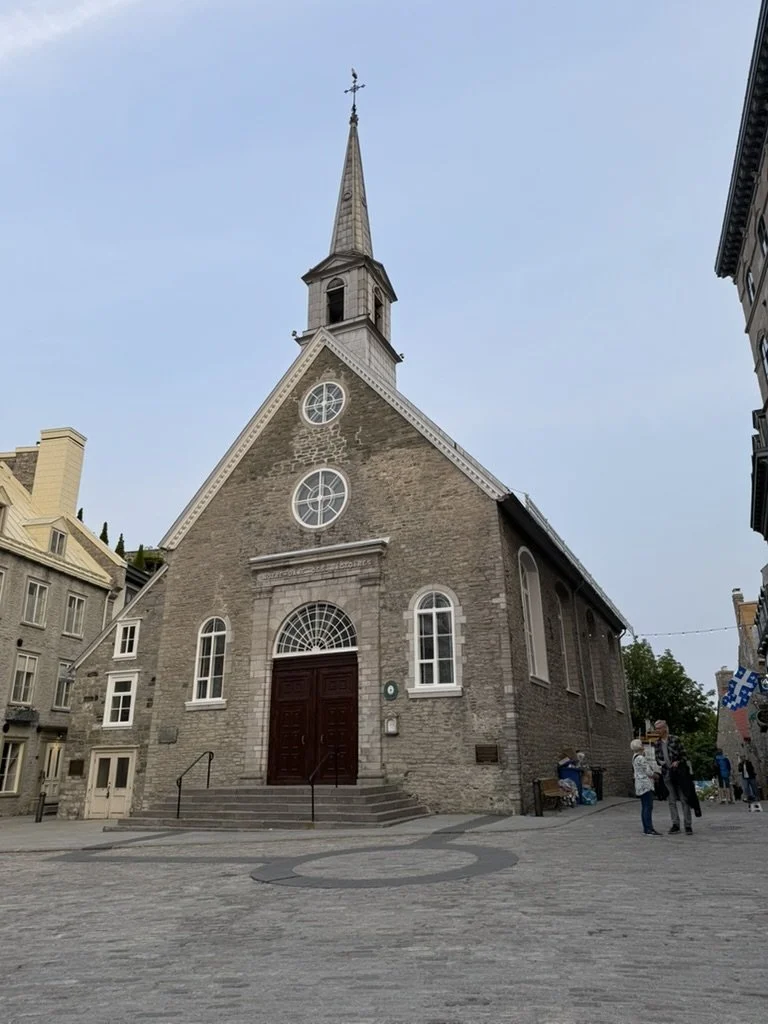
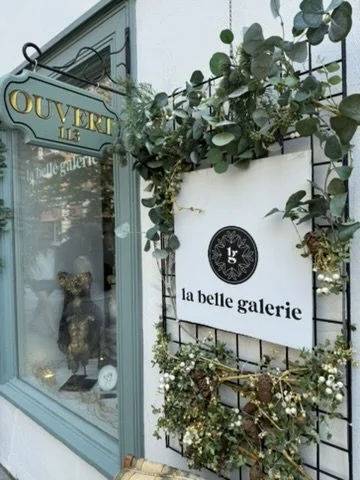
Two weeks ago, I embarked on a journey to Quebec City, a place I hold dear as both an artist and admirer of its vibrant culture. My destination was La Belle Galerie, nestled in the heart of the Old Port. This gallery, aptly named “The Beautiful Gallery,” has become a creative home for me, a space where I showcase and sell my work.
This marked my fourth visit to the gallery. Twice before, I had the privilege of performing live carving demonstrations during festive events that bring the Old Port to life. These evenings buzz with energy—street performers captivating crowds, art displays spilling into the streets, and the mingling of light-hearted spirits. These events have been both professionally rewarding, helping me connect with repeat collectors, and personally enriching, as I thrive in the lively artistic atmosphere.
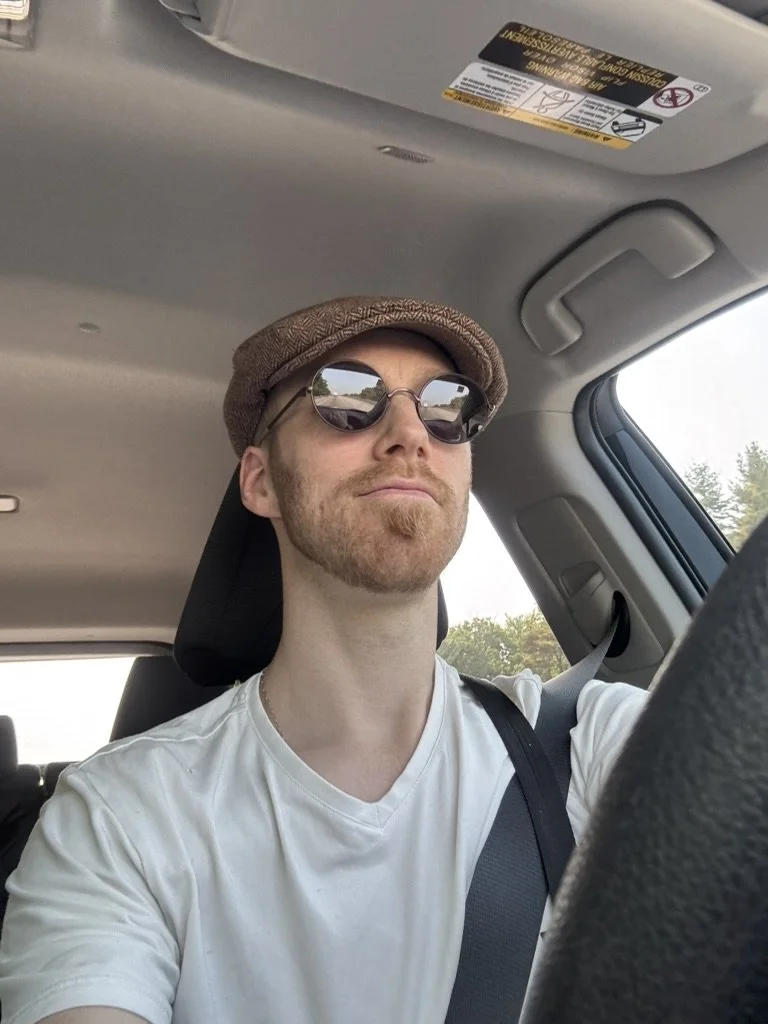
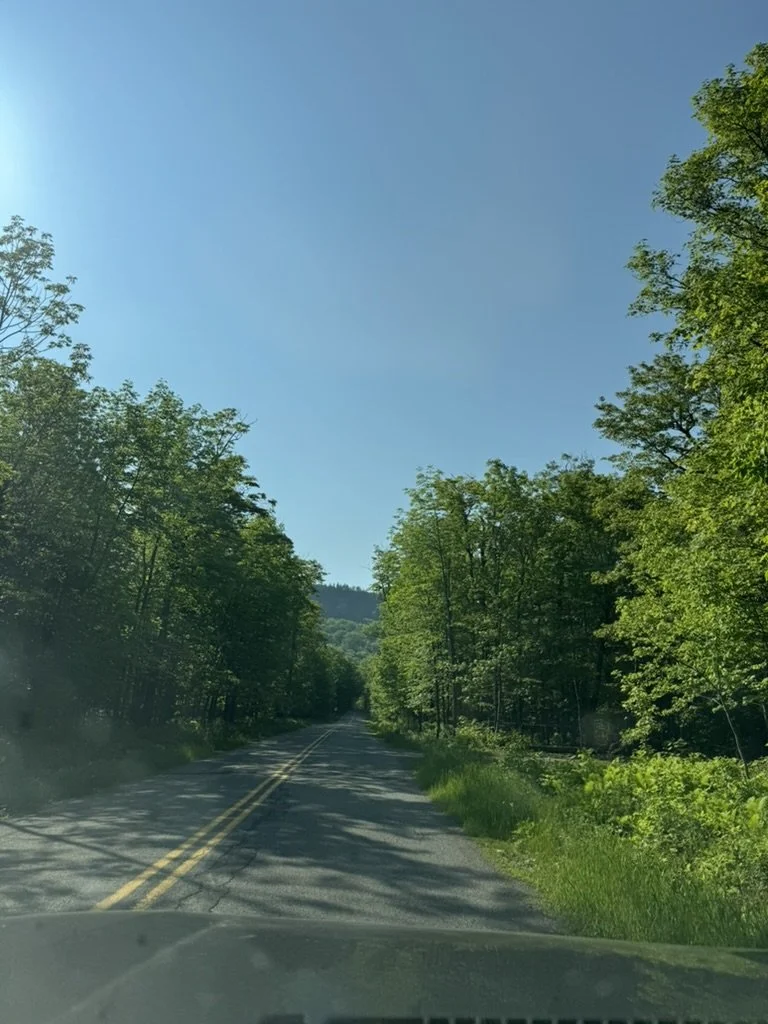
This recent trip, however, was for the gallery’s annual vernissage, signaling the start of a new season and the influx of summer tourism. It’s a pivotal time for sales and a chance to immerse myself in the rhythm of the city. Though the drive is far from light—nine hours, plus navigating Toronto traffic—it’s always worth it.
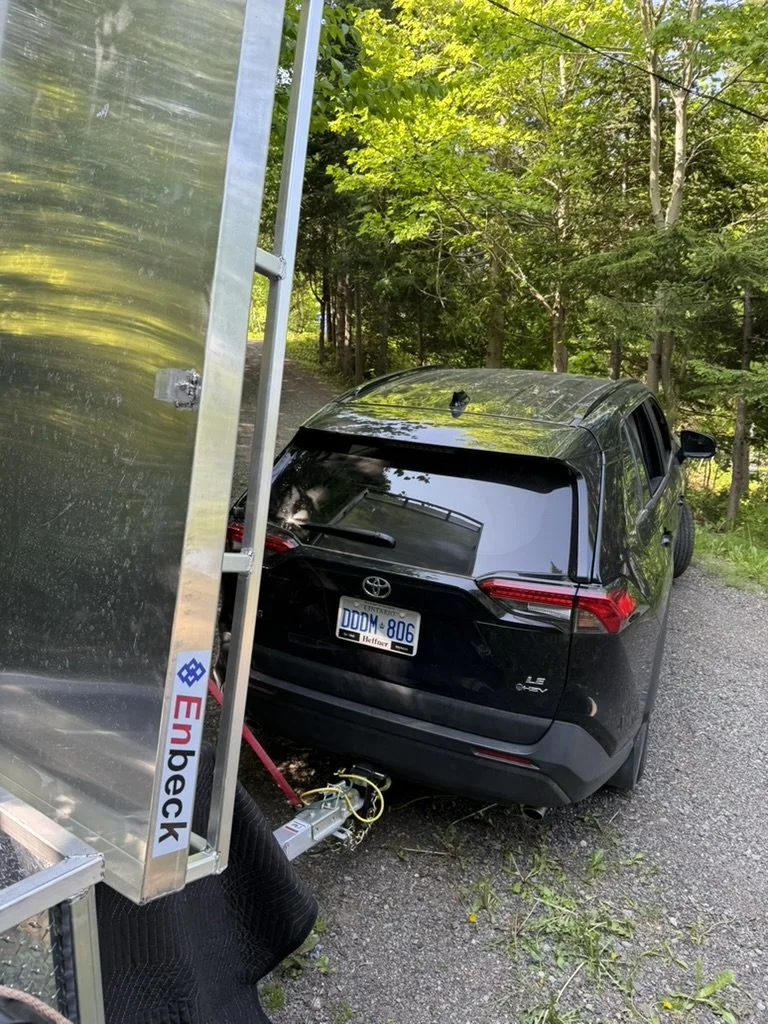
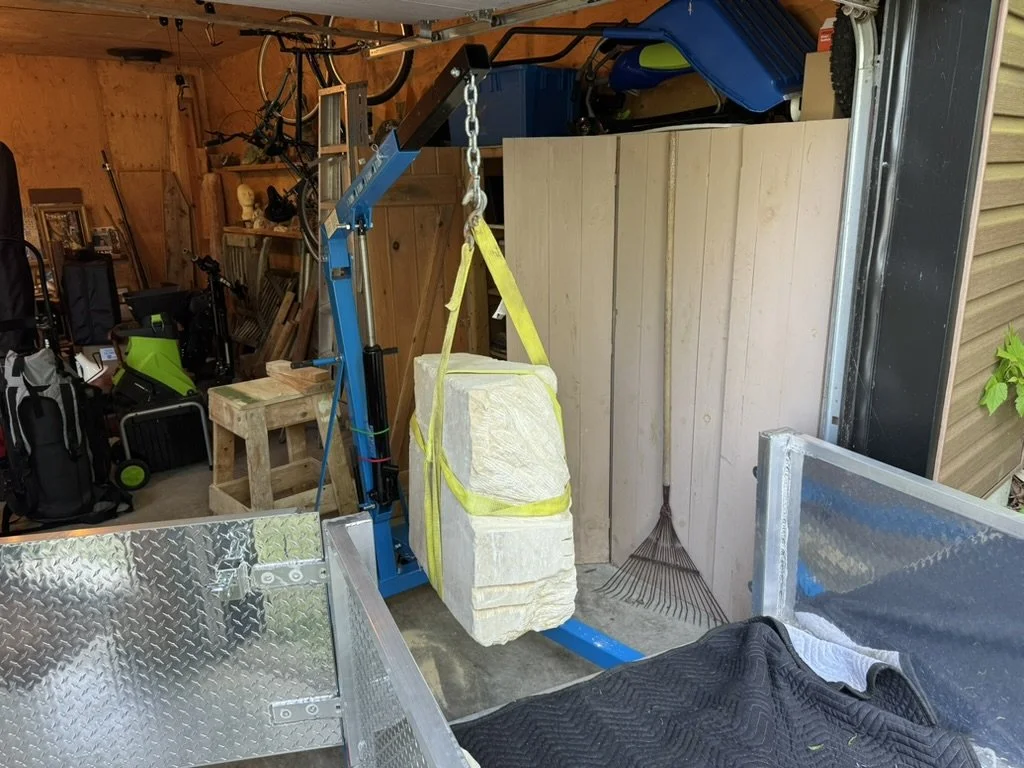
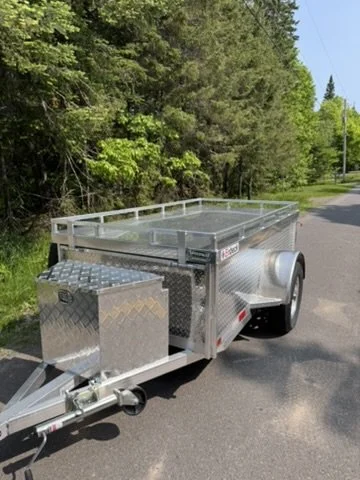
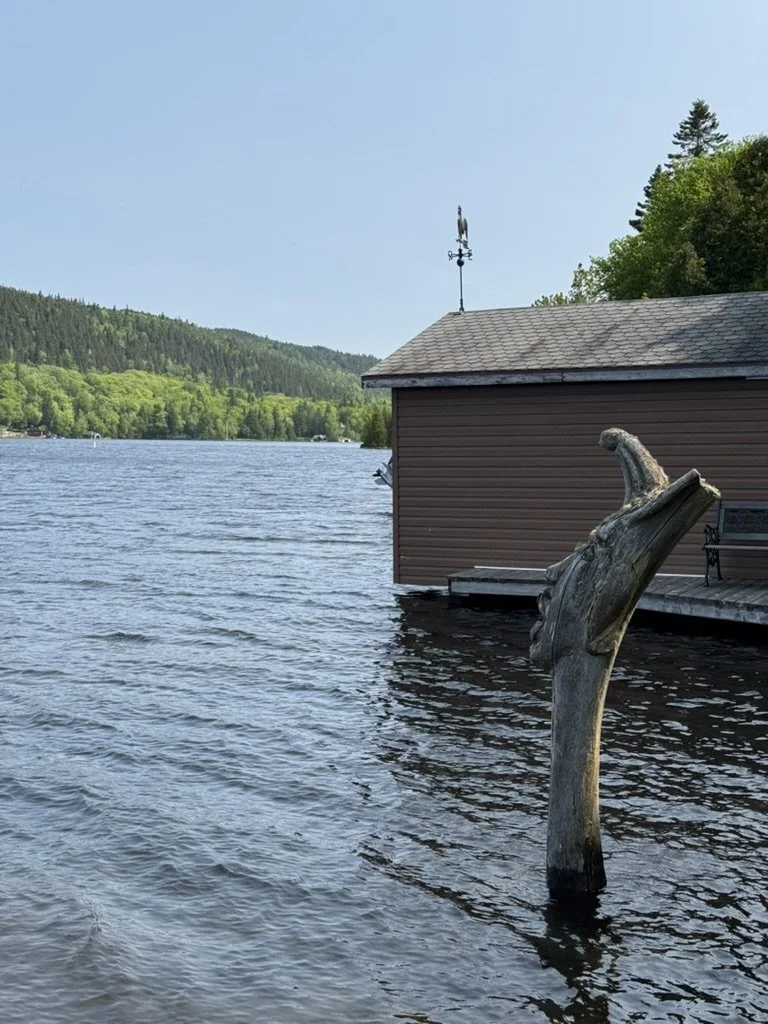
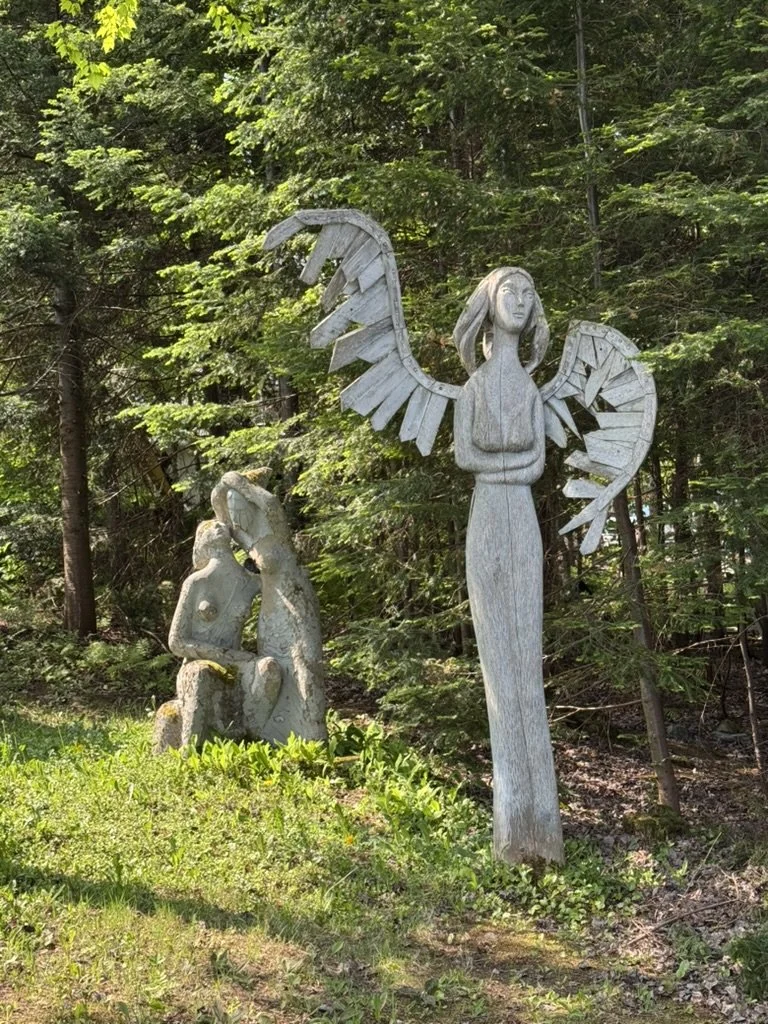
Along the way, I took a detour to St. Aubert, where a unique opportunity awaited: a massive 800-pound block of limestone. Perched on a steep hill by a lakeside cottage, it belonged to a 90-year-old artist who could no longer work on it. There was a bittersweetness to taking this piece of stone. It carried the history of an artist’s life—a man who balanced his passion for art with a career in banking. Now, it’s in my hands, ready to be transformed into something new.
Getting it onto my trailer was no small feat. The hill was the steepest I’ve ever climbed, and the descent to the cottage garage was even steeper. With the help of an engine hoist (and a few creative maneuvers), I managed to load the stone. Driving up that hill with the weight of the trailer and stone was a triumph—my RAV4 Hybrid AWD didn’t let me down.
This journey reminded me of something my late high school art teacher, Al Wright, once said: “To become a master, you have to make a million mistakes.” Every experience, every challenge, and every stone I carve is part of that journey. While I didn’t make any critical mistakes this time, there’s always room for improvement and learning.
For me, this wasn’t just a trip—it was another chapter in the lifelong pursuit of artistic mastery. Now, back in the studio and slightly behind schedule, I’m ready to get to work. As always, what one does on their vacation time says a lot about their passion. Here’s to another day, another stone, and another step forward.

The Mirror of Art: Reflection as the Genesis of Life
Art holds a mirror to our inner selves. Whether we’re viewing or creating, art invites reflection. It challenges us to ask why it resonates, how it connects to our lives, and what it reveals about our innermost thoughts.
Recently, I had a small but profound epiphany about this dynamic interplay. Art, at its core, is a tool for self-discovery. When we look at a piece, we don’t just see the subject; we see a reflection of our inner world. The emotions it stirs, the memories it evokes, and the questions it raises—all these responses point back to the essence of who we are.
But the magic of art doesn’t stop there. Creating art offers a similar experience in reverse. The act of creation allows us to project our unconscious thoughts, emotions, and desires outward, forming a tangible mirror for introspection. This process can be deeply revealing, offering clarity on aspects of ourselves we might not otherwise recognize.
Ultimately, art is a tool that fosters curiosity. It challenges us to engage with the world, to explore the intricate relationship between our inner and outer lives, and to ponder how we act within it. By attuning ourselves to this reflective process, we can respond to life with greater creativity, curiosity, and purpose.
Art isn’t just a reflection; it’s a call to action. It urges us to see, think, and create with intention. So, whether you’re standing in front of a sculpture, painting, or even the first draft of your own work, ask yourself: What is this piece showing me? How does it guide my next steps?
Let’s embrace the mirror and see where it takes us.


Honoring the Vision: A Reflection on Creation and Legacy
We must hold onto our visions, however elusive they may seem. They are the bridges between the past, present, and future.
When Disneyland opened its gates for the very first time, a poignant moment unfolded. An interviewer expressed regret to Walt Disney's brother, saying, "I'm really sorry that Walt wasn't here to see this." His brother’s reply was as profound as it was simple: "He did see it; that’s why you’re seeing it today."
This story captures the essence of holding onto a vision—a vision that transcends time and circumstance, even when the originator isn’t physically present. Yet, holding onto such a vision can be one of life’s greatest challenges. Sometimes the idea evolves so far from its original form that we lose sight of what it once was. Other times, we find ourselves trapped in the act of trying too hard, pushing beyond the point of clarity. The most difficult competition is not with others, but with ourselves—with the person we were yesterday, the person we imagined we’d be, or the person we’re striving to become.
In moments of doubt, I remind myself of the deep roots that ground me. I was born on the Canadian Shield, a landscape shaped by glaciers and time. The etched lines of its ancient rock hold stories that have become part of my memory. For most of my life, I didn’t realize the profound influence this rugged terrain had on me. Beneath the dark, rich soil lies a masterpiece of natural sculpture—a testament to the Earth’s resilience and artistry.
This realization has shaped my work. I’ve found solace and purpose in paying homage to the land, in transforming its hardened forms into creations that remind us why life is worth living. Whether through stone, bronze, or other materials, my art seeks to honor the timeless connection between humanity and the Earth. The land’s stories are older than we can comprehend, and its wisdom is something we must carry forward.
As the Indigenous peoples of this land remind us, "Only the rocks stay." This profound truth resonates deeply with me. The rocks, ever-present and enduring, remind us of the permanence of nature amid the impermanence of our lives. Through my work, I hope to capture a fraction of that permanence and share it with others.
We must hold onto our visions, however elusive they may seem. They are the bridges between the past, present, and future. And in the act of creating, we find not only a connection to the world around us but also to the self we were always meant to be.