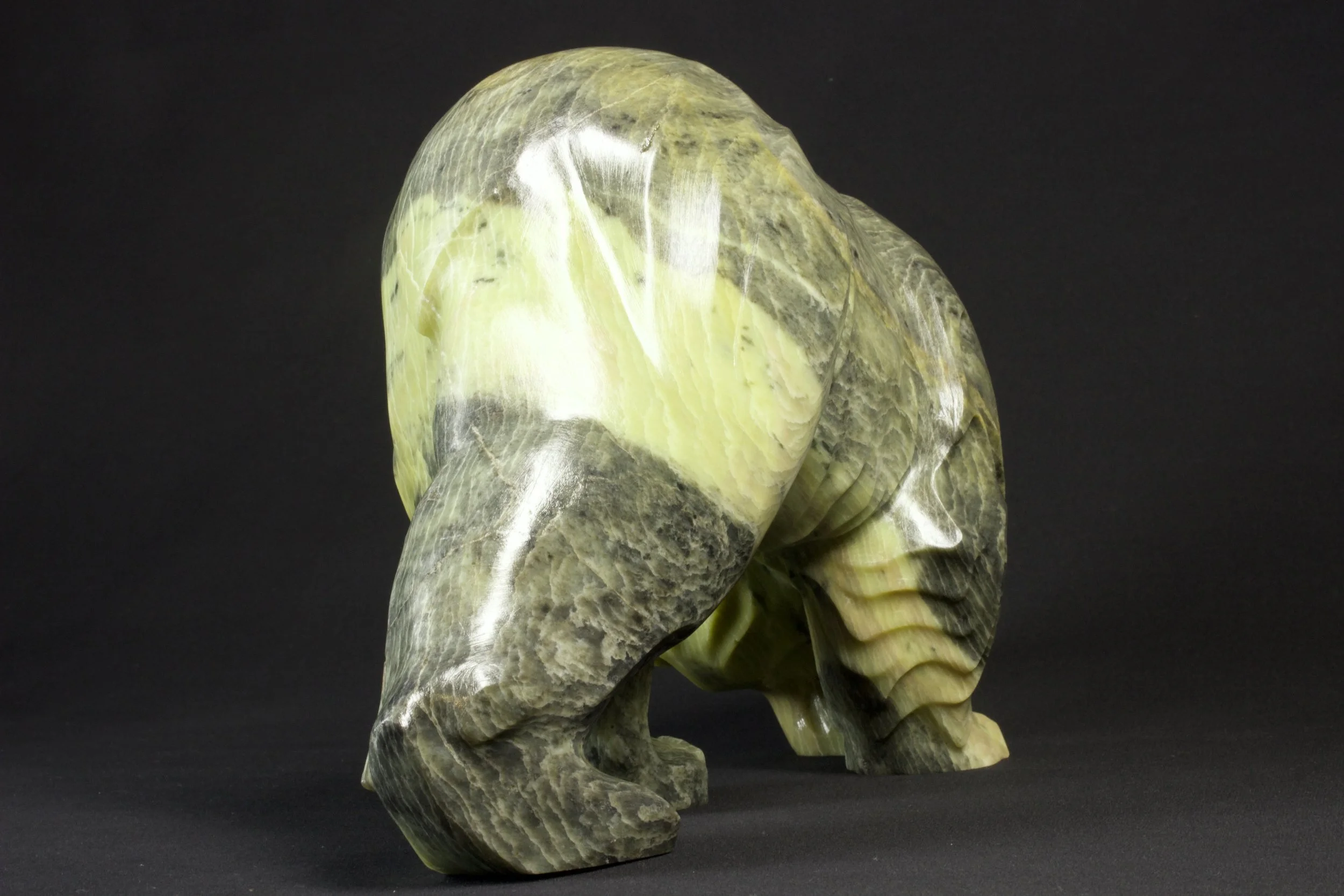
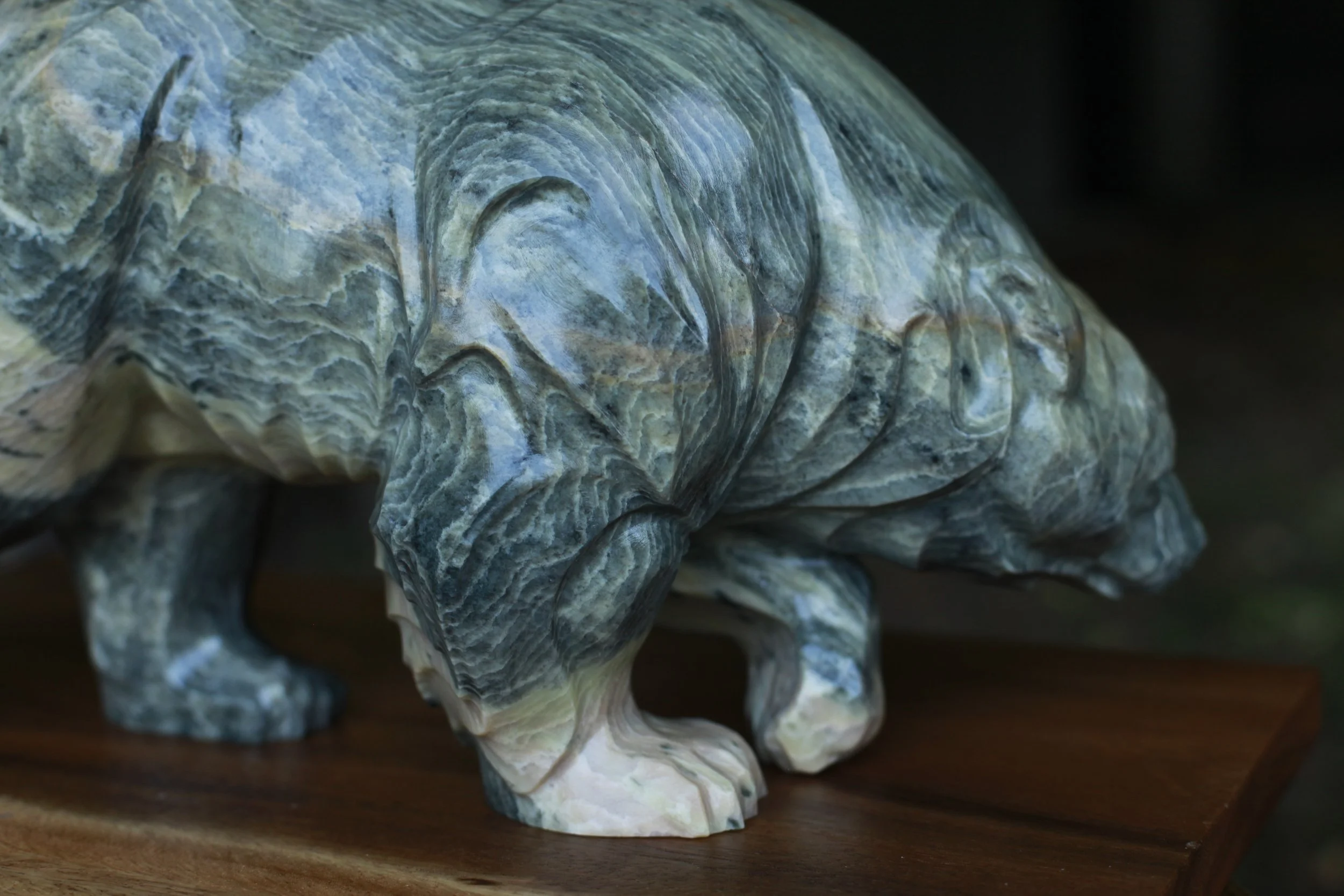
Something Unique
What happens when an original stone sculpture crosses into another medium? Through 3D scanning, digital modelling, and a combination of materials, Wesley Booker explores a new sculptural process he calls Veritas Composite.
I suppose everyone is looking for something exceptional. Something that has never quite been done before. Something that makes people stop for a moment and wonder how it came into existence.
And I think, perhaps, I have found a little bit of that.
In my studio, I am constantly imagining new ways of getting things done. Stone carving has slowly moulded me into something of a jack-of-a-few-trades. Over the years, I have learned to move between materials, tools, and technologies—sometimes because I want to, and sometimes because the work itself seems to demand it.
Recently, I have been exploring 3D scanning and digital modelling as part of my sculptural process. But the goal is not to abandon the original material. Quite the opposite. The goal is to carry something forward.
A sculpture begins in stone. It is carved, discovered, and brought into being through the removal of material. Then, through a combination of scanning, modelling, and casting, it can pass into another medium entirely. The strange thing is that the result often becomes so transformed that people cannot even recognize the original sculpture within it. And yet, somehow, it is still there.
This is not entirely unlike the process of bronze casting, where the original sculpture is often made from clay or another material before being transformed into bronze. But there is something different about beginning with stone. Stone is not simply a material that can be replaced. It has its own history. Its own weight. Its own ancientness.
So when a sculpture begins in stone and eventually becomes something else, the process becomes a kind of transformation. The original is not destroyed. It becomes something new.
I have begun calling these works Veritas Composite.
Veritas is Latin for “truth,” while composite refers to something made from several different materials. Together, the name seems to describe the process quite well. It is a simpler way of saying: a sculpture that began in stone and has been transformed through a combination of materials and modern techniques.
But perhaps there is something more truthful in the name than that. Because the work is not pretending to be one thing. It is stone. It is bronze-like. It is wood, brass, glass, and the invisible mathematics of digital scanning. It is an original sculpture, and it is also something entirely new.
Perhaps that is what makes it true.
Tracing the Heavens
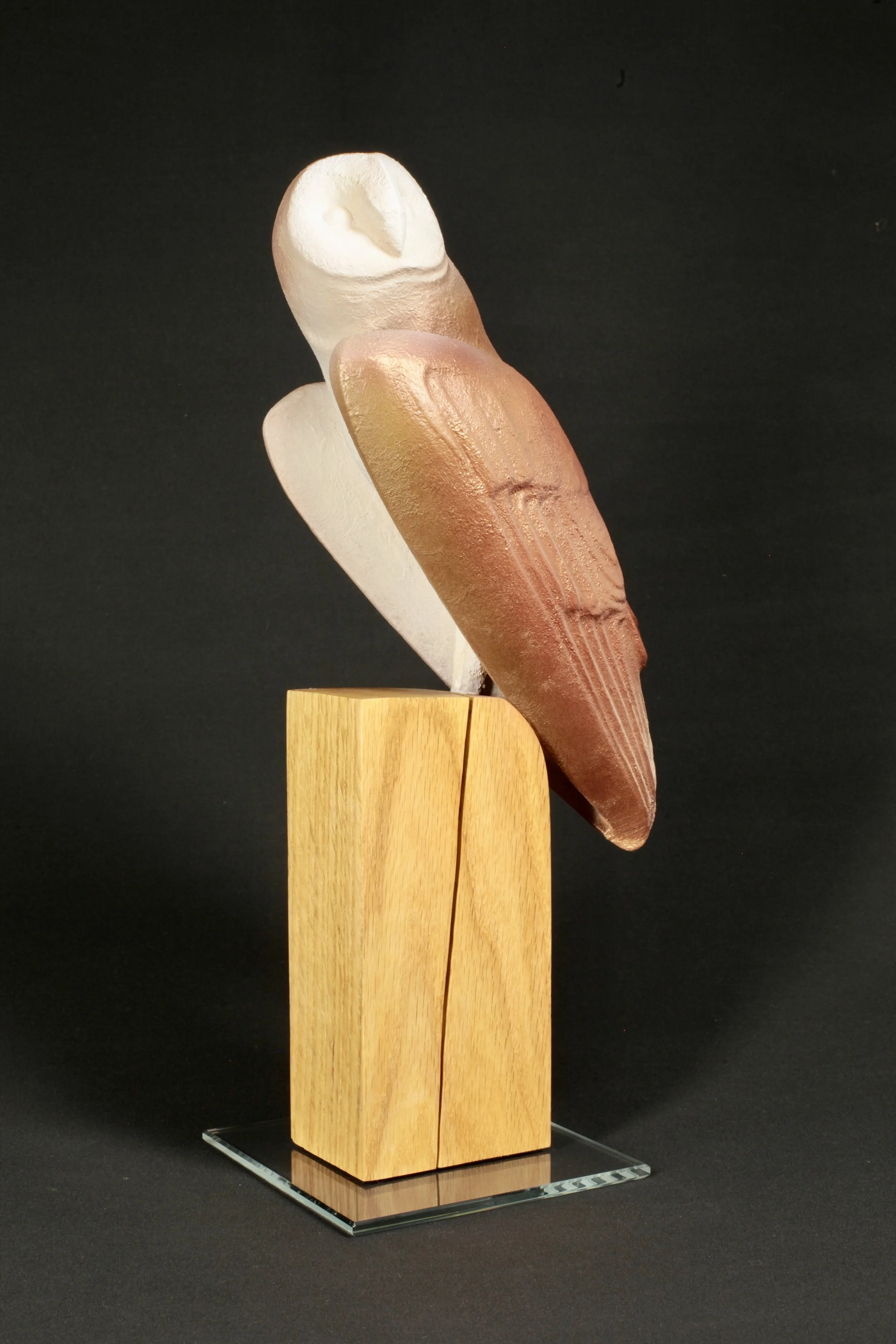
The first of these works is named, like its predecessor, Tracing the Heavens. The sculpture is mounted with brass dowels running through the work and into a cured piece of red oak. Beneath it, a glass base provides stability while allowing the sculpture to remain visually light.
There is something I enjoy about the meeting of these materials. The stone carries its ancient weight, while the brass and glass seem to lift it into something more contemporary. The red oak gives it a grounding—something warm and earthly.
Stone reaching upward. The heavens above. The earth below. A small meeting of worlds.
Requiem
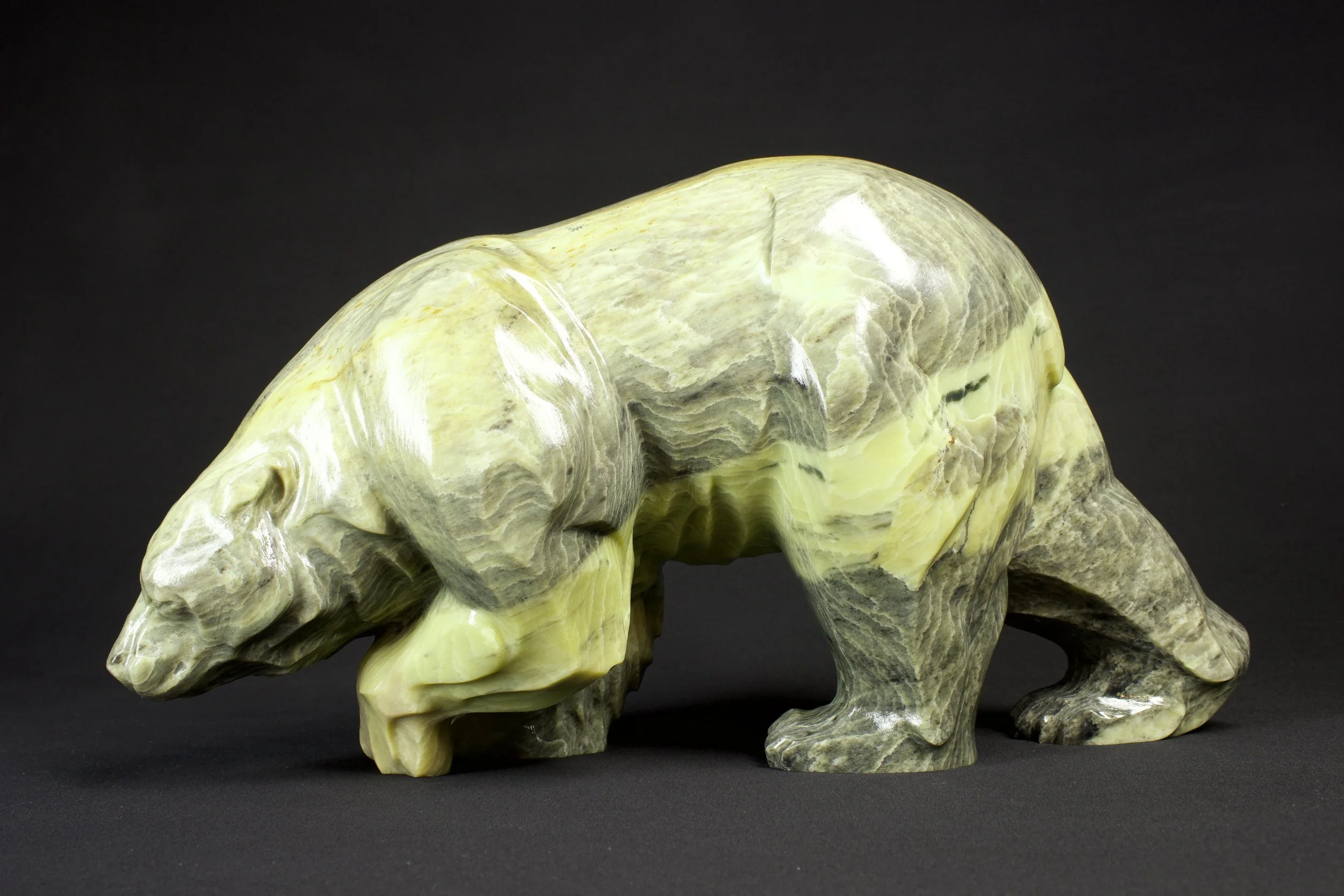
The second work is called Requiem.
The word means “rest.”
I chose the name following a period in my own life last year when I was forced to rest after an illness that nearly took my life. There are certain experiences that change the way one looks at time. The things that once seemed urgent become strangely quiet. The body becomes a reminder that everything we are doing is temporary, and that sometimes the most important thing we can do is simply remain.
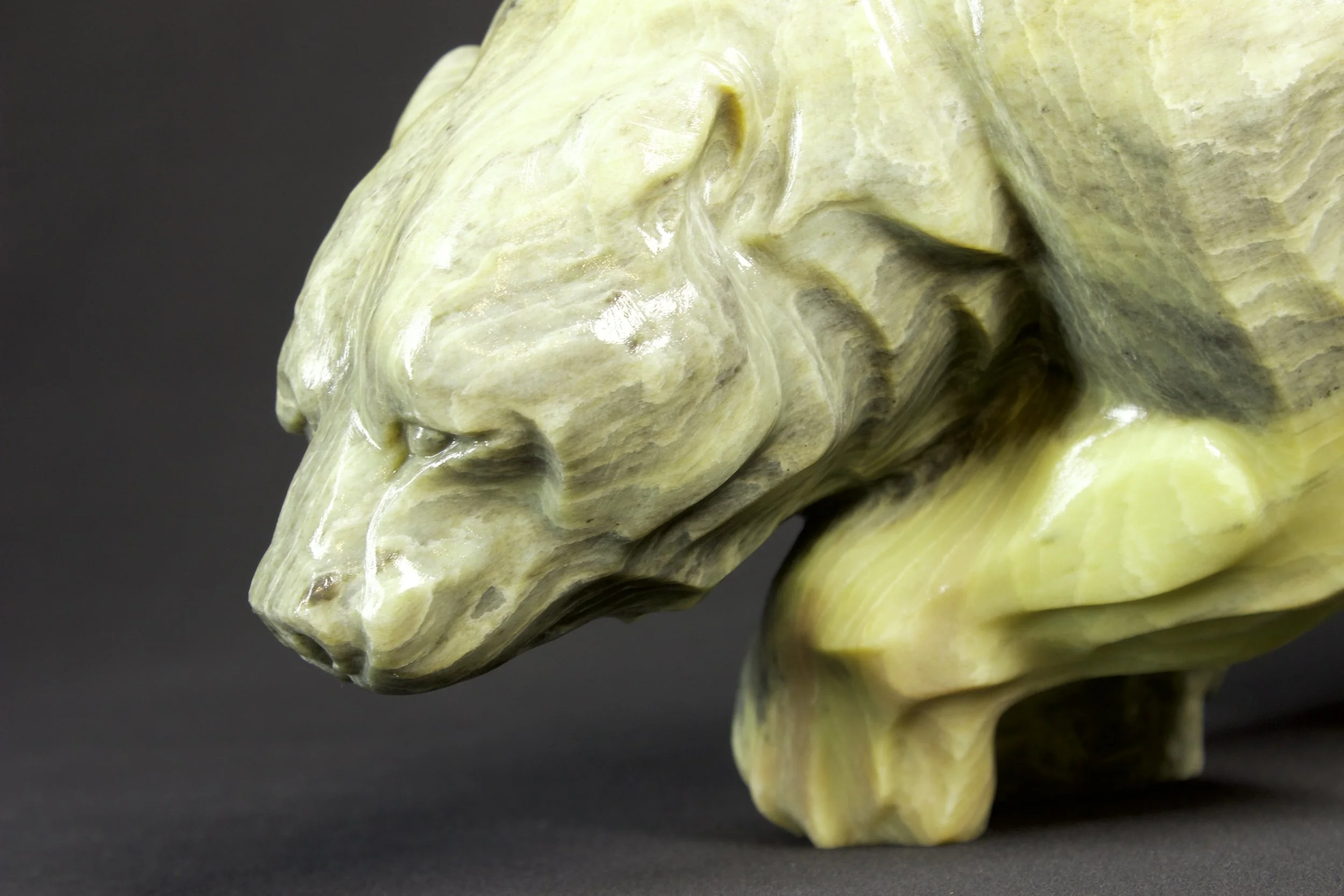
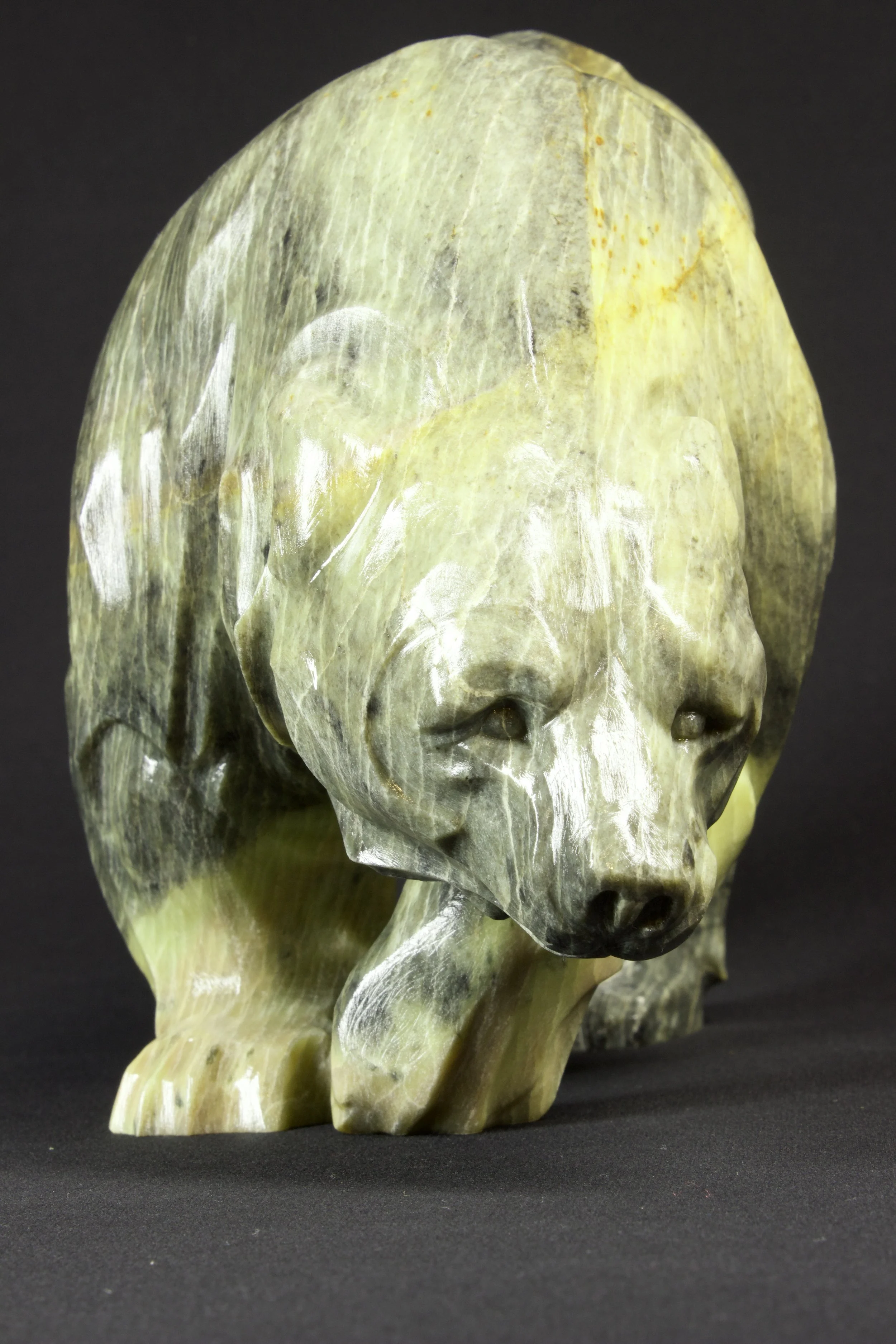
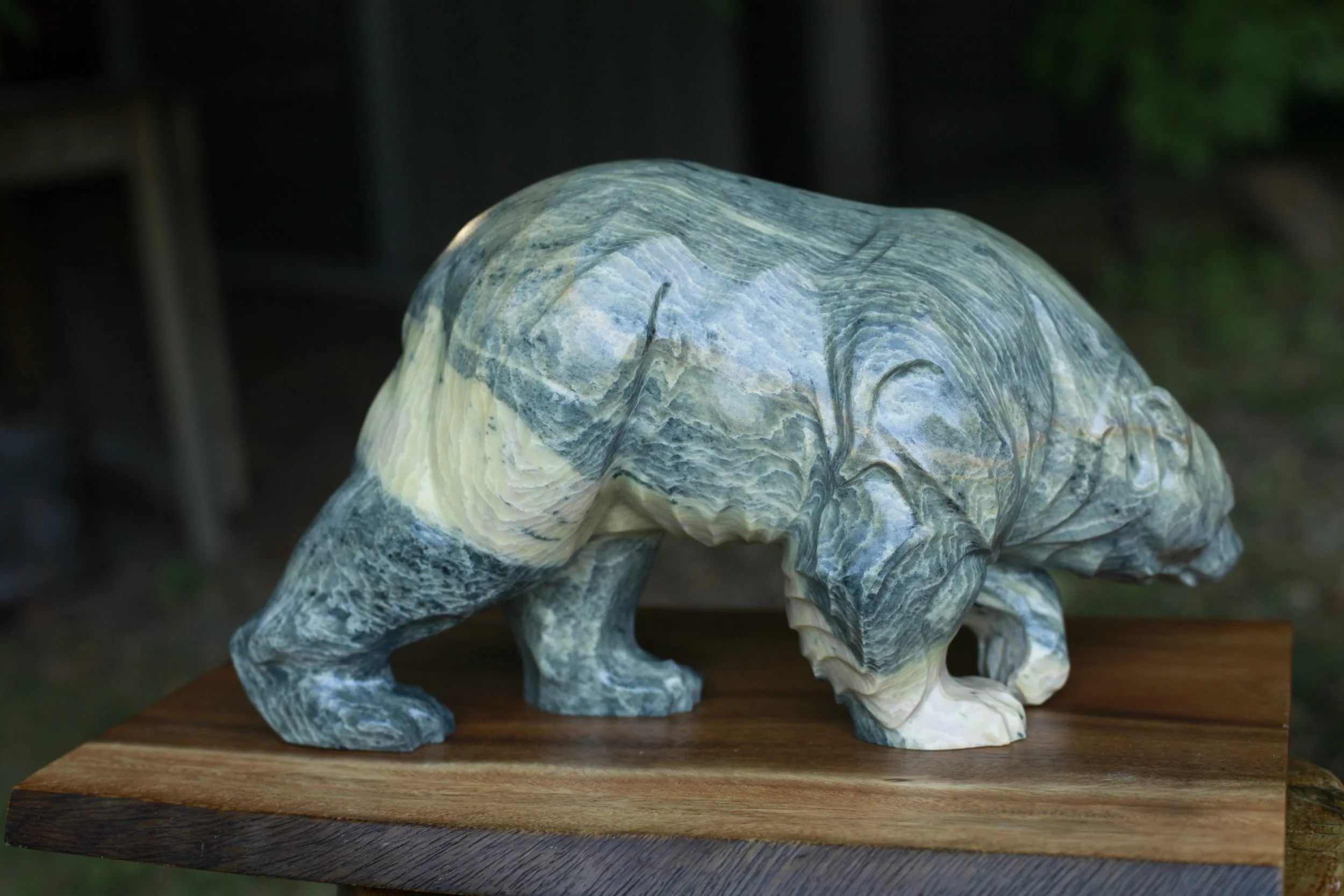
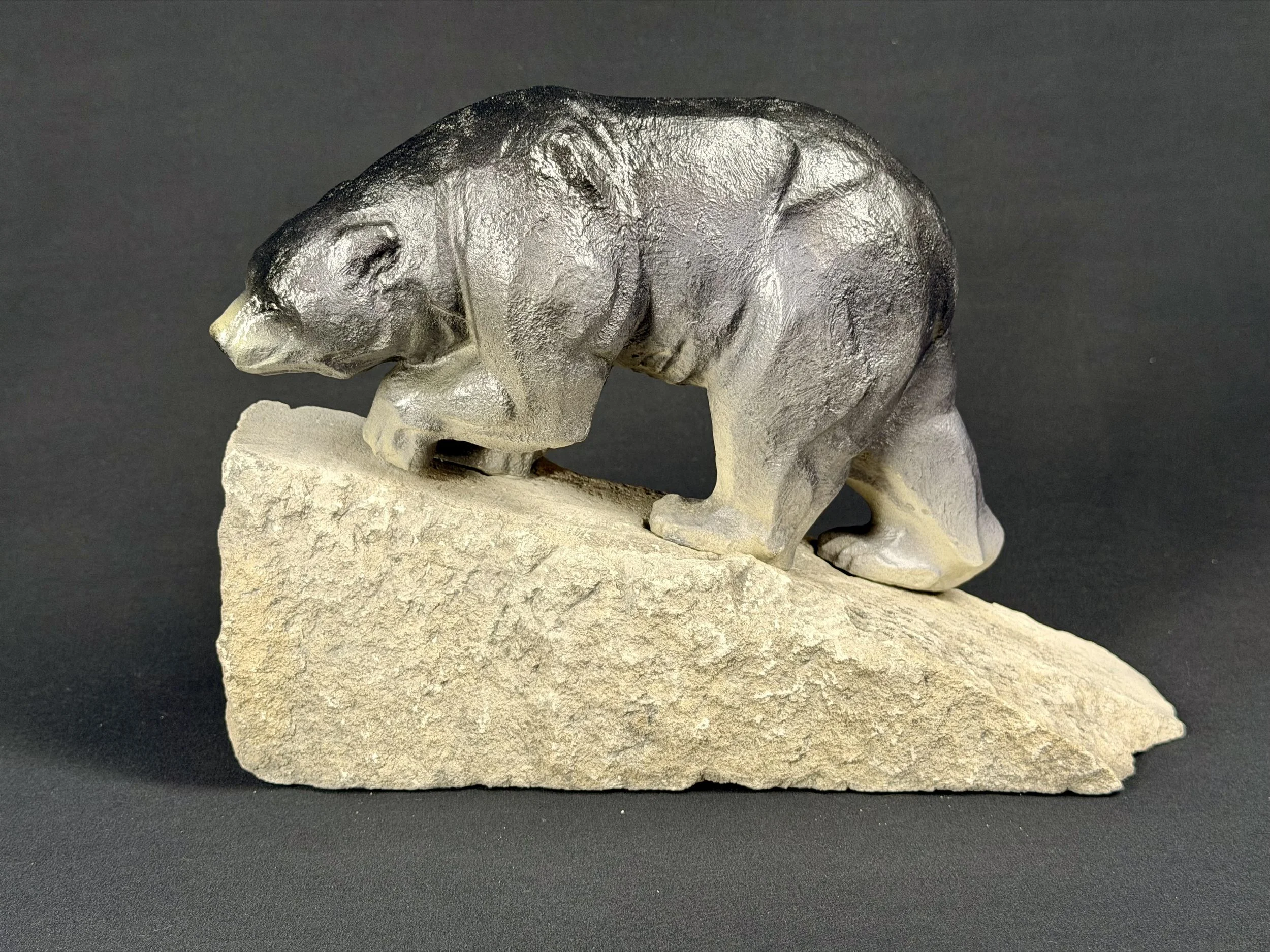
This black bear is mounted to a limestone base. The finish was designed to bring out the character of its movement, while also allowing the life of the stone to move upward through its feet and into the body. I wanted the bear to feel as though it had not simply been placed upon the stone, but had emerged from it.
As if the limestone remembered the bear. As if the animal had been waiting there all along.
The black bear’s stealth is something that deserves attention in these northern lands. It can become almost ghostlike when it does not want to be seen. There is an incredible power in that kind of presence—the ability to move through the forest almost entirely unnoticed.
A dark shape between the trees. A sound in the undergrowth. And then nothing.
Perhaps that is part of what I wanted to capture in Requiem: not simply the physical form of the bear, but the feeling of its passing through the world.
Both of these sculptures exist somewhere between stone and bronze. They carry qualities of both, while belonging entirely to neither.
And this is perhaps the most interesting part of the process.
Each piece will be completely unique unto itself. Although I can create another work from the same original sculpture, the process of casting, finishing, and combining materials means that no two pieces will ever be entirely identical. Each one will have its own surface, its own character, its own small history.
The sculpture changes as it travels. From stone. To digital form. To another material. And finally, into the world.
These works are now resting at La Belle Galerie in Quebec City.
If one of them speaks to you, or if you are interested in having another piece created through this process, feel free to reach out to me.
Perhaps there is another sculpture waiting to cross over.
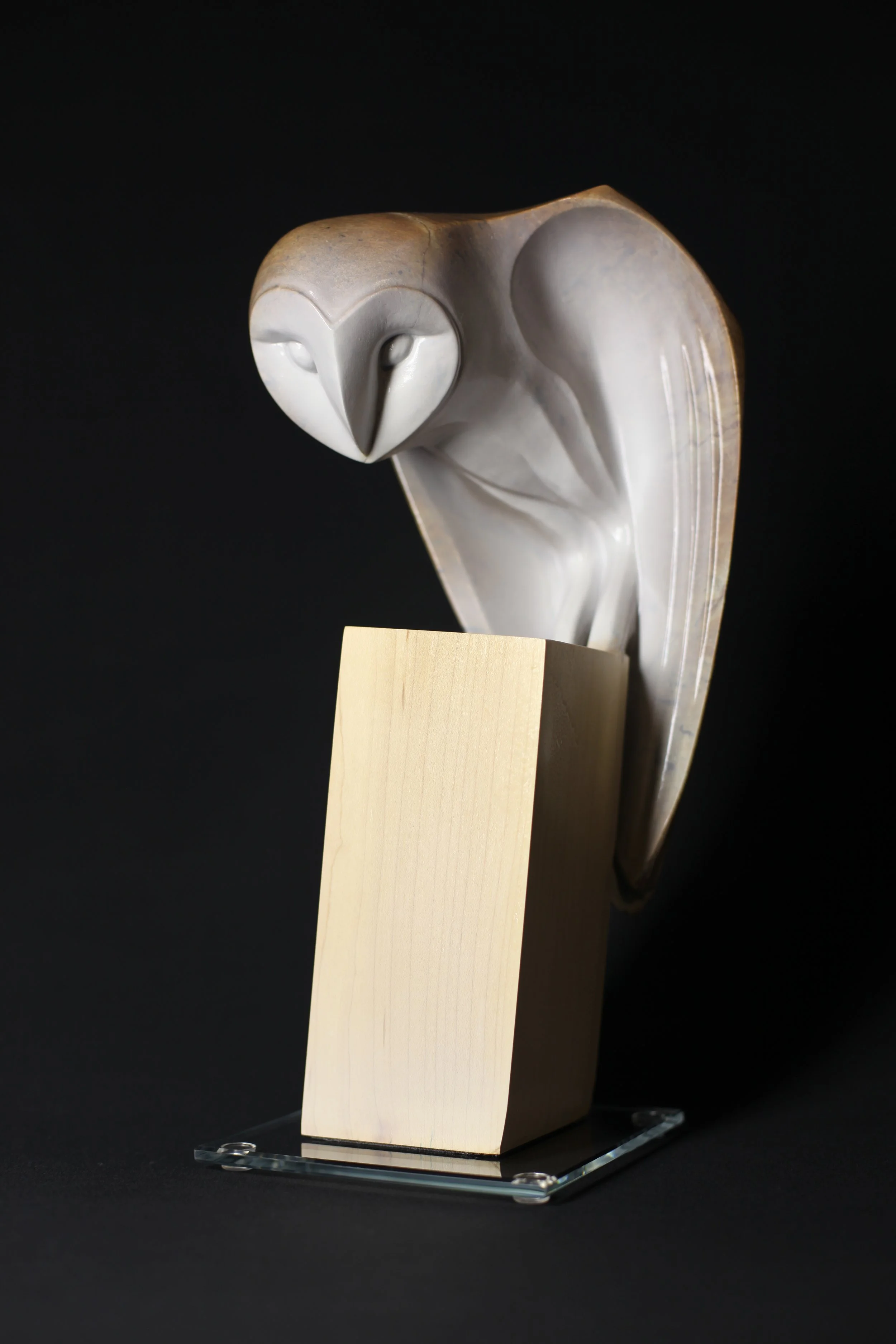
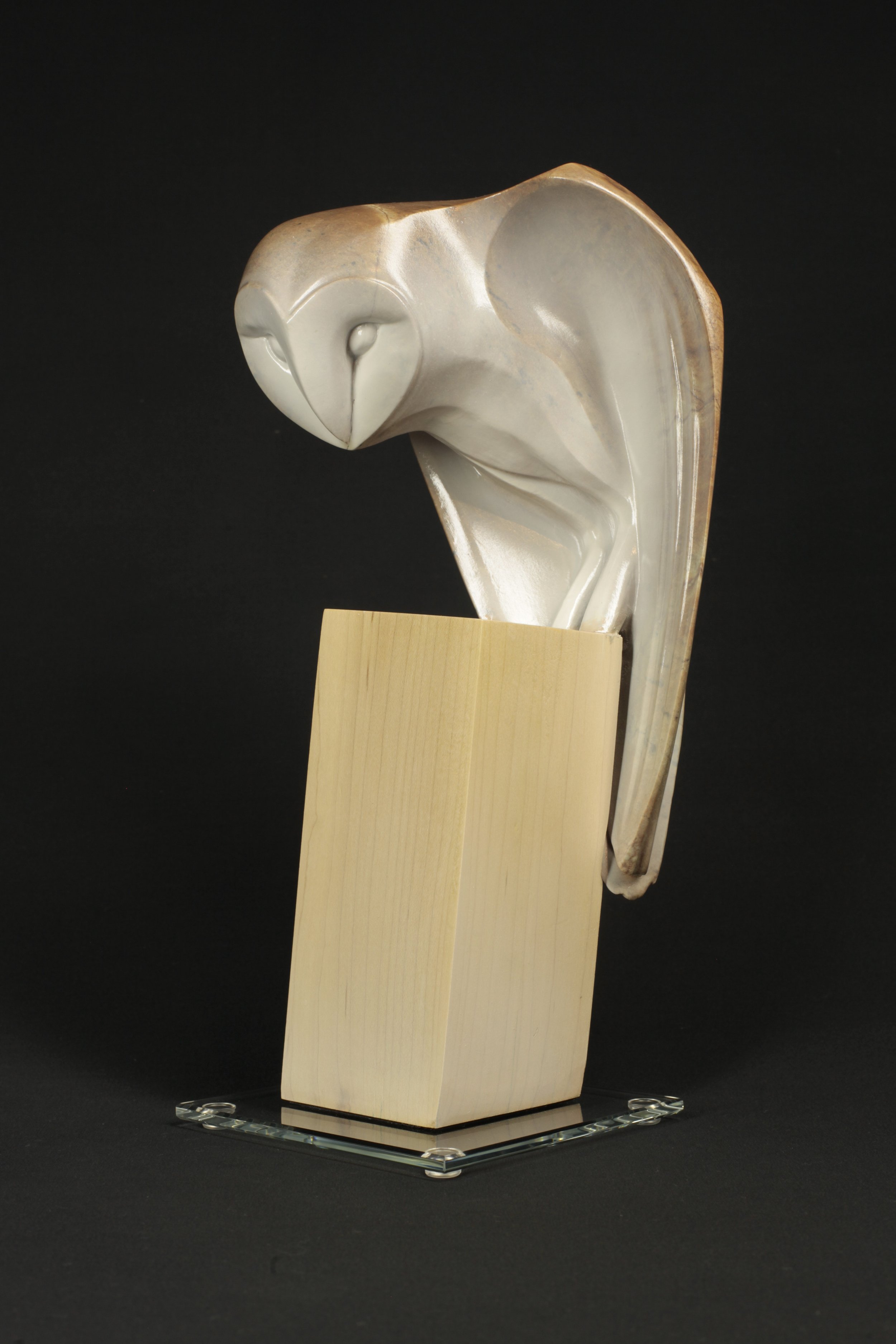
Learning All Over Again — Nocturnae & Clean Again
Each time I return to the owl or the bear, I begin again. Nocturnae and Clean Again explore two distinct personalities in stone — one watchful and nocturnal, the other instinctual and grounded. These sculptures reflect the slow process of learning to feel movement, muscle, feather, and fur from within the stone itself.
Each time I return to an owl or a bear, I’m learning all over again.
No two works of mine are much alike. Part of that is intentional — I leave space before approaching a subject again. I try not to repeat the same pose, the same lines, or even the same mistakes. That space forces me to approach the form as if it were brand new — living, dynamic, and deeply personal.
I’ve carved several owls and bears, as you may have noticed. But these last two feel different. They feel more real to me — not necessarily because they are “better,” but because they carry more life. They speak a little louder when viewed.
I know there is still a long way to go. Not in the sense of making a better sculpture, but in learning to truly feel the life of the barn owl or the polar bear — to carve as if it were my own body. To understand every joint and muscle, every fold of feather or sweep of fur. To sense how they move. How they rest. Even how they might feel.
Growth as an artist is slow and patient. Each day is unique. Allowing the process to unfold in its own time is paramount.
Nocturnae
The word Nocturnae means “belonging to the night.” After long night shifts spent carving, I sometimes feel nocturnal myself.
This piece took years of quiet deliberation. The stone sat for a long time before it revealed itself. When it finally did, it wasn’t obvious or graceful — it showed itself crudely, almost stubbornly. I wish I had a photograph of its original state. You’d be surprised it’s the same work.
But that’s part of being an artist. You gaze into stone the way you might gaze into the stars — until a shape begins to emerge from the chaos of constellations.
The owl, in my mind, is deeply observant. Fused in stillness. Perched high on a rafter or doorframe, trying not to be seen, yet fully aware. It locks its gaze onto someone below, quietly contemplating their thoughts and feelings. There is tension in that stillness — a presence that feels almost psychological.
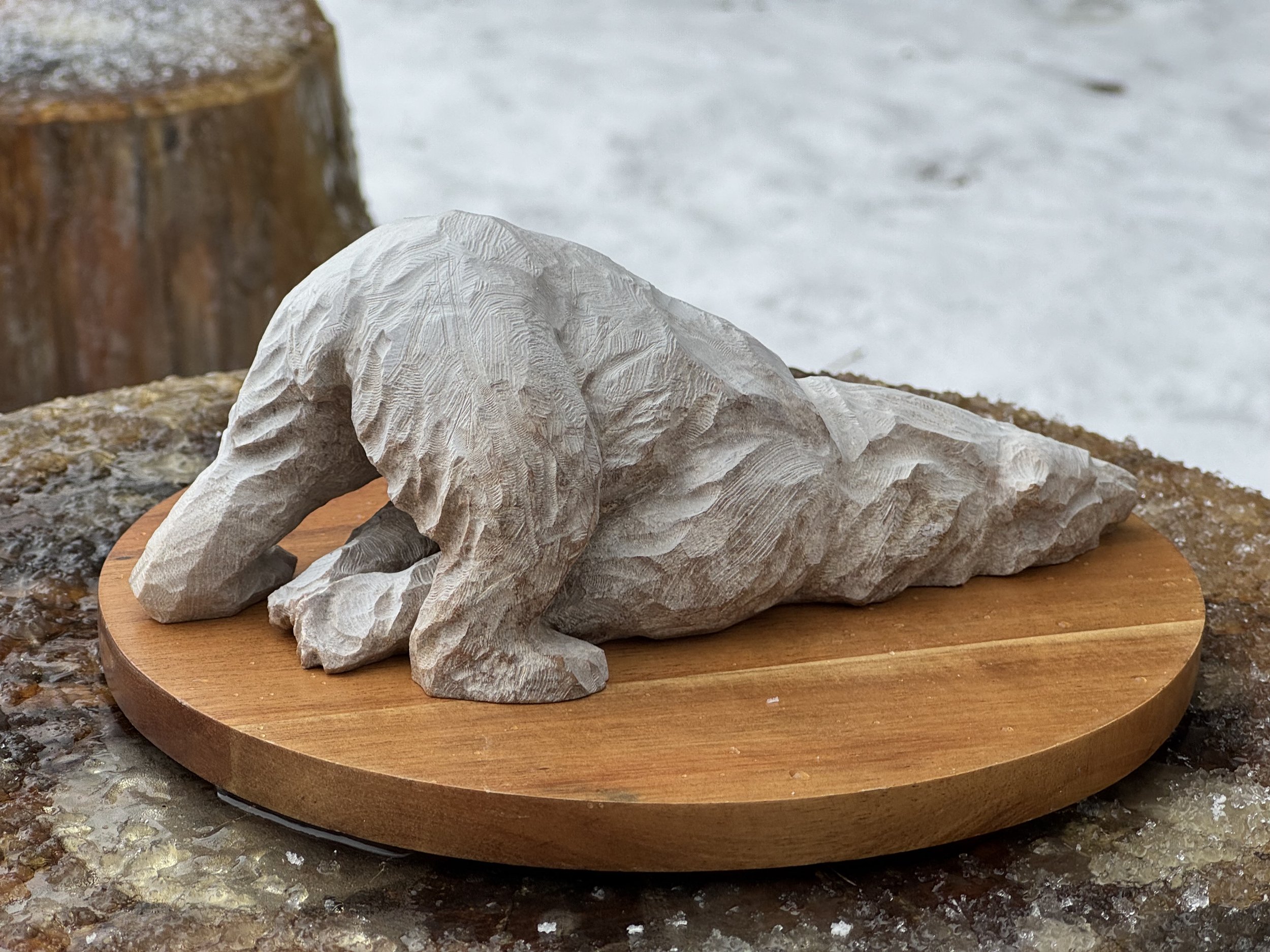
Clean Again
Where the owl holds silence, the bear carries gesture.
The pose may look playful or even lazy — the slow shuffle after a long day, hindquarters raised, sliding forward to spare a few calories. It’s open to interpretation.
But in truth, the bear is cleaning its fur by dragging its body across the snow. Hence the name Clean Again. It’s a simple, instinctual act. A reset. A return to clarity.
What I love most about these two pieces is their personalities. They are distinct from one another, yet both feel alive in their own way.
Both Nocturnae and Clean Again are currently available and can be viewed in the Available Works section of my website. I invite you to take a closer look — sometimes the life within a sculpture reveals itself more fully when you stand quietly in front of
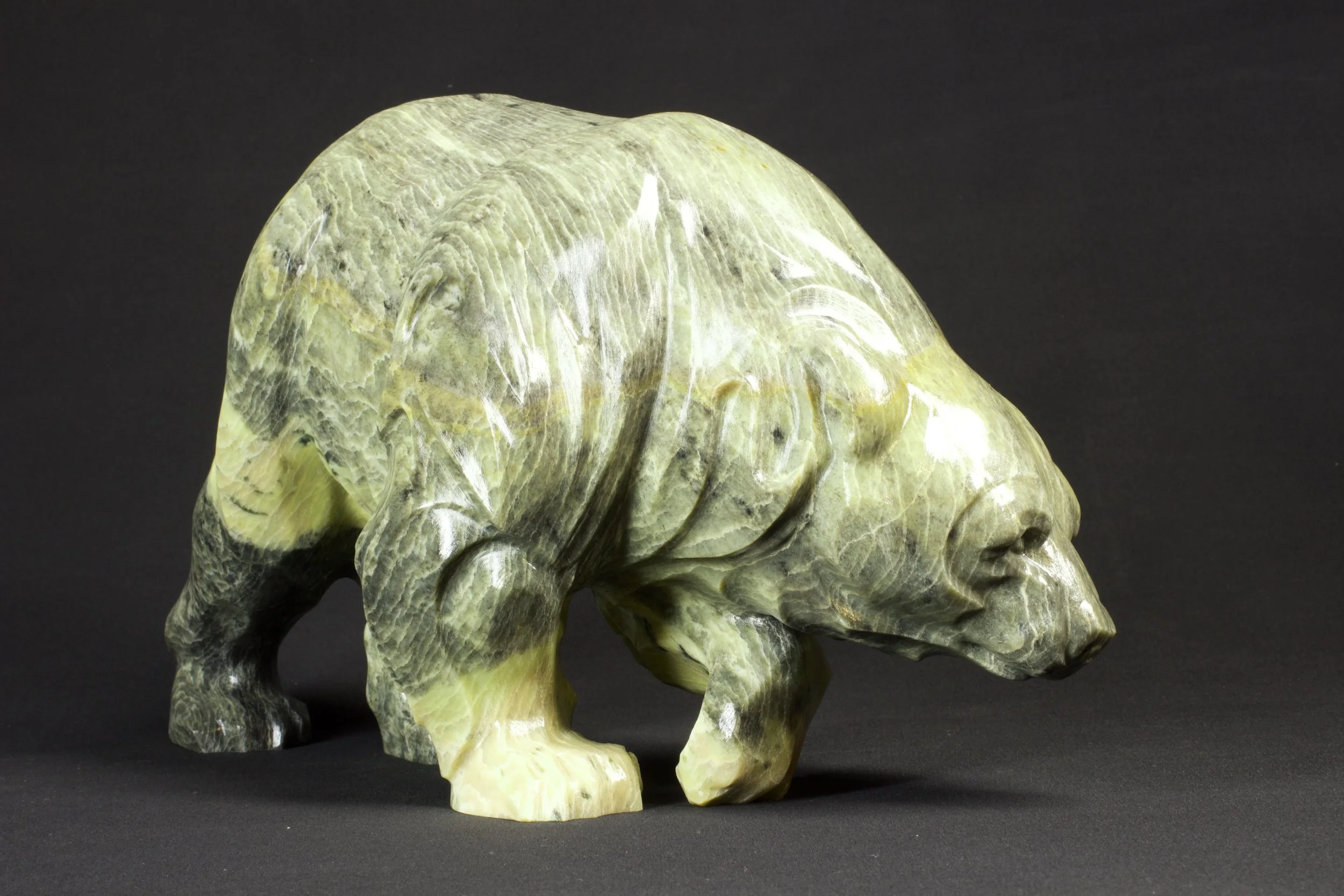
‘REQUIEM’ - Metamorphosis, Mortality, and the Bear Within
The bear has long been a symbol of wisdom, transformation, and guidance. Through recent life experiences and the creation of pieces like Metamorphose and Requiem, I’ve come to understand my own mortality, my own transformations, and the deep meaning of rest and repose.
There was a word that stuck out when selecting the name of my recent bear. I have to admit (and this fact goes with many of y sculptures), I often find moments of love and distaste. This is obviously a useful quality to have reason to allow some constructive criticism happen (since there isn’t a panel of apes who jury my work over my shoulder). But I digress; the point is the subject matter is one I’ve done many times before but I like to try a pose that is unique to the shape of the stone, but also unique to what I have done before. At this moment, I am satisfied.
You won’t hear a critique often from an artist, but coming from my perspective, it is probably valuable, from another person looking outside, to one’s internal disposition. As in, this reflects our souls need to improve. This experience I can share and perhaps you’ll find some solace in it.
There are certain angles I love this sculpture, but there are certain angles I do not. I think part of that is inevitable due to the nature of bears hidden nature. But also this sculpture in particular. I’ve read from commentators that they like the bears head to be ‘point up’. Yet I do no see this in nature often. They will sniff the air, but only look up if they suspect something. But they are stealth animals for the most part. They weight hundreds of pounds yet can creep through the densest of forests without being heard before even being seen and they are just as good as being unseen as they are unheard. I know. But this all lends itself to being ‘hidden’.
The qualities of the bear are just as mysterious as I’ve always felt. In many Native American traditions, the bear is seen as a carrier of ancient wisdom, a guide, and even an elder kinsman who has taken the form of a bear. Through dreams and visions, they are said to reveal which plants heal, and which paths to follow.
This might sound far-fetched, but I recently went through an experience that confronted me with mortality, and it has transformed the way I see myself and my life. I’ve realized how often I’ve taken my days for granted—living as a provider, a “respectable commoner,” carrying weight on a thin frame until I became something I no longer recognized.
Years ago, I saw this clearly in a photograph with my cousin, someone very much like me. Yet in that photo, I appeared already transformed into the “respectable version” of myself. Looking back now, I see how true it is: we all shapeshift in our own ways.
Now, after this brush with mortality, I feel another transformation unfolding. Some sides of me I do not recognize—and I am making conscious steps to move away from them. We are all in metamorphosis, whether we realize it or not.
I sculpted a piece some time ago called Metamorphose—a polar bear, gazing upward, almost in prayer. To me, it symbolized that genesis of transformation: sitting crushed, yet lifting our spirit high to look to the Creator for help. The slow shift from mind to movement, where grace begins to act on our behalf. It’s no coincidence that this piece found a new home.
Now, I find myself holding Requiem, a sculpture that has accompanied me through the darkest chapter of my life. Its name means “rest” or “repose.” And it became just that for me: a space of deep reflection, a cathedral of silence, where the shifting light of each day reminded me that rest is not idleness, but a sacred part of transformation.
We are transforming, all of us. May you find your own requiem—a place of repose, where light shimmers through ordinary moments like stained glass, illuminating the hidden spirit within you.