Forging the Legs of a Blue Heron
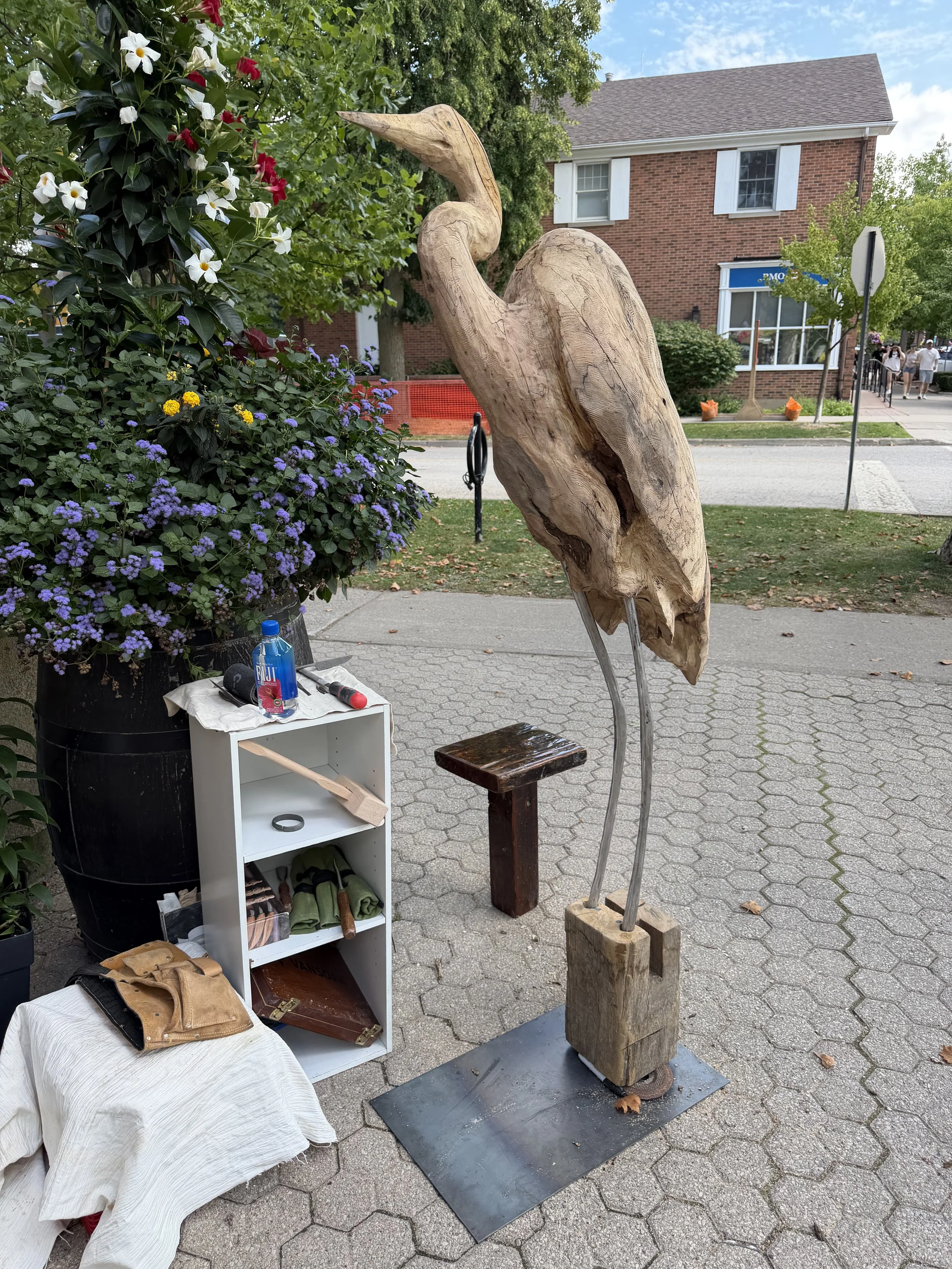
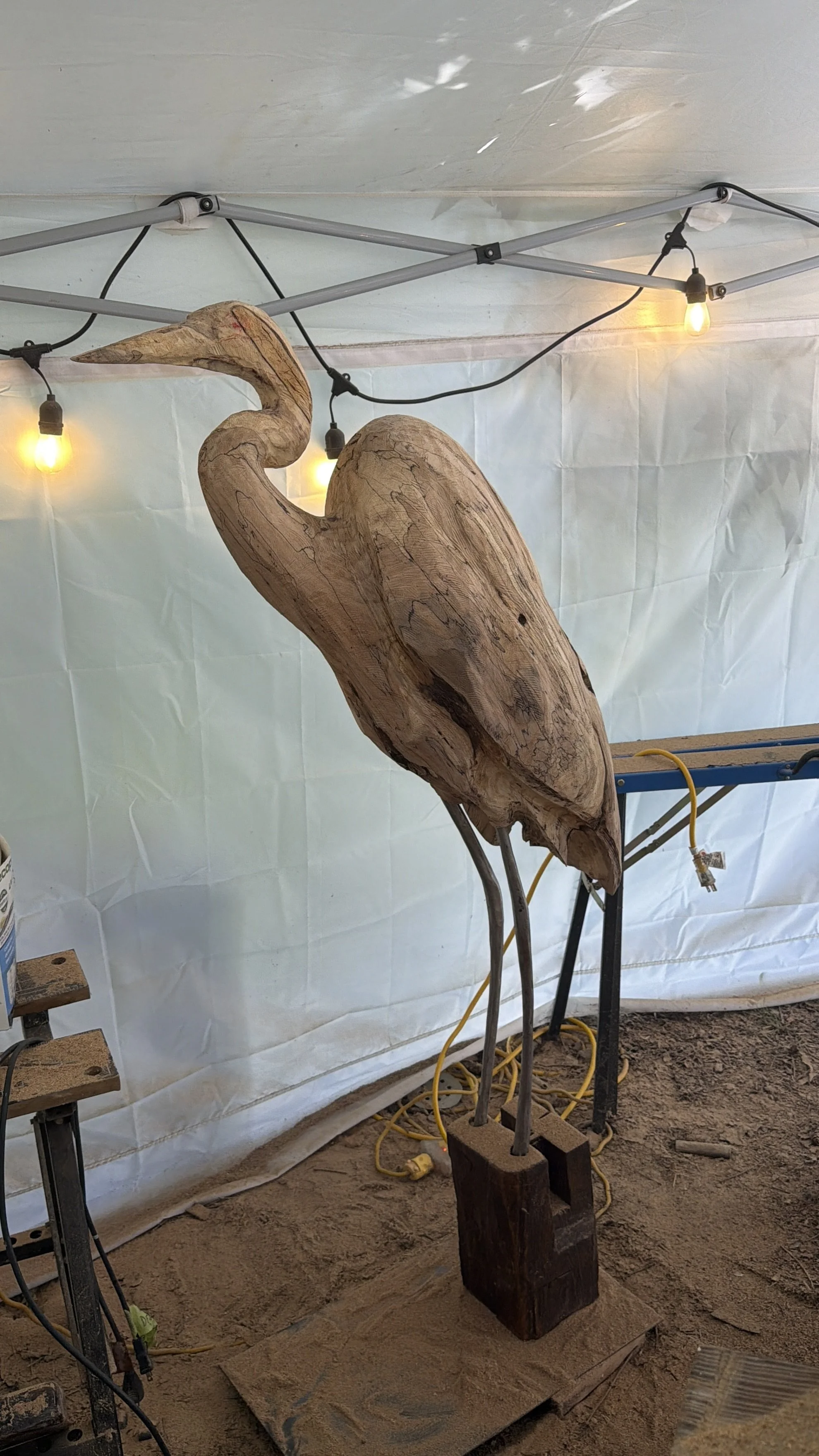
The heron still has a long way to go. There is carving left to do, feet to shape, steel to finish, colour to build and water to create.
About four weeks ago, I made the trip to a blacksmith shop to tackle an unusual part of a sculpture that has been occupying my studio for quite some time: the legs for a large blue heron carved from spalted maple.
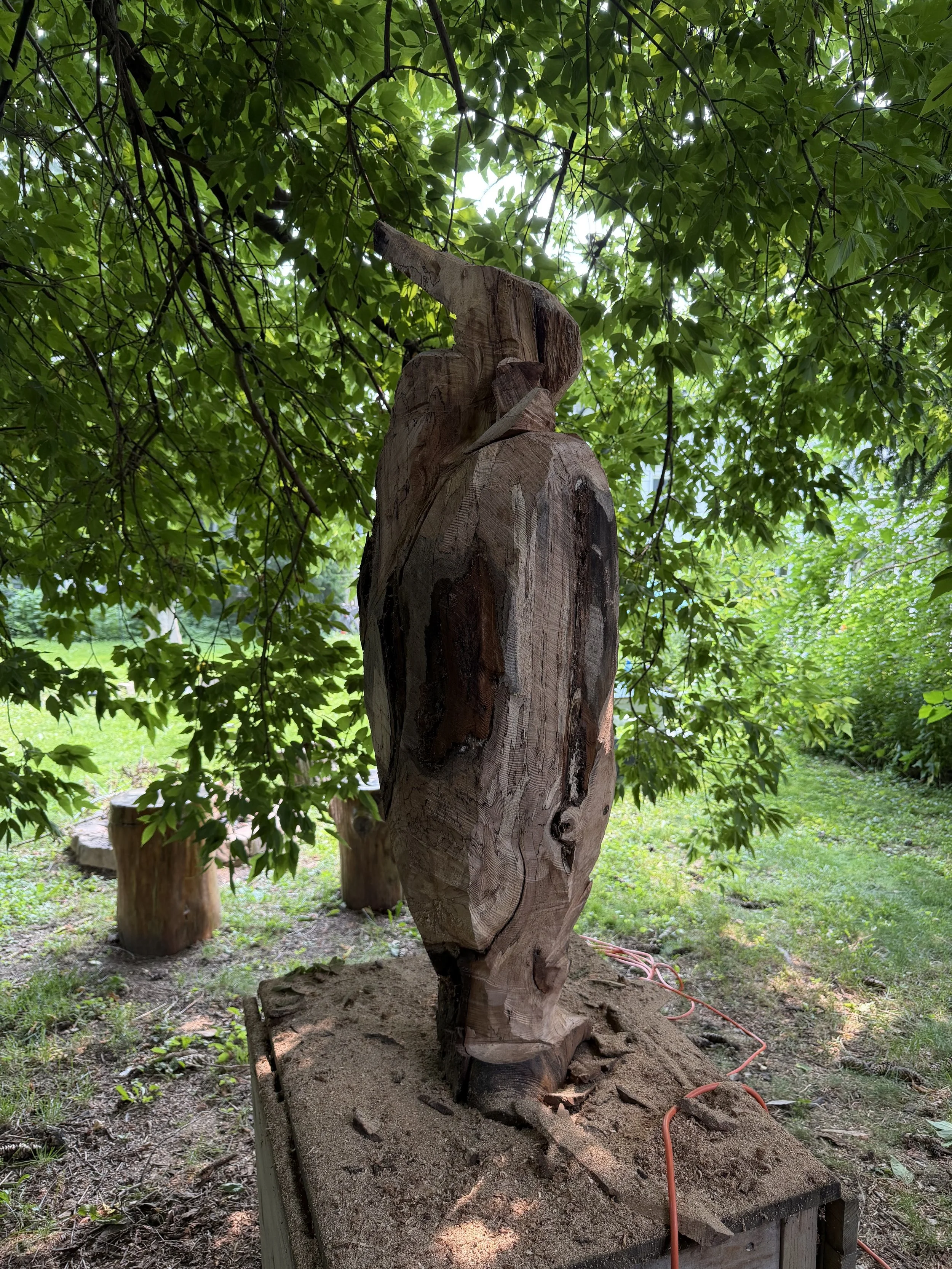
This piece began sometime last winter and has been a particularly meaningful project for me. It is the first sculpture where I started with a chainsaw and gradually worked my way down through smaller and smaller tools, slowly revealing the form hidden within the wood. After months of carving, I had finally reached the point where I could begin to feel a real sense of accomplishment.
The legs, however, presented a problem.
I hadn’t done any serious blacksmithing since 2004, when I studied the craft at the Haliburton School of Art and Design. Fortunately, I have the good fortune of knowing someone who could help me get back into it: Sandra Dunn, who runs the blacksmith shop I visited—and, somewhat ironically, was also one of my teachers all those years ago.
It was a wonderful opportunity to return to the forge with someone who had originally taught me the craft.
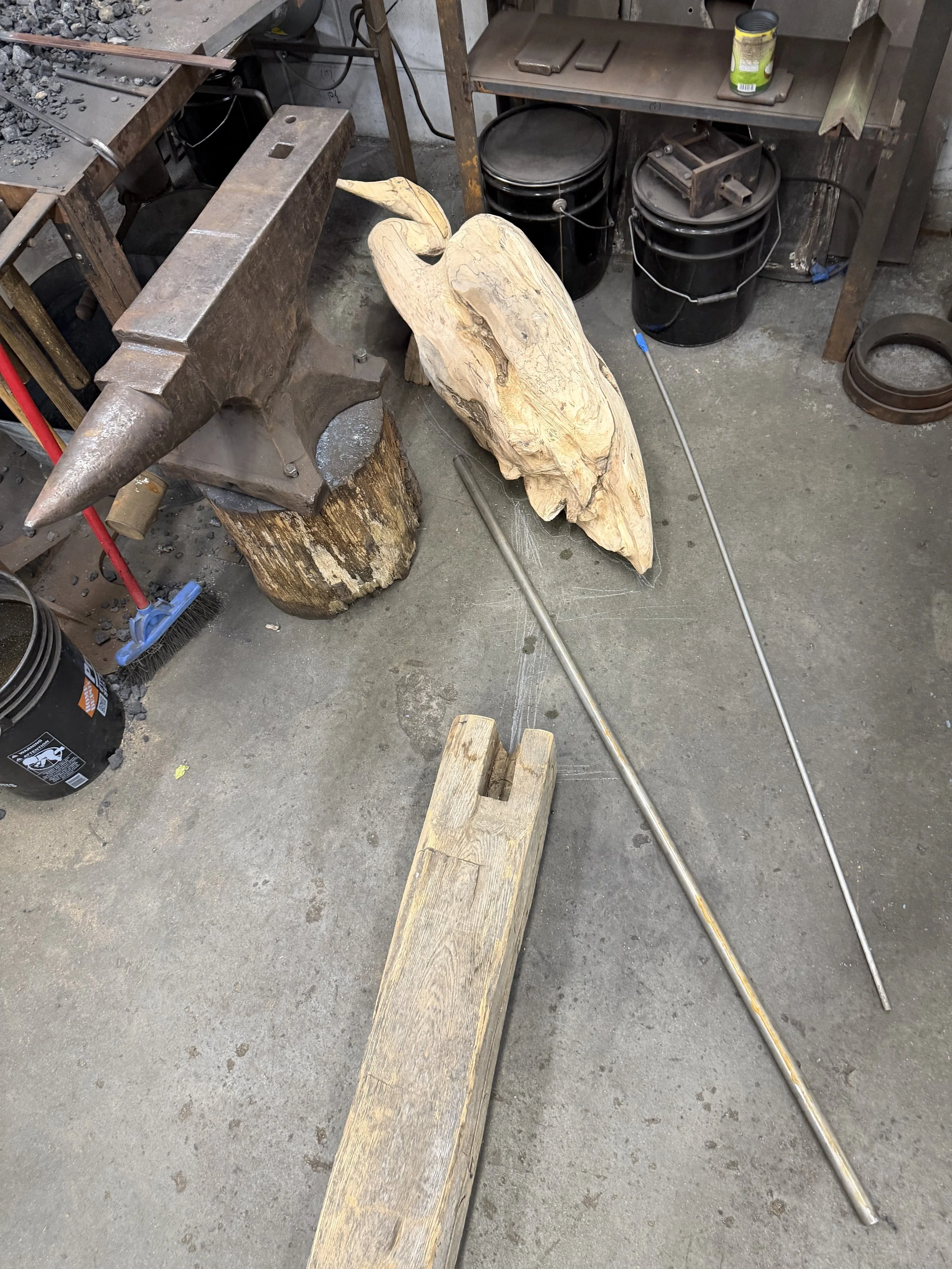
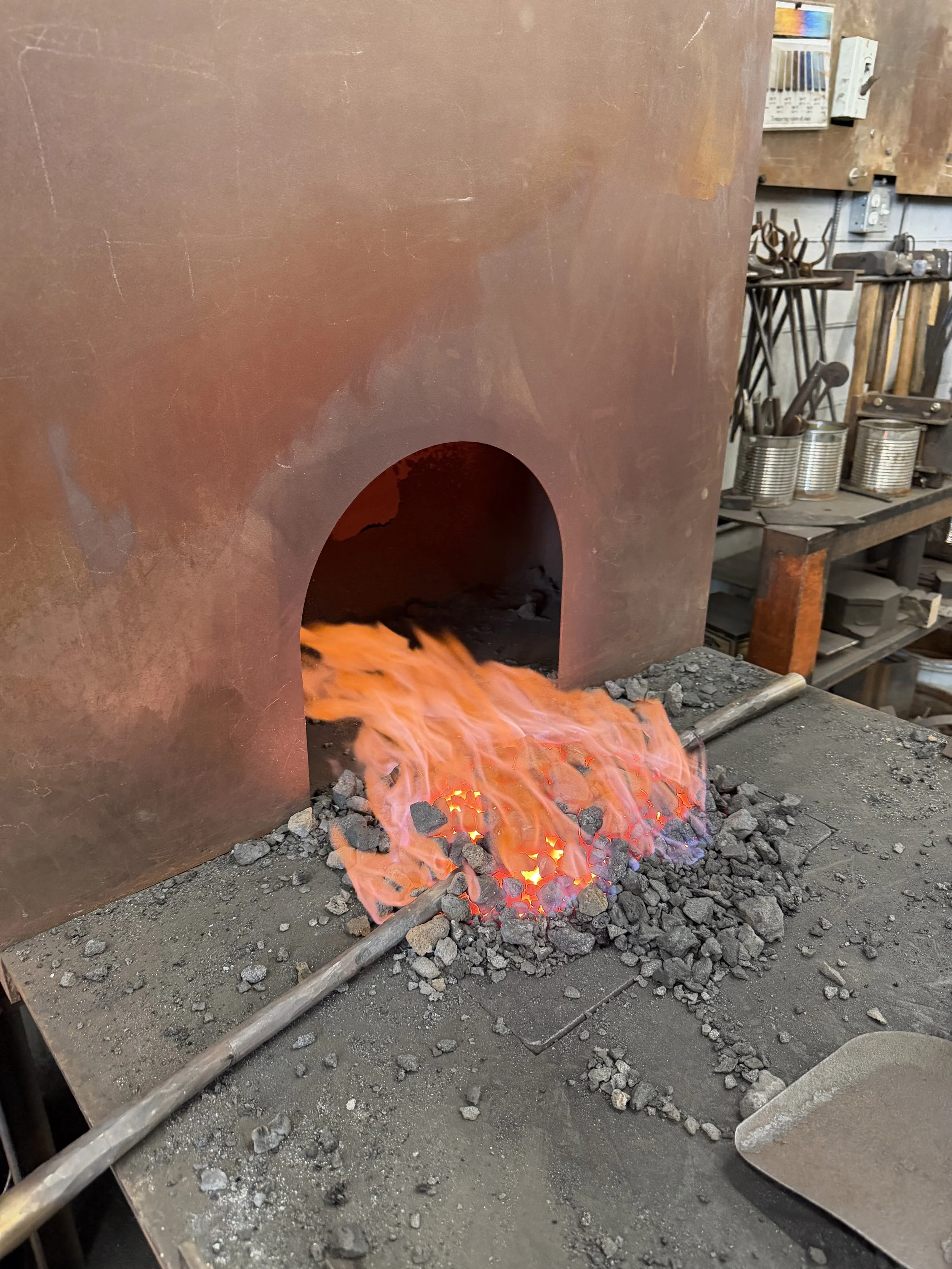
We fired up the coal forge and selected the stock for the legs: one-inch stainless-steel rods. Sandra also generously let me make use of her pneumatic hammer, which made the work considerably faster than it would have been by hand.
Even so, the stainless steel was a completely different beast from the wrought iron I remembered working with. It was incredibly hard and required a tremendous amount of effort to move. What I had imagined would be a roughly five-hour job quickly became something closer to a two-day undertaking.
And, naturally, I managed to make things a little more complicated.
At one point on the first day, I left one of the pieces in the forge a little too long and managed to disintegrate part of the leg. Thankfully, Sandra and her crew were able to weld it back together. The repair disappeared remarkably well—once finished, you would never know the leg had been broken in half, and the joint is structurally sound.
After all that forging, the next challenge was figuring out how to actually mount this enormous bird.
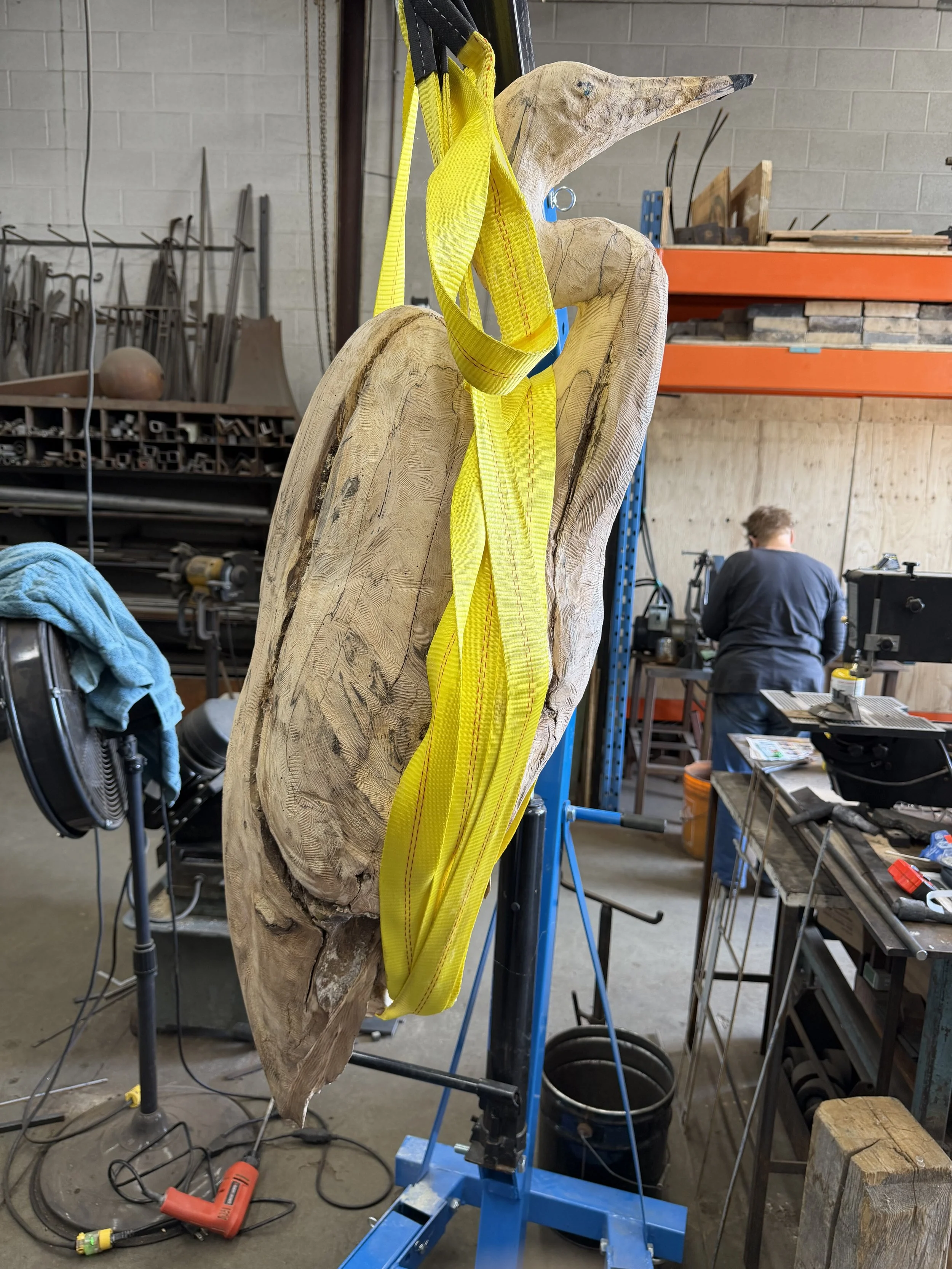
The wooden sculpture stands roughly three and a half feet tall, so I used an engine hoist to lift the piece into the air while I carefully located and drilled the mounting holes through both the reclaimed wood base and the heron itself. Getting the angles right took some patience and careful attention to detail, but eventually everything came together.
And then came the moment I had been waiting for.
The heron stood on its own.
For a sculpture this large, though, simply standing isn’t quite enough. I need to be able to continue carving without worrying about the whole thing shifting or tipping, so I also had Sandra help me fabricate a steel support hidden within the reclaimed wood base.
Three half-inch wrought-iron rods will disappear into the base and connect the sculpture securely to the bottom. The intention is that none of this structure will be visible when the piece is finished. Instead, the base will create the illusion that the heron is standing in shallow water, with its legs disappearing naturally into the surface.
There is still quite a bit of work ahead.
I’ll carve the heron’s feet directly from wood and paint them to blend with the stainless-steel legs. The legs themselves will receive a dark, black-grey finish that transitions naturally into the feet and the colours of the bird.
Once the carving is complete, the heron will be painted with a gradient inspired by the natural tones of a blue heron—richer colour toward the upper portion of the bird while leaving the lower portion closer to the natural warmth of the maple.
The final touch will be the base.
I plan to use a river-flow epoxy over the stainless-steel support so that the structure disappears beneath a translucent, water-like surface. The goal is for the finished sculpture to give the impression of a blue heron standing in water, while still allowing the character and grain of the reclaimed wood to remain part of the piece.
It is a big project.
But that’s often the way these things happen. You start with an idea that seems manageable, and somewhere along the way it becomes considerably more complicated than you anticipated. Then, once you’ve invested enough time into it, you can’t really stop. You just keep following the piece toward whatever it wants to become.
Interestingly, this sculpture wasn’t originally intended to be a blue heron at all.
I began it as a great egret. Somewhere well into the carving process, however, I realized that the height and proportions of the sculpture had grown beyond what would make sense for a great egret. Rather than forcing the sculpture to conform to the original idea, I decided to let the piece become what its proportions were suggesting.
The blue heron made much more sense.
Sometimes the material has a better idea than the artist.
There is another reason I’ve had the opportunity to make so much progress on this piece lately.
My stone-carving course at the Haliburton School of Art and Design was unfortunately unable to run this year because we didn’t reach the minimum enrollment. It was disappointing, particularly because I really enjoy returning to Haliburton and introducing people to the craft of stone carving.
The timing would have been ideal, too. The course was scheduled for mid-August, when the temperatures are generally a little more forgiving than they can be in June or July. Since the course takes place outdoors in a tent, cooler weather makes a considerable difference.
But that’s the nature of teaching and scheduling. Sometimes a particular week simply doesn’t line up with enough people’s vacation plans.
Hopefully the course will have another chance to run next year. I would love to return and share the process of taking an idea from a rough piece of material and gradually turning it into something tangible.
In the meantime, perhaps everything happened for a reason.
The cancelled course gave me a little unexpected time to return to this heron and push the project further than I otherwise might have.
So, for now, I’m enjoying the process and looking forward to seeing where it leads.
There is still plenty of carving, forging, drilling, painting and finishing ahead before this bird is ready to leave the studio. I’ll share more photographs and progress as the sculpture continues to take shape.
For now, at least, the heron has legs—and it can finally stand on its own.