Learning All Over Again — Nocturnae & Clean Again
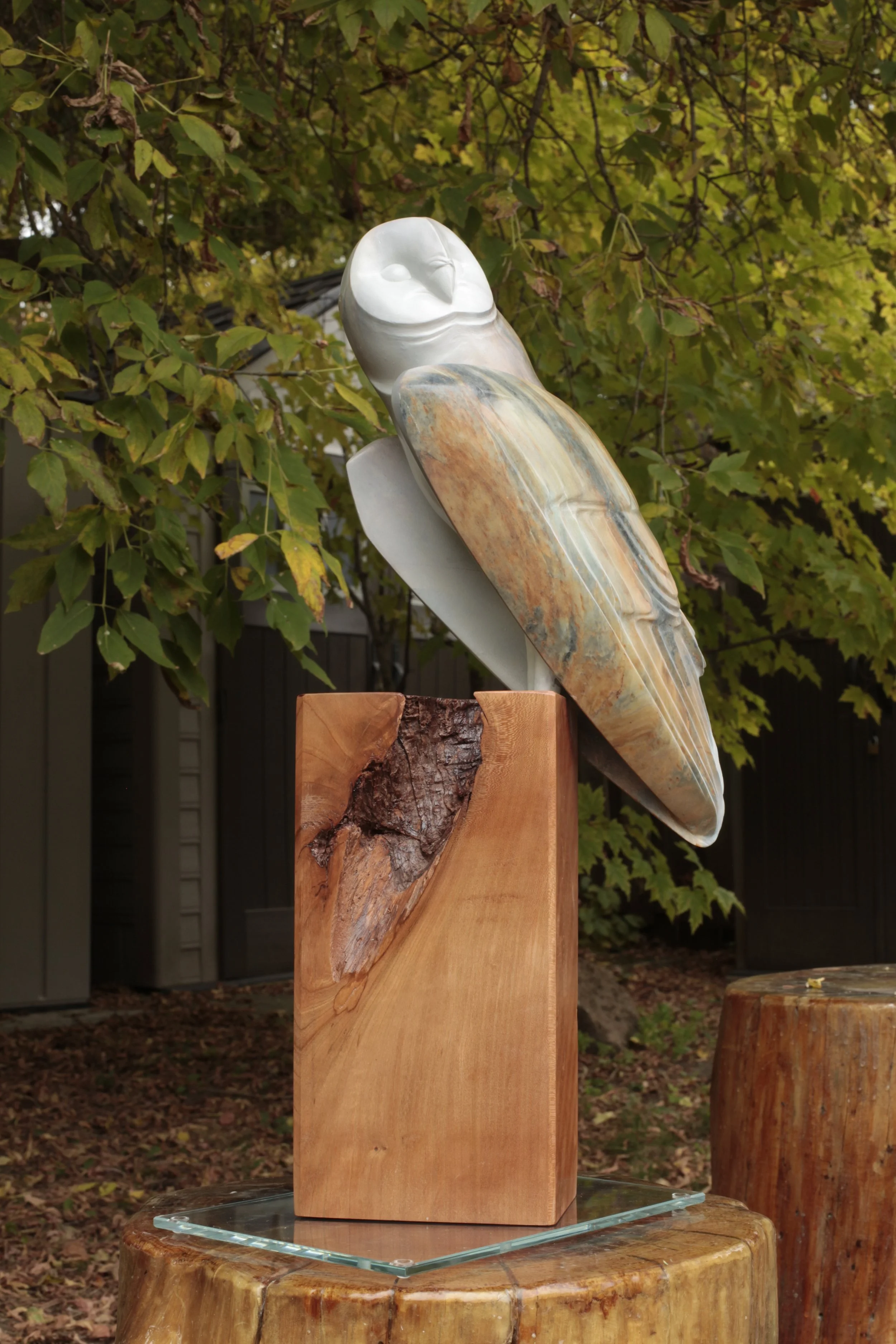
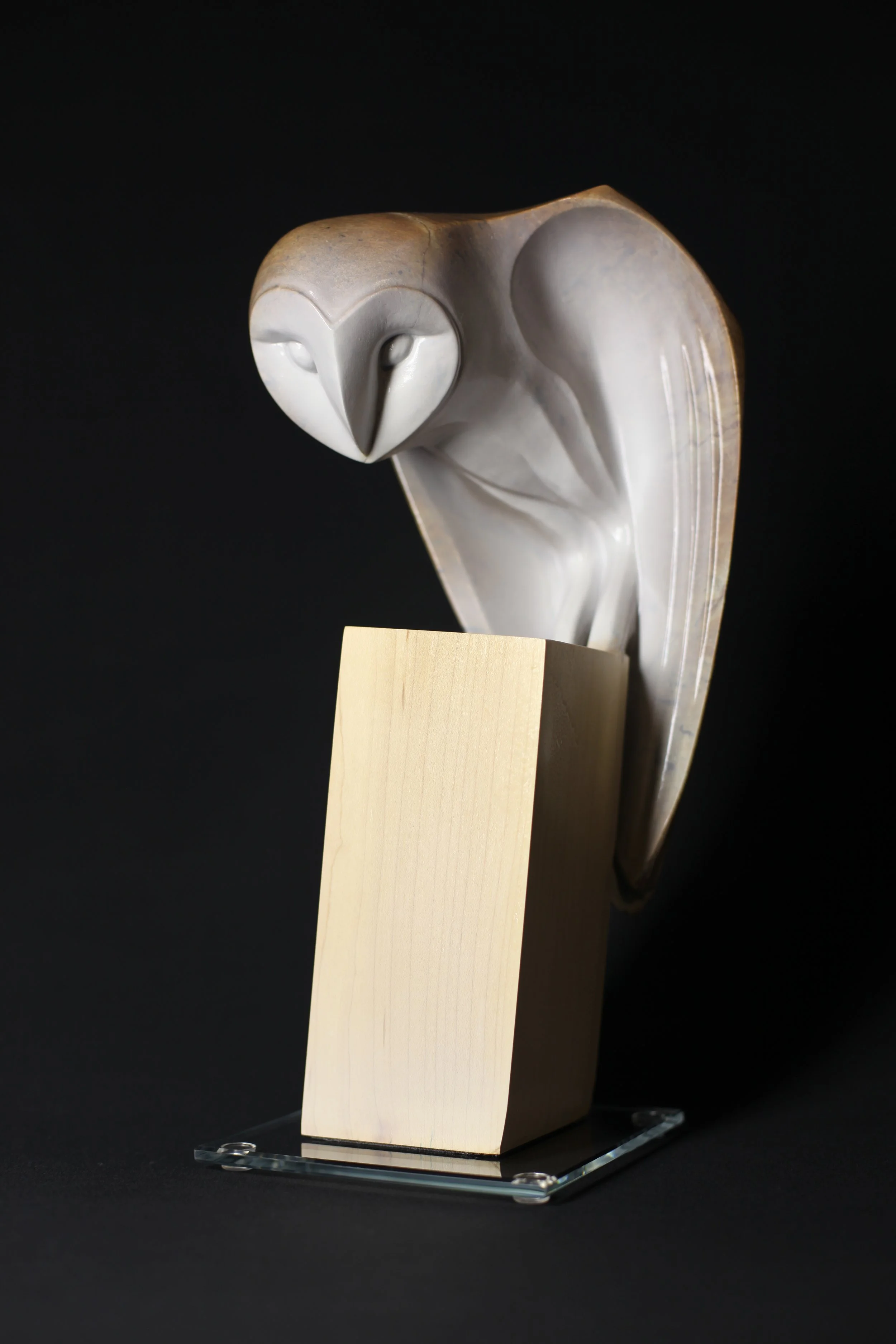
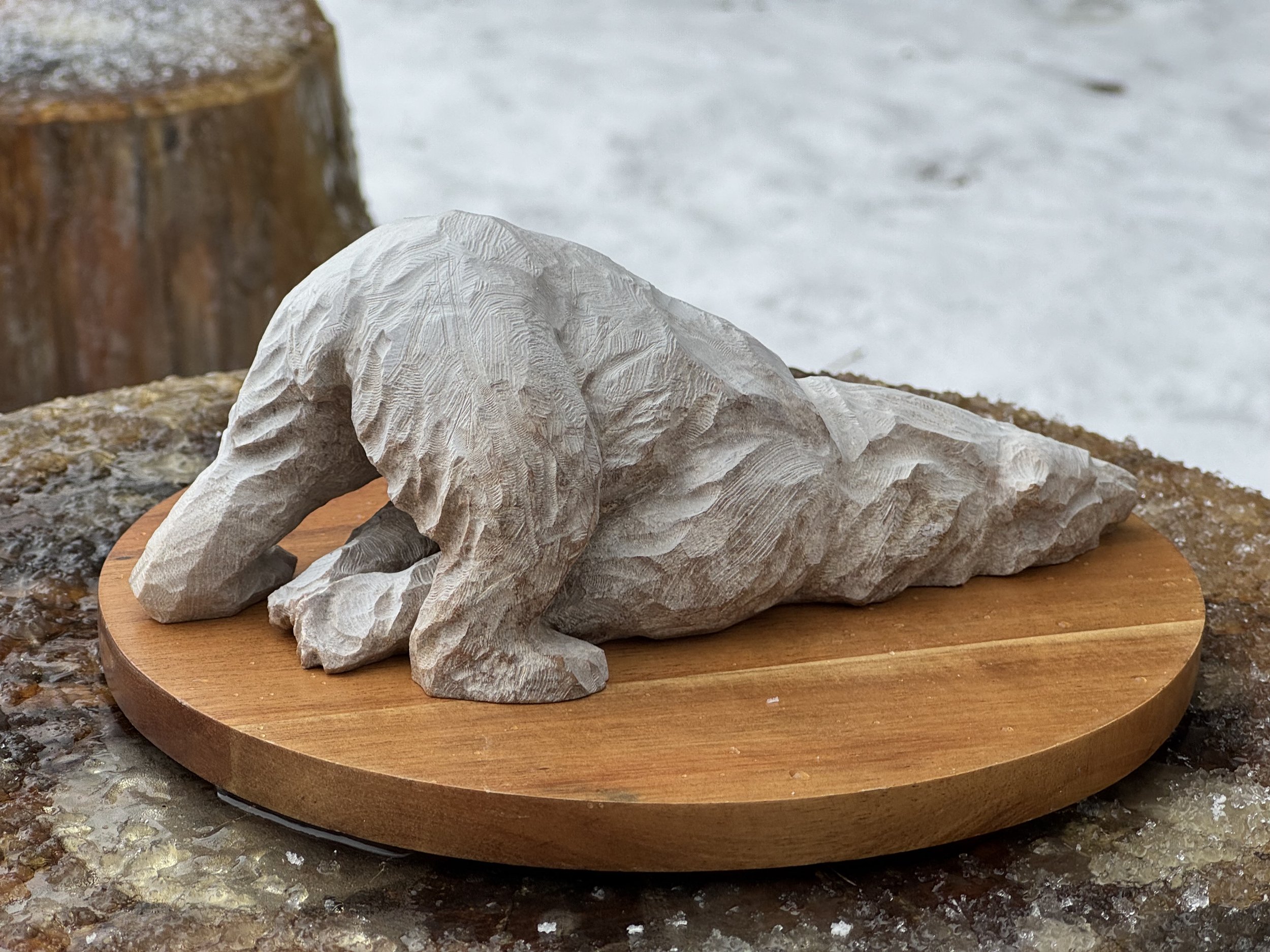
Each time I return to the owl or the bear, I begin again. Nocturnae and Clean Again explore two distinct personalities in stone — one watchful and nocturnal, the other instinctual and grounded. These sculptures reflect the slow process of learning to feel movement, muscle, feather, and fur from within the stone itself.
Each time I return to an owl or a bear, I’m learning all over again.
No two works of mine are much alike. Part of that is intentional — I leave space before approaching a subject again. I try not to repeat the same pose, the same lines, or even the same mistakes. That space forces me to approach the form as if it were brand new — living, dynamic, and deeply personal.
I’ve carved several owls and bears, as you may have noticed. But these last two feel different. They feel more real to me — not necessarily because they are “better,” but because they carry more life. They speak a little louder when viewed.
I know there is still a long way to go. Not in the sense of making a better sculpture, but in learning to truly feel the life of the barn owl or the polar bear — to carve as if it were my own body. To understand every joint and muscle, every fold of feather or sweep of fur. To sense how they move. How they rest. Even how they might feel.
Growth as an artist is slow and patient. Each day is unique. Allowing the process to unfold in its own time is paramount.
Nocturnae
The word Nocturnae means “belonging to the night.” After long night shifts spent carving, I sometimes feel nocturnal myself.
This piece took years of quiet deliberation. The stone sat for a long time before it revealed itself. When it finally did, it wasn’t obvious or graceful — it showed itself crudely, almost stubbornly. I wish I had a photograph of its original state. You’d be surprised it’s the same work.
But that’s part of being an artist. You gaze into stone the way you might gaze into the stars — until a shape begins to emerge from the chaos of constellations.
The owl, in my mind, is deeply observant. Fused in stillness. Perched high on a rafter or doorframe, trying not to be seen, yet fully aware. It locks its gaze onto someone below, quietly contemplating their thoughts and feelings. There is tension in that stillness — a presence that feels almost psychological.
Clean Again
Where the owl holds silence, the bear carries gesture.
The pose may look playful or even lazy — the slow shuffle after a long day, hindquarters raised, sliding forward to spare a few calories. It’s open to interpretation.
But in truth, the bear is cleaning its fur by dragging its body across the snow. Hence the name Clean Again. It’s a simple, instinctual act. A reset. A return to clarity.
What I love most about these two pieces is their personalities. They are distinct from one another, yet both feel alive in their own way.
Both Nocturnae and Clean Again are currently available and can be viewed in the Available Works section of my website. I invite you to take a closer look — sometimes the life within a sculpture reveals itself more fully when you stand quietly in front of
Looking Up: Lessons from an Owl and the Art of Letting Go
A reflection on carving, faith, and fatherhood—how one artist found spiritual meaning in a barn owl sculpture that reminded him of his daughter and the importance of looking up.
There are times I’ve fallen in love with a sculpture as I’ve been working on it. Perhaps I’m not the only one who’s felt this way—but for me, it’s increasingly rare. The constant inner critic is always present, whispering in the background, even as the artist within searches for appreciation and gratitude in the process. At some point, those two voices—the critic and the creator—merge. And in that merging, something magical happens: flow. The careful turns careless, the mind quiets, and the stone begins to speak.
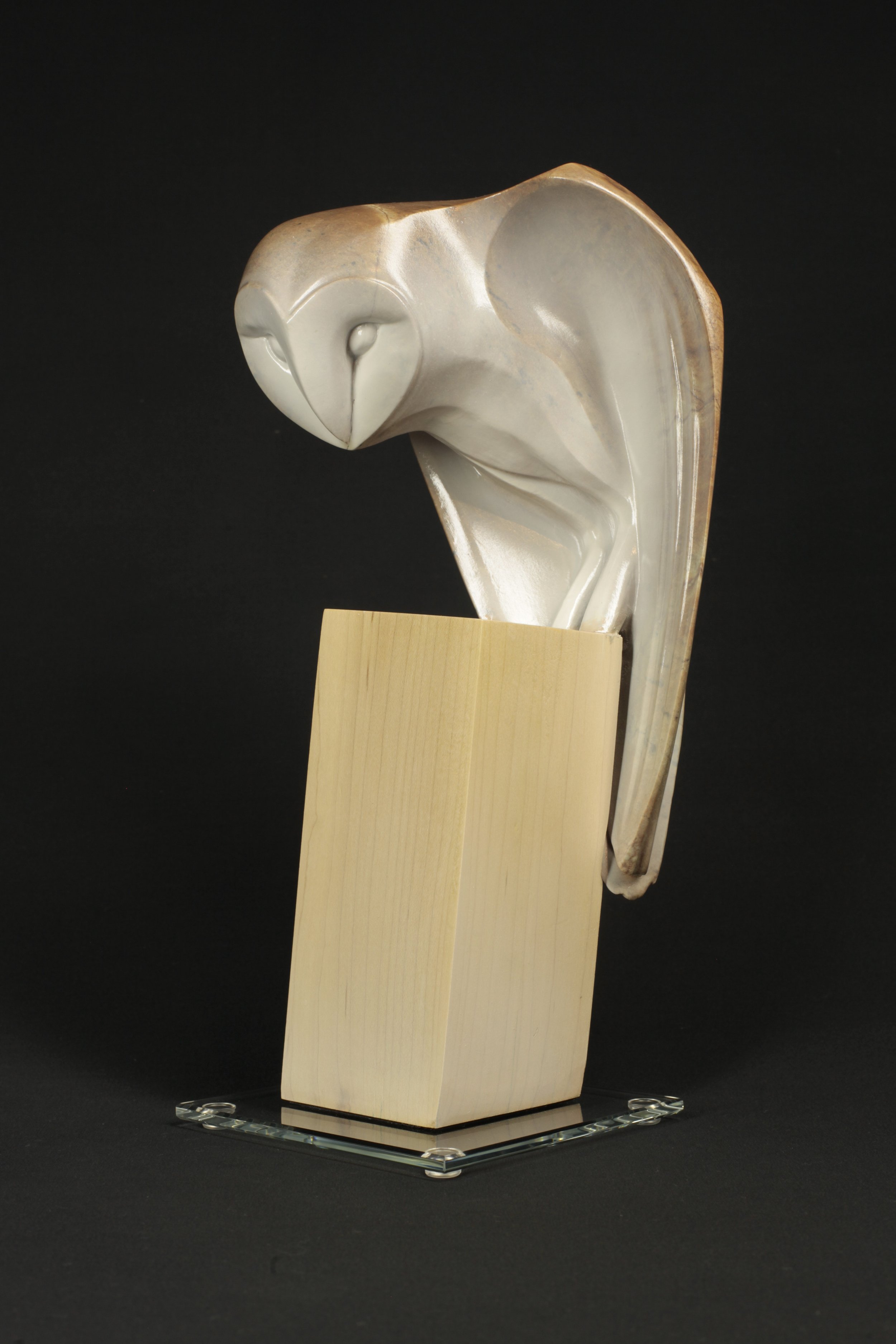
The last piece I produced began with an extraordinary reference—a young barn owl, wings slightly spread, head raised toward the sky as if watching the heavens. The posture reminded me of my daughter. That innocent, upward gaze of wonder. How often do we forget to look up as we grow older? As we stand taller, we begin to see others as peers—or worse, as competition—each of us fighting never to look up again.
But maybe looking up is exactly what we need to do more often.
Our mission, whether as artists or simply as people, is to remain teachable—to learn from something higher, to serve others as if we were entertaining the children of God. To be both young and old at once requires humility and adaptability. It calls on us to forgive, to turn the cheek, and to love even our adversaries.
When I carve an owl, I often sense that same paradox: a creature both feared and revered. Its silent watchfulness commands respect, but in its eyes I see gentleness, understanding, and beauty. In this particular owl, I saw my daughter’s spirit—bright, alert, full of promise.
So when it came time to bring the sculpture to the gallery in Niagara-on-the-Lake, it wasn’t easy. Letting go never is. Yet, I know there will be more. I will see my daughter in many future works and strive to make each piece more beautiful than the last—for love’s sake, for the art, and for whoever the piece connects with. Because in the end, we’re all connected in ways we can’t yet imagine.